
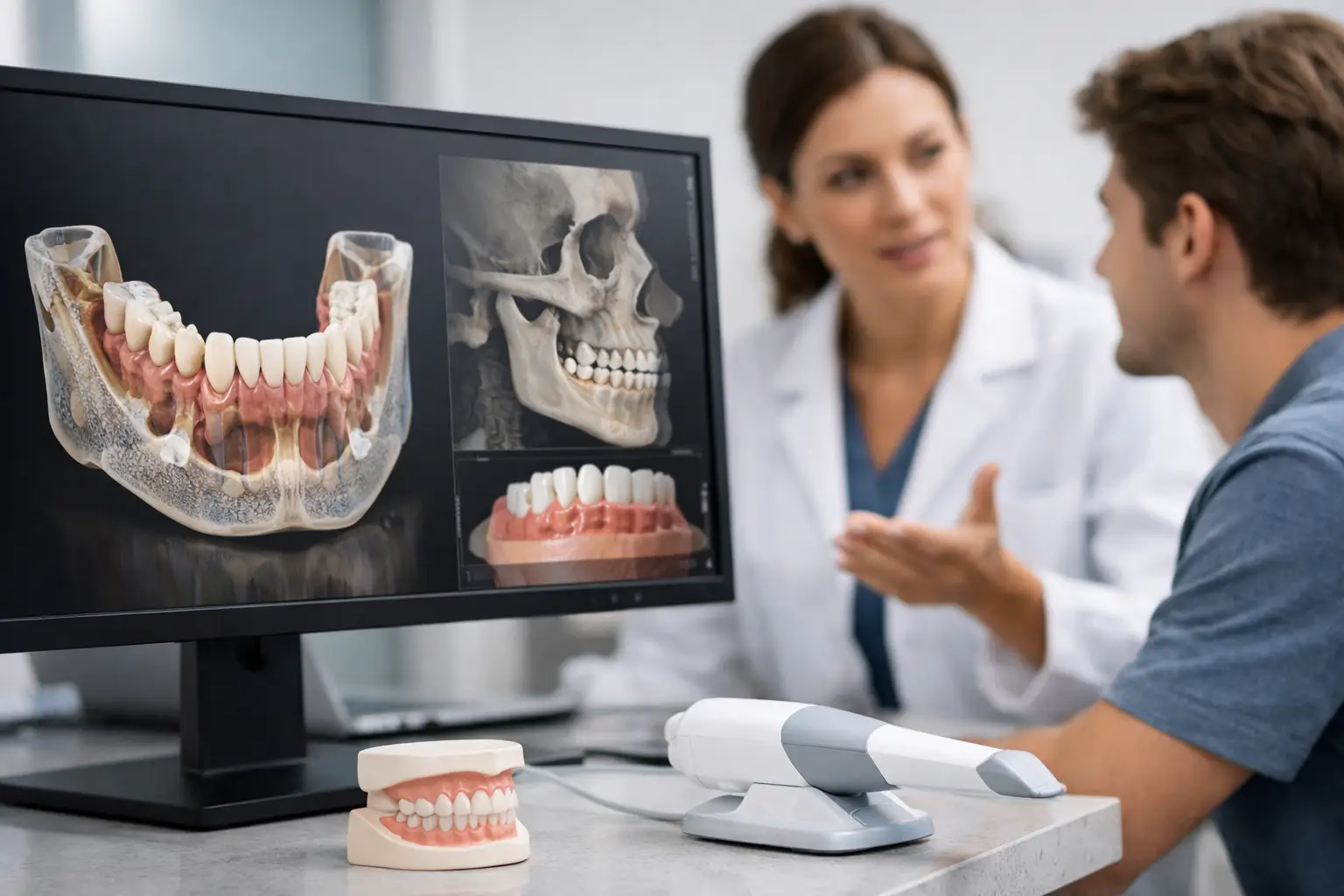
When an orthodontist can see more, you get answers that feel clearer and treatment that feels more tailored. That is one of the biggest advantages of 3d imaging for orthodontics. Instead of relying only on flat images, this technology helps your orthodontist evaluate teeth, roots, jaw position, and surrounding structures in a more complete way from the start.
For patients, that often means fewer surprises and more confidence in the plan. If you are considering braces, Invisalign, early orthodontic treatment for your child, or care for a more complex bite issue, understanding how 3D imaging works can make the process feel a lot less intimidating.
What 3D imaging for orthodontics actually shows
Traditional orthodontic records still have value. Photos, digital scans, and standard X-rays each play an important role. But they do not always show the full picture when teeth are impacted, roots are angled in unusual ways, or jaw relationships are more complicated than they appear from the outside.
3D imaging for orthodontics gives your orthodontist a detailed, three-dimensional view of the teeth, bone, roots, and airway-related structures. Depending on the case, this can help identify issues that are harder to judge on a two-dimensional image alone.
That matters because orthodontic treatment is not just about making teeth look straighter. It is also about how teeth fit together, how the jaws relate to each other, and how to move teeth safely within the bone. A smile can look crowded on the surface, but the reason behind that crowding may be very different from one patient to the next.
Why orthodontists use 3D imaging
The short answer is precision. A more complete image helps support more precise diagnosis and treatment planning.
For example, if a tooth is stuck beneath the gums, 3D imaging can help show exactly where it sits and whether it is close to neighboring roots. If a patient has a crossbite, underbite, or asymmetry, it can help reveal whether the issue is mostly dental, skeletal, or a combination of both. If someone has jaw discomfort or airway concerns, it may provide useful information that shapes the next step in care.
This does not mean every patient needs it for every visit. That is where experience matters. Good orthodontic care is not about using technology just because it exists. It is about choosing the right tools for the right case and explaining why they are being recommended.
How 3D imaging improves treatment planning
One of the most helpful things about 3D imaging is that it can make treatment planning more individualized. Orthodontics is never one-size-fits-all, even when two patients seem to have similar smiles.
A teen with crowding may need a very different approach than an adult with crowding, gum recession, and old dental work. A child with developing bite problems may benefit from early interceptive treatment, while another child may be better off waiting and monitoring growth. Three-dimensional records can help your orthodontist weigh those differences with more confidence.
This can affect decisions about timing, the type of appliance used, whether a tooth should be exposed to help it erupt, or how carefully certain movements need to be controlled. It can also be helpful when planning Invisalign treatment, especially in cases where root position and bite correction matter just as much as the visible alignment of the front teeth.
What this means for braces and Invisalign patients
If you are choosing between braces and Invisalign, imaging alone will not decide for you. But it can help your orthodontist recommend the option that best matches your bite, goals, and daily routine.
With braces, 3D imaging may help map out more complex movements, evaluate impacted teeth, and monitor how teeth will move in relation to roots and bone. With Invisalign, it can add another layer of detail when planning tooth movement and bite correction, particularly in more involved cases.
For adults, this can be especially reassuring. Adult orthodontic treatment often comes with extra factors such as previous dental work, missing teeth, recession, or TMJ symptoms. A more complete image helps reduce guesswork and supports a plan that respects both appearance and long-term function.
3D imaging for orthodontics in children and teens
Parents often want to know whether advanced imaging is really necessary for younger patients. The answer depends on what your orthodontist is trying to evaluate.
In many routine situations, standard records may be enough. But if a child has delayed eruption, impacted teeth, severe crowding, a narrow arch, or signs of a developing jaw discrepancy, 3D imaging can be very helpful. It allows the orthodontist to look beneath the surface while the mouth is still growing and changing.
That can make a real difference in early treatment decisions. Sometimes the best plan is to act sooner and guide development. Other times the best plan is to watch growth carefully and step in later. Better imaging supports better timing, and timing is a big part of successful orthodontics.
Is 3D imaging safe?
This is one of the most common questions, and it is a fair one. Patients should always feel comfortable asking why an image is needed and how it will support their care.
Orthodontic practices that use 3D imaging do so with clear clinical reasons in mind. The goal is not to collect extra records. The goal is to gather the information needed to diagnose accurately and plan safely. When recommended appropriately, this type of imaging can be an important part of delivering high-quality care.
If you have concerns, ask your orthodontist to explain why the scan is useful in your specific case. A good provider will walk you through the reason in plain language and help you feel informed, not rushed.
What to expect during a 3D orthodontic scan
For most patients, the process is quick and straightforward. You will usually stand or sit still while the machine rotates around your head for a short period of time. There are no impressions, no poking, and no lengthy preparation.
That simplicity is part of why modern orthodontic technology can make treatment feel less stressful. Clear records at the beginning often lead to clearer conversations about what is going on, what your options are, and what the path forward looks like.
For nervous patients, especially children and first-time adult patients, that clarity matters. When you can actually see what your orthodontist is seeing, the plan often feels more understandable and less overwhelming.
The real benefit is confidence
Technology should never replace personal care. It should support it. The best use of 3D imaging happens when advanced tools are paired with careful diagnosis, thoughtful treatment planning, and a team that takes time to answer questions.
At a practice like 1st Impressions Orthodontics, that combination matters. Patients are not just looking for a scan or a set of braces. They want clear guidance, a treatment plan that fits real life, and confidence that their smile and bite are being treated with precision.
When 3D imaging makes the biggest difference
Some orthodontic cases benefit more from 3D imaging than others. It is especially useful when impacted teeth are involved, when jaw relationships are more complex, when previous dental work affects planning, or when airway and TMJ concerns are part of the picture.
It can also be valuable when a patient wants to avoid unnecessary delays. A detailed image at the beginning may help answer questions earlier, which can keep treatment planning more efficient and reduce uncertainty.
That said, more technology is not always better for every single situation. The real advantage comes from using it selectively and thoughtfully. A trustworthy orthodontist will recommend it when it genuinely adds value, not just because it sounds impressive.
If you are exploring orthodontic care and want a plan that feels personalized from the start, ask how imaging is used in the diagnostic process. The right conversation can tell you a lot about the kind of care you can expect – precise, supportive, and built around what you actually need.