
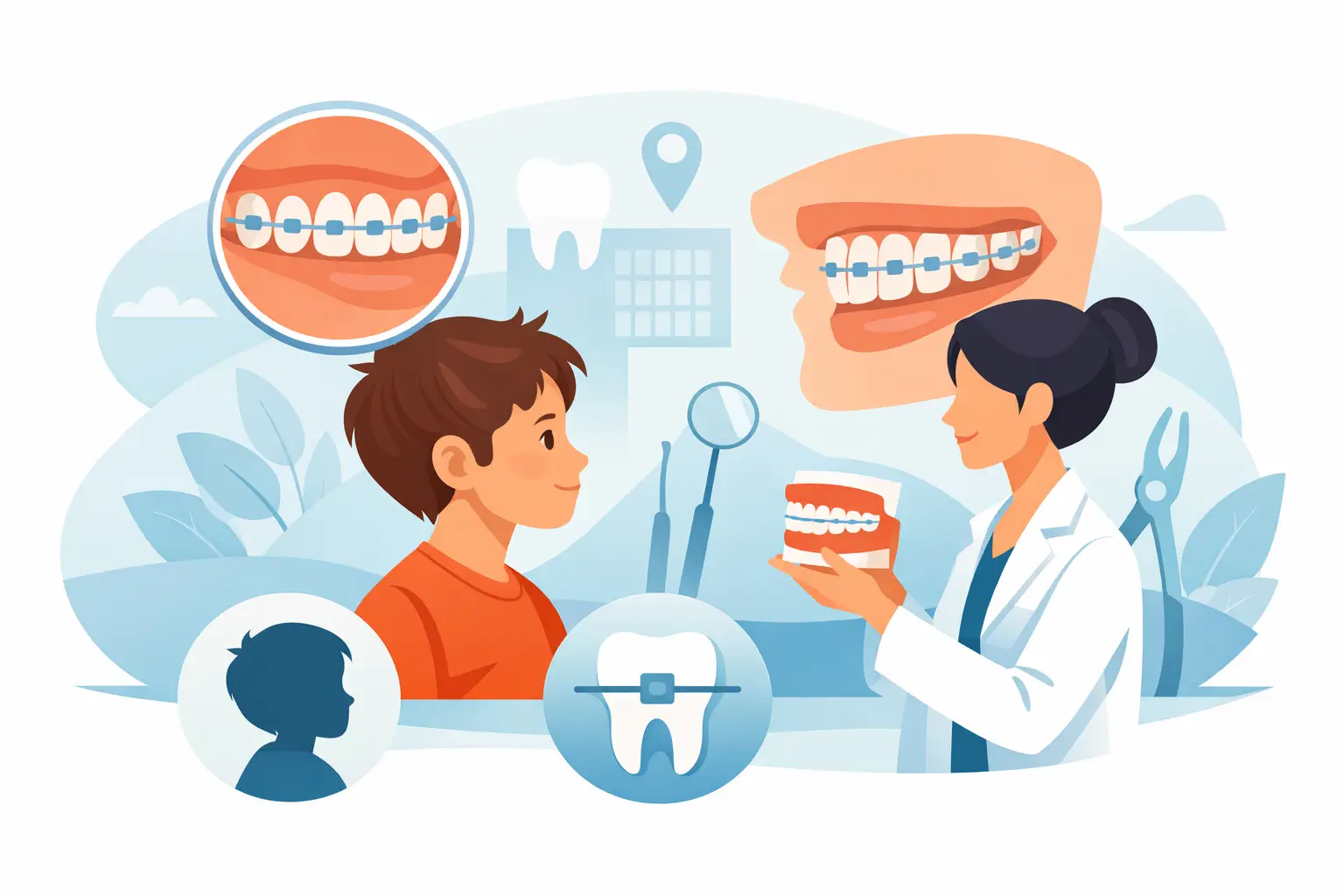
Most parents don’t spend much time wondering when should a child see an orthodontist until something becomes hard to ignore – crowded teeth, a bite that looks off, or a dentist mentioning braces. The surprise for many families is that the first orthodontic visit usually happens earlier than treatment itself.
That early timing is not about rushing into braces. It is about getting clear guidance before small issues become bigger ones. For some children, nothing needs to happen right away. For others, an early evaluation can make treatment simpler, shorter, or more comfortable later.
When should a child see an orthodontist?
A good rule is to schedule an orthodontic evaluation by age 7. That recommendation often catches parents off guard because many baby teeth are still present at that point. But age 7 is when enough permanent teeth have usually come in for an orthodontist to spot developing problems with jaw growth, spacing, crowding, and bite alignment.
This does not mean every 7-year-old needs braces. In fact, many do not. It means age 7 is often the right time to look ahead instead of waiting until a problem is more obvious.
Orthodontists are trained to evaluate how the teeth and jaws are developing together. A child may seem fine on the surface but still have an issue with erupting teeth, a crossbite, or a jaw discrepancy that is easier to address while growth is still active.
Why age 7 matters
At this age, children are in a useful transition stage. They often have a mix of baby teeth and permanent teeth, which gives the orthodontist a better picture of how the bite is forming. That matters because some orthodontic concerns are not just about crooked teeth. They involve the way the upper and lower jaws fit together.
If a child has severe crowding, an underbite, a crossbite, or habits that affect development, early treatment may help guide growth in a healthier direction. If everything looks normal, the visit still gives you peace of mind and a plan for monitoring changes over time.
Parents sometimes worry that an early visit means years of treatment. Usually, it means the opposite. A timely check can prevent unnecessary delays, reduce uncertainty, and help families understand what to watch for.
Signs your child may need an orthodontic evaluation sooner
Age 7 is the general recommendation, but some children should be seen earlier. If you notice certain changes in the way your child bites, speaks, or chews, it is worth scheduling a consultation even if they are younger.
A child may benefit from an earlier orthodontic exam if they lose baby teeth very early or very late, have difficulty chewing, breathe mostly through the mouth, or have teeth that seem blocked out or erupting in unusual positions. Biting the inside of the cheek often, thumb-sucking beyond the toddler years, or jaws that shift to one side when closing can also point to a developing bite problem.
You may also notice that the front teeth do not meet correctly, the lower jaw seems too far forward or too far back, or the smile appears very crowded even before all permanent teeth arrive. These signs do not always mean immediate treatment is necessary, but they do mean the situation deserves a specialist’s eye.
What happens at the first orthodontic visit
For many families, the biggest source of stress is not the diagnosis. It is the unknown. The first visit is usually much simpler than parents expect.
An orthodontist will examine your child’s teeth, bite, and jaw development. Digital imaging or 3D imaging may be used to see how permanent teeth are forming below the gums and whether spacing or eruption problems are likely. The goal is to understand not just what the smile looks like today, but where it is headed.
From there, you should get clear guidance. In some cases, the recommendation is to start early interceptive treatment. In others, the best plan is to monitor growth and check again later. That kind of honest timing matters. Good orthodontic care is not about starting as soon as possible. It is about starting when it will be most effective.
Does every child need early orthodontic treatment?
No. That is one of the most important things for parents to hear.
An early orthodontic evaluation and early orthodontic treatment are not the same thing. Many children are seen around age 7, then placed on observation until more permanent teeth erupt. Monitoring can be extremely valuable because it keeps treatment well-timed without being premature.
When early treatment is recommended, it is usually because there is a specific issue that benefits from intervention during growth. That might include creating room for incoming teeth, correcting a harmful bite pattern, or reducing the severity of a jaw alignment problem.
There are trade-offs. Early treatment can improve development and lower the risk of more complicated problems later, but it also means beginning orthodontic care sooner. In some situations, a child who has early treatment may still need a second phase of braces or aligners during the teen years. That does not mean the first phase failed. It means the goals were different – often to guide growth, protect oral health, or make future treatment more straightforward.
Common problems orthodontists look for in children
Parents often think orthodontics is mainly about straight teeth, but the bite is just as important. When teeth do not fit together correctly, children can develop uneven wear, chewing difficulty, speech issues, or strain on the jaw.
During a child’s evaluation, an orthodontist may look for crowding, extra spacing, impacted teeth, crossbites, open bites, deep bites, overjets, underbites, and asymmetrical jaw growth. Habits such as prolonged thumb-sucking or tongue thrusting can also affect how the teeth and jaws develop.
Some problems are easy to spot in family photos. Others are subtle and develop gradually. That is why early screening has value even when nothing appears urgent.
What if your child is older than 7?
If your child is already 9, 11, or 13 and has never seen an orthodontist, do not worry. It is still absolutely worth scheduling an evaluation.
Many children begin orthodontic treatment later, especially once more permanent teeth are in place. In fact, the preteen and teen years are a common time to start braces or Invisalign treatment, depending on the child’s needs and maturity. The key point is not whether you hit the exact age recommendation. The key is getting a professional assessment before delaying longer than necessary.
If your child has no pain and no obvious cosmetic concerns, it can be tempting to wait until all adult teeth come in. Sometimes that works out fine. Sometimes it misses a window when a bite issue could have been addressed more efficiently. A consultation removes the guesswork.
How parents can decide what to do next
If you are unsure whether now is the right time, start with two questions. First, is your child around age 7 or older? Second, have you noticed anything unusual about spacing, bite, jaw position, or the way teeth are coming in?
If the answer to either is yes, an orthodontic check is reasonable. You do not need to wait for a dentist to bring it up, and you do not need to assume braces are the next step. You are simply gathering information from a specialist who can tell you whether treatment is needed now, later, or not at all.
That kind of clarity can make the whole process feel much more manageable. In a practice built around compassionate care and modern imaging, families can get precise answers without adding stress to an already busy schedule.
The right time for a child to see an orthodontist is often earlier than parents expect, but that early visit is really about reassurance. Sometimes the best outcome is a simple message: everything looks on track, and we will keep an eye on it together.