
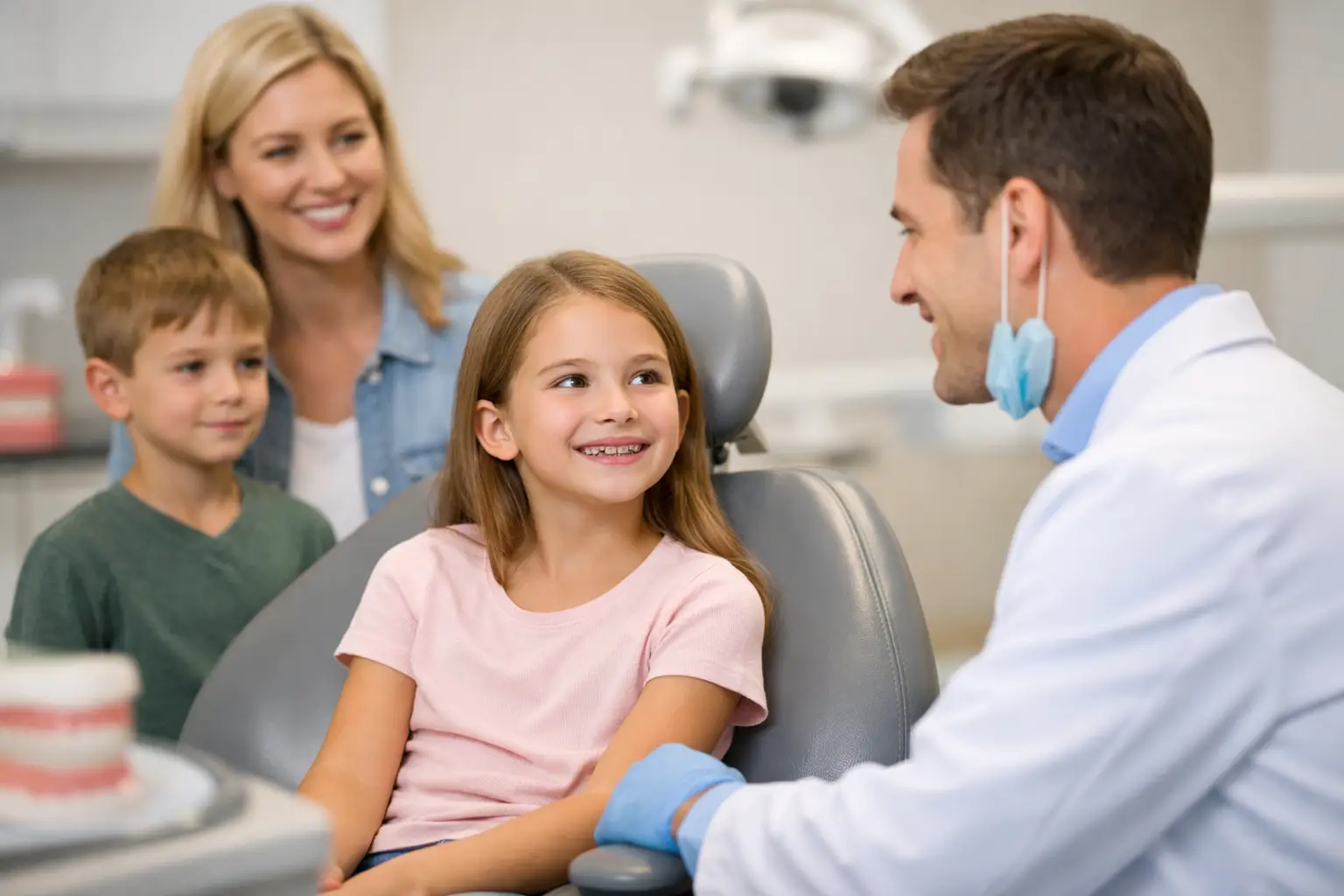
A lot of parents expect orthodontic treatment to start in the teen years, so it can be surprising to hear this question much earlier: when should kids see orthodontist professionals for the first time? In most cases, the best time for an initial orthodontic evaluation is around age 7. That does not mean your child will need braces right away. It means you can catch developing issues early, get clear guidance, and make decisions with less stress.
For many families, that first visit is more about reassurance than treatment. Some children are growing exactly as expected. Others may have bite or jaw concerns that are easier to manage when a child is still developing. The value of an early check is not that every child needs early treatment. The value is knowing what is happening and what to watch.
When should kids see orthodontist specialists for the first time?
The American Association of Orthodontists recommends an orthodontic checkup by age 7, and there is a practical reason for that timing. By then, many children have a mix of baby teeth and permanent teeth. That gives an orthodontist a better view of how the bite is developing, whether permanent teeth are coming in properly, and whether the jaws are growing in a balanced way.
At age 7, problems can show up even if a child still looks too young for braces. A narrow upper jaw, a crossbite, crowding, extra spacing, or a jaw that shifts to one side may already be visible. Some concerns are subtle and easy for parents to miss because kids rarely complain about them. Others look minor now but can become harder to treat later.
That said, age 7 is a guideline, not a hard rule. If your child is younger and you notice something unusual, it is reasonable to schedule a visit sooner. If your child is older and has never seen an orthodontist, it is still absolutely worth getting an evaluation. Helpful timing is better than perfect timing.
Why early orthodontic visits matter
Early evaluations are about timing, not pressure. A good orthodontist is not looking for reasons to start treatment unnecessarily. They are looking for the right moment to help, or the right moment to simply keep an eye on growth.
Growth can work in your child’s favor when certain problems are caught early. If the jaws are not lining up well, or if the bite is causing uneven wear and tear, treatment during the growing years may reduce the complexity of care later. In some cases, early intervention can create space for erupting teeth, guide jaw development, or lower the risk of damage to prominent front teeth.
There is also a comfort factor for families. Parents often feel more at ease when they understand what is normal, what is not, and what the next step should be. Instead of waiting and wondering, you get a treatment plan or a simple monitoring schedule with clear expectations.
Signs your child may need an orthodontic evaluation sooner
Some children need an orthodontic exam before age 7 because there are already visible signs that something is off. One common sign is early or late loss of baby teeth. While every child develops at a different pace, teeth that are coming in much earlier or much later than expected can point to spacing or eruption issues.
Another sign is difficulty biting or chewing. If your child avoids certain foods, bites their cheek often, or seems to struggle with normal chewing, the bite may not be functioning well. Mouth breathing, thumb sucking beyond the toddler years, or speech concerns can also affect dental and jaw development.
You may also notice teeth that stick out, teeth that do not meet properly, or jaws that seem unbalanced. Some children have a crossbite where the upper teeth fit inside the lower teeth. Others have a deep bite, open bite, or crowding that is already becoming obvious. Jaw shifting, clicking, or facial asymmetry can be worth evaluating too.
If you are unsure whether a concern is significant, that is exactly why an orthodontic consultation can help. It turns guesswork into a plan.
What happens at the first orthodontic visit?
For parents who have never taken a child to an orthodontist, the unknown is often the stressful part. The first visit is usually straightforward and low pressure. It commonly includes a visual exam, digital imaging, and a discussion about how the teeth and jaws are developing.
An orthodontist will look at tooth alignment, bite position, jaw growth, spacing, and eruption patterns. They may also ask about habits like thumb sucking, breathing patterns, grinding, or family history of orthodontic issues. If advanced imaging is used, it can help show the position of teeth that have not fully erupted yet and give a more complete picture of growth.
Just as important, parents should leave with a clear explanation. Sometimes the recommendation is to start treatment soon. Sometimes it is to come back in six to twelve months for observation. And sometimes the message is simple: everything looks good right now.
That kind of clarity matters. Families do better when they understand not just what is recommended, but why.
Does an early visit mean early braces?
Not usually. This is one of the biggest misconceptions around orthodontic care for kids. An early evaluation does not automatically lead to braces or appliances.
Many children who visit at age 7 do not begin active treatment right away. They may enter a monitoring phase where the orthodontist checks growth and tooth eruption over time. This approach can be incredibly helpful because it avoids unnecessary treatment while still keeping an eye on changes that matter.
When early treatment is recommended, it is generally because there is a meaningful reason to act during growth. That could include correcting a crossbite, helping make room for permanent teeth, reducing the effects of a harmful oral habit, or addressing a jaw development issue while it is still more responsive to treatment.
There are trade-offs to consider. Some children benefit from two phases of treatment, with early care followed by braces later. Others do better waiting until more permanent teeth come in and completing treatment in one phase. The right path depends on the child, the bite, the timing of growth, and the goals of treatment.
Common problems an orthodontist may spot early
Parents often think of crooked teeth first, but orthodontics is about more than appearance. A child can have teeth that look fairly straight and still have a bite issue that deserves attention.
Crowding is common, especially when there is not enough room for adult teeth to erupt properly. Crossbites can affect how the jaws grow and how the teeth wear down over time. Overbites and underbites may influence chewing, speech, and facial balance. Protruding front teeth can be more vulnerable to injury, especially in active kids.
An orthodontist may also identify impacted teeth, abnormal eruption patterns, or signs that jaw growth is not progressing symmetrically. None of these findings automatically mean urgent treatment, but they do shape the best timeline for care.
How parents can make the decision easier
If you are wondering whether now is the right time, you do not need to have all the answers before scheduling a consultation. In fact, a lot of stress comes from feeling like you should know more than you do. You do not. That is the orthodontist’s job.
What helps most is paying attention to patterns. Is your child having trouble chewing? Are the teeth coming in crowded or unevenly? Is there a visible bite issue, mouth breathing, or a habit that has continued longer than expected? Even if the answer is maybe, it is enough to justify a professional opinion.
It also helps to choose a practice that explains things clearly and does not rush families into treatment. A child’s first orthodontic experience should feel supportive, not intimidating. That matters for parents, and it matters for kids who may already feel nervous about dental visits.
For families in Westminster and nearby communities, seeing a specialist early can bring a lot of peace of mind. At 1st Impressions Orthodontics, that early guidance is meant to make treatment feel easier, not more complicated.
The best time to schedule an orthodontic evaluation is usually before a problem becomes obvious to everyone else. If your child is around age 7, or if you are noticing bite or growth concerns sooner, a simple visit can answer the question clearly and help you move forward with confidence.