
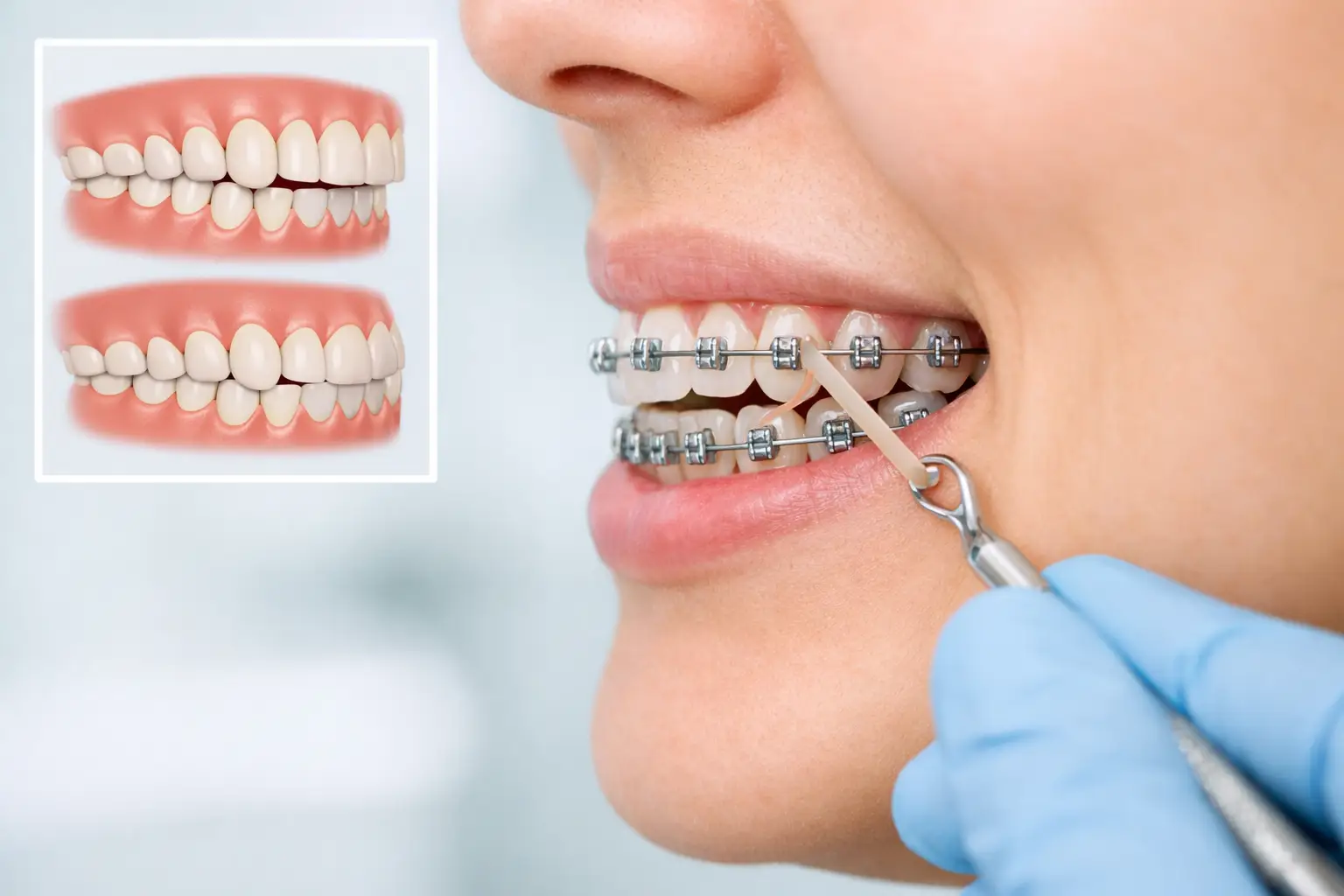
If your teeth seem straight enough but your bite still feels off, you are not imagining it. Many people are surprised to learn that bite issues can affect chewing, speech, jaw comfort, and even tooth wear long before they become obvious in photos. That is exactly why understanding how braces fix bite problems matters – treatment is not just about a nicer smile, but about getting your teeth and jaws to work together the way they should.
What a bite problem really means
Your bite is the way your upper and lower teeth meet when you close your mouth. Ideally, those teeth fit together in a balanced, functional way. When they do not, orthodontists call it a malocclusion. That can show up as an overbite, underbite, crossbite, open bite, or crowding and spacing that throws off the way the teeth come together.
Some bite issues are easy to spot. A child may have front teeth that stick out, or an adult may notice the lower teeth sit too far forward. Others are more subtle. You might grind certain teeth down faster, bite your cheek often, or feel tension in your jaw without realizing your bite is part of the problem.
Bite problems can develop for different reasons. Genetics often play a major role, especially when the jaws are different sizes or the teeth erupt in less-than-ideal positions. Habits like thumb sucking, early loss of baby teeth, or long-term mouth breathing can also influence how the bite develops.
How braces fix bite problems over time
Braces work by applying gentle, controlled force to the teeth. That pressure stimulates the bone around the roots, allowing teeth to move into healthier positions. It sounds simple, but the planning behind it is precise. Every small adjustment is designed to improve how the teeth fit together, not just how they look in a mirror.
When people ask how braces fix bite problems, the answer is usually a combination of tooth movement, arch coordination, and timing. Braces can tip teeth, rotate them, move them bodily through the bone, and help create the space needed for proper alignment. As the teeth shift, the upper and lower arches begin to fit together more evenly.
In some cases, the bite problem is mostly dental, meaning the teeth themselves are in the wrong positions. In other cases, there is a skeletal component involving jaw growth or jaw size. Braces can still help significantly, but the treatment approach may need to be more customized, especially for growing children or adults with more complex issues.
Different bite problems braces can correct
Overbite and excessive overjet
People often use these terms interchangeably, but they are not exactly the same. An overbite describes vertical overlap, when the upper front teeth cover too much of the lower front teeth. Overjet refers to horizontal distance, when the upper teeth project too far forward.
Braces can improve both by repositioning the front teeth and coordinating the back teeth so the bite closes more evenly. Depending on the case, treatment may also involve elastics or other appliances that guide the relationship between the upper and lower arches.
Underbite
An underbite happens when the lower teeth or jaw sit in front of the upper teeth. Mild cases may be corrected with braces and elastics alone. More significant underbites can be more complex, especially if jaw structure is the main cause.
For children and younger teens, timing can make a big difference because growth may still be guided. For adults, braces can still improve function and alignment, but some severe skeletal underbites may need a combination of orthodontics and jaw surgery. That does not mean every underbite becomes a surgical case. It means honest diagnosis matters.
Crossbite
A crossbite occurs when some upper teeth sit inside the lower teeth instead of outside them. This can happen in the front or back of the mouth. Left untreated, crossbites can contribute to uneven tooth wear, gum stress, and shifting of the jaw when biting.
Braces can correct crossbites by moving teeth into more stable positions and widening or coordinating the arches when needed. In younger patients, expanding the upper arch may be part of the plan.
Open bite
With an open bite, the upper and lower teeth do not touch properly when the mouth closes, often leaving a gap between the front teeth. This can make biting into foods difficult and may affect speech.
Braces help by bringing the teeth into better vertical alignment. The exact strategy depends on the cause. If tongue posture or oral habits contributed to the open bite, those factors may need attention too. Moving the teeth without addressing the habit can make relapse more likely.
Crowding and spacing that affect the bite
Even when the main complaint is crooked teeth, the real issue may be functional. Teeth that are crowded can hit too early, trap food, or push neighboring teeth out of balance. Spacing can also affect how the bite settles.
Braces organize the teeth within each arch so contact points are more even and predictable. That often improves both comfort and appearance at the same time.
Why braces do more than straighten teeth
A common misconception is that braces are cosmetic while bite correction is separate. In reality, the two are closely connected. Straightening teeth is often part of fixing the bite because each tooth has a job to do. When teeth are out of place, that job becomes harder.
A better bite can reduce abnormal wear on enamel, lower the chance of chipping certain teeth, and make chewing more efficient. Some patients also notice that speech feels clearer or that jaw strain improves once the bite is more balanced. Results vary, of course. Braces are not a cure-all for every jaw symptom, and not every click or ache is caused by bite problems alone. Still, proper alignment can remove one major source of stress from the system.
What the process looks like
Treatment starts with a careful exam, photos, and digital imaging. This is where an orthodontist looks beyond the obvious and evaluates how the teeth, roots, bone, and jaws relate to one another. In a modern practice, 3D imaging can be especially helpful for seeing the full picture and building a more precise plan.
Once braces are placed, the early phase often focuses on alignment and leveling. As treatment progresses, more detailed bite correction begins. That may include wire changes, elastics, springs, or other tools to guide the teeth into the right relationship.
This part requires patience. Teeth do not move safely overnight, and the bite often looks temporarily uneven while one area is being corrected before another catches up. That can feel frustrating, especially for teens and adults who want quick results, but controlled movement is what protects the teeth and supporting bone.
It depends on age and the type of problem
Children, teens, and adults can all benefit from orthodontic treatment, but the approach is not identical.
For younger children, early orthodontic care can sometimes guide jaw development and make future bite correction simpler. This does not mean every child needs braces right away. It means certain bite problems are easier to address while the mouth and jaws are still growing.
Teens are often ideal candidates because many permanent teeth are in place and growth may still help with correction. Adults can absolutely achieve excellent results too. The difference is that adult treatment may require more careful coordination if there is gum recession, missing teeth, restorations, or a long-standing skeletal imbalance.
Are braces always the only answer?
Not always. Some bite problems can be treated with clear aligners, and some need additional appliances along with braces. A few severe jaw discrepancies may require surgical orthodontics for the most stable result. That is why personalized planning matters so much.
The best treatment is the one that fits the biology of your case and the realities of your life. A working parent may want a plan that minimizes disruption. A teen athlete may care about comfort and protection during sports. A child with anxiety may need a more gradual, supportive approach. Good orthodontic care should account for all of that, not just the X-rays.
Why finishing treatment matters just as much
Once the bite has been corrected, retention protects the result. Teeth naturally want to shift, and without retainers, even a well-finished bite can drift over time. Retainers help preserve both the appearance of the smile and the function of the bite.
That final phase is easy to underestimate, but it is part of the long-term success of treatment. The goal is not simply to move teeth. The goal is to help them stay where they can function comfortably and look their best.
If your bite feels off, the next step is not guessing whether it is serious enough. It is getting a clear, judgment-free evaluation from an orthodontic specialist who can explain what is happening, what can be improved, and what makes sense for your goals. Often, peace of mind starts there.