
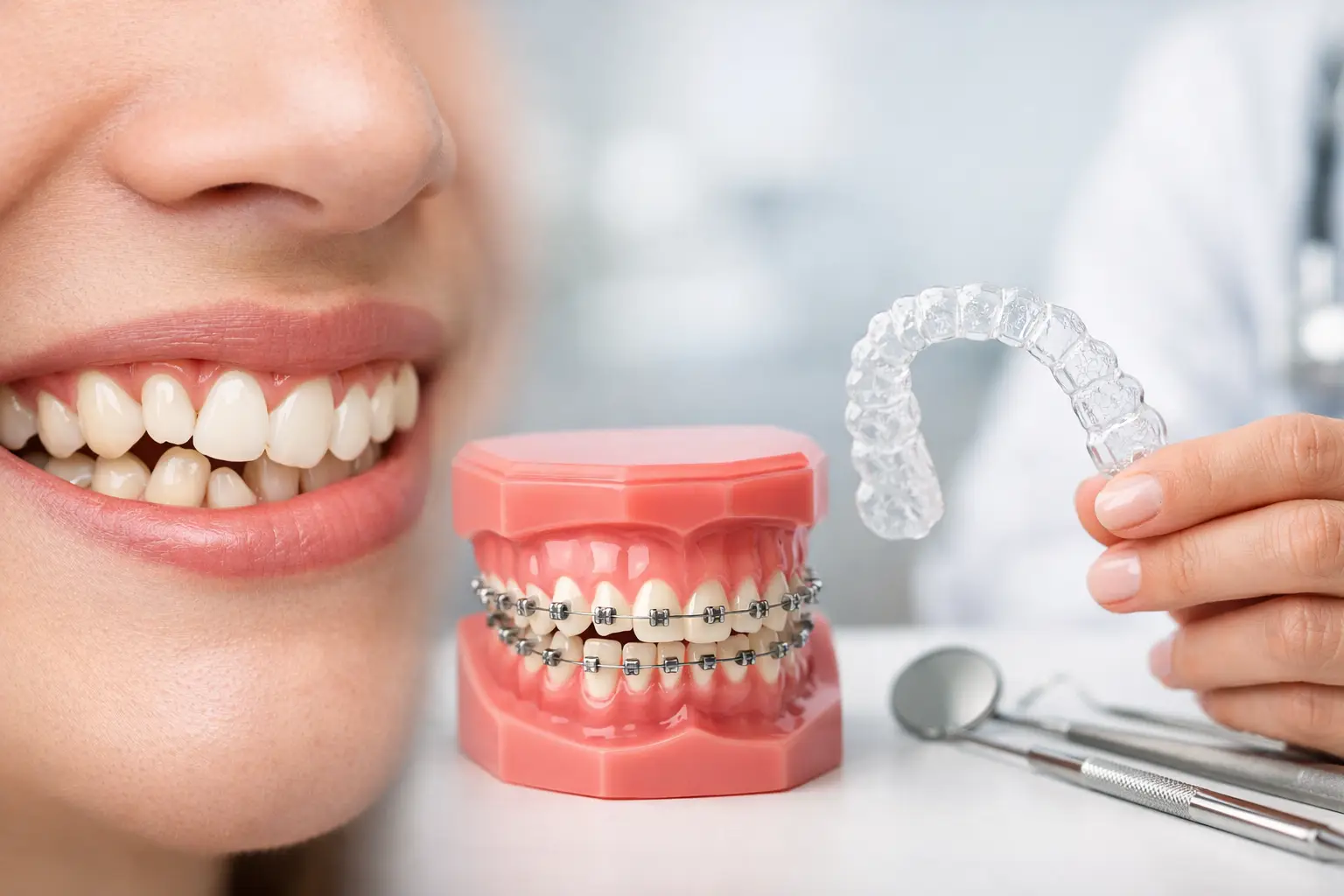
A lot of people wait longer than they want to because they assume fixing crooked teeth means years of noticeable braces, constant appointments, and a major disruption to daily life. The truth is that crooked teeth treatment options are more flexible, more comfortable, and more personalized than many patients expect. The right choice depends on what is causing the crowding or spacing, how your bite fits together, and what works realistically for your schedule and goals.
Some patients are mainly concerned about appearance. Others are dealing with harder-to-ignore issues like teeth that are difficult to clean, uneven wear, jaw tension, or a bite that never feels quite right. When crooked teeth are part of a larger orthodontic issue, the best treatment is not always the least visible or the fastest on paper. It is the one that moves teeth safely, protects long-term oral health, and fits your life well enough that you can stay consistent with it.
What causes crooked teeth?
Crooked teeth can develop for several reasons, and that matters because treatment planning starts with the cause, not just the look of the smile. Genetics often play a role. Some people simply inherit a jaw that is too small for the size of their teeth, which can lead to crowding, overlapping, or teeth erupting out of position.
Habits and development can also affect alignment. Early loss of baby teeth, thumb sucking, tongue posture, impacted teeth, or uneven jaw growth can all change how permanent teeth come in. In some cases, teeth gradually shift later in life due to natural aging, missing teeth, or not wearing retainers after past orthodontic treatment.
That is why a good orthodontic evaluation goes beyond saying, “your teeth are crooked.” It looks at bite function, jaw position, spacing, crowding severity, and the health of the gums and bone supporting the teeth.
Crooked teeth treatment options for different needs
There is no one-size-fits-all answer. The most appropriate treatment depends on age, complexity, compliance, and whether the issue is limited to a few teeth or involves the full bite.
Braces
Traditional braces remain one of the most effective ways to correct mild, moderate, and complex alignment problems. Metal braces give your orthodontist excellent control over tooth movement, which makes them a strong choice when there is significant crowding, bite correction, or rotated teeth that need detailed adjustments.
They are also reliable because they work around the clock. You do not need to remember to put them in or take them out, which can be especially helpful for younger patients and busy teens. The trade-off is visibility. Even though modern braces are smaller and more comfortable than many people remember, they are still the most noticeable option.
Clear braces
Clear braces function similarly to metal braces but use tooth-colored or translucent brackets for a more subtle appearance. Many older teens and adults like this option because it offers the control of braces with a less obvious look.
The main trade-off is that clear braces can be a little more delicate and may stain if they are not cared for properly. Still, for patients who want fixed treatment without the shine of metal, they can be a very practical middle ground.
Invisalign clear aligners
For many patients, Invisalign is one of the most appealing crooked teeth treatment options because it is removable, discreet, and designed for convenience. The aligners are custom made to fit closely over your teeth and are switched out in a planned sequence to guide movement over time.
This can be a great fit for adults and teens who want flexibility for work, school, sports, or social events. Eating is easier because you remove the aligners at mealtimes, and brushing and flossing are usually simpler than with braces.
But Invisalign is not just about appearance. It still requires discipline. Aligners need to be worn as directed for most of the day, and results depend heavily on consistency. For some complex bite issues, braces may still offer better control or a more efficient path. A specialist can tell you whether clear aligners are the right tool for your specific case rather than just a popular option.
Early orthodontic treatment
Children do not always need full treatment right away, but some benefit from early interceptive orthodontics before all permanent teeth come in. This approach can help guide jaw development, make space for erupting teeth, reduce the risk of impaction, or address bite problems while a child is still growing.
Early treatment does not mean every child gets braces young. Often, it means monitoring growth carefully and stepping in only when timing can make a real difference. For families, this can prevent bigger problems later or reduce the complexity of future treatment.
Retreatment for shifted teeth
Many adults had braces years ago and assume they have missed their chance because their teeth moved back. Retreatment is common. If relapse has caused crowding or spacing, a new orthodontic plan can often improve alignment again, sometimes with clear aligners and sometimes with braces.
This is also where retainers matter. Once teeth are corrected, retention is what helps protect the result. If you are exploring treatment for a second time, the long-term plan should include realistic retainer guidance, not just active tooth movement.
How bite problems affect treatment choices
Crooked teeth are not always only a cosmetic concern. Sometimes what looks like simple crowding is tied to a deeper bite issue such as an overbite, underbite, crossbite, or open bite. When the bite is off, treatment may need to do more than straighten visible front teeth.
This is where personalized planning makes a big difference. If your teeth look straighter but your bite is still unstable, you may continue to deal with uneven wear, clenching, or discomfort. Digital imaging and 3D records can help map tooth and jaw position more precisely, which supports a treatment plan that is both efficient and accurate.
What to expect during evaluation and planning
A consultation should leave you feeling informed, not pressured. A thorough orthodontic exam typically includes photos, digital scans or impressions, and X-rays or 3D imaging when needed. These tools help identify not just where the teeth are now, but how they can move safely.
From there, your orthodontist can explain whether treatment should start now, what options fit your case, how long treatment may take, and what level of maintenance is involved. This is also the time to talk openly about lifestyle concerns. If you travel often, have a teen involved in sports, or want the most discreet option possible, those details matter.
Good treatment planning balances clinical precision with real-life follow-through. The best option is not simply the one that looks best in a brochure. It is the one you can successfully stick with.
Choosing between braces and clear aligners
This is one of the most common decisions, and there is no universal winner. Braces tend to be the stronger choice for more complex movement and for patients who may struggle with compliance. Clear aligners are often ideal for people who value removability, appearance, and easier hygiene.
If you are deciding between the two, ask practical questions. How complex is the tooth movement? How important is a low-profile look at work or school? Will you reliably wear aligners as directed? Are there bite issues that need more control? Those answers usually point toward the best fit faster than trends or social media opinions.
In a modern specialty orthodontic office, both options can be delivered with a high level of precision. What matters most is whether the plan is customized to your bite, your goals, and your daily routine.
When to seek treatment
If crooked teeth are making you self-conscious, harder to clean, or uncomfortable to bite with, it is reasonable to schedule an evaluation. You do not need to wait for things to get worse. Children should also be assessed early enough to catch developmental concerns, even if treatment is not immediately needed.
For adults, there is no age limit on wanting a healthier, more confident smile. Many people in Westminster and nearby communities are surprised to learn that modern orthodontic care can be straightforward, efficient, and much more manageable than they expected.
The next step does not have to feel overwhelming. With clear guidance, thoughtful planning, and treatment built around your needs, crooked teeth can be corrected in a way that feels both comfortable and worth it.