
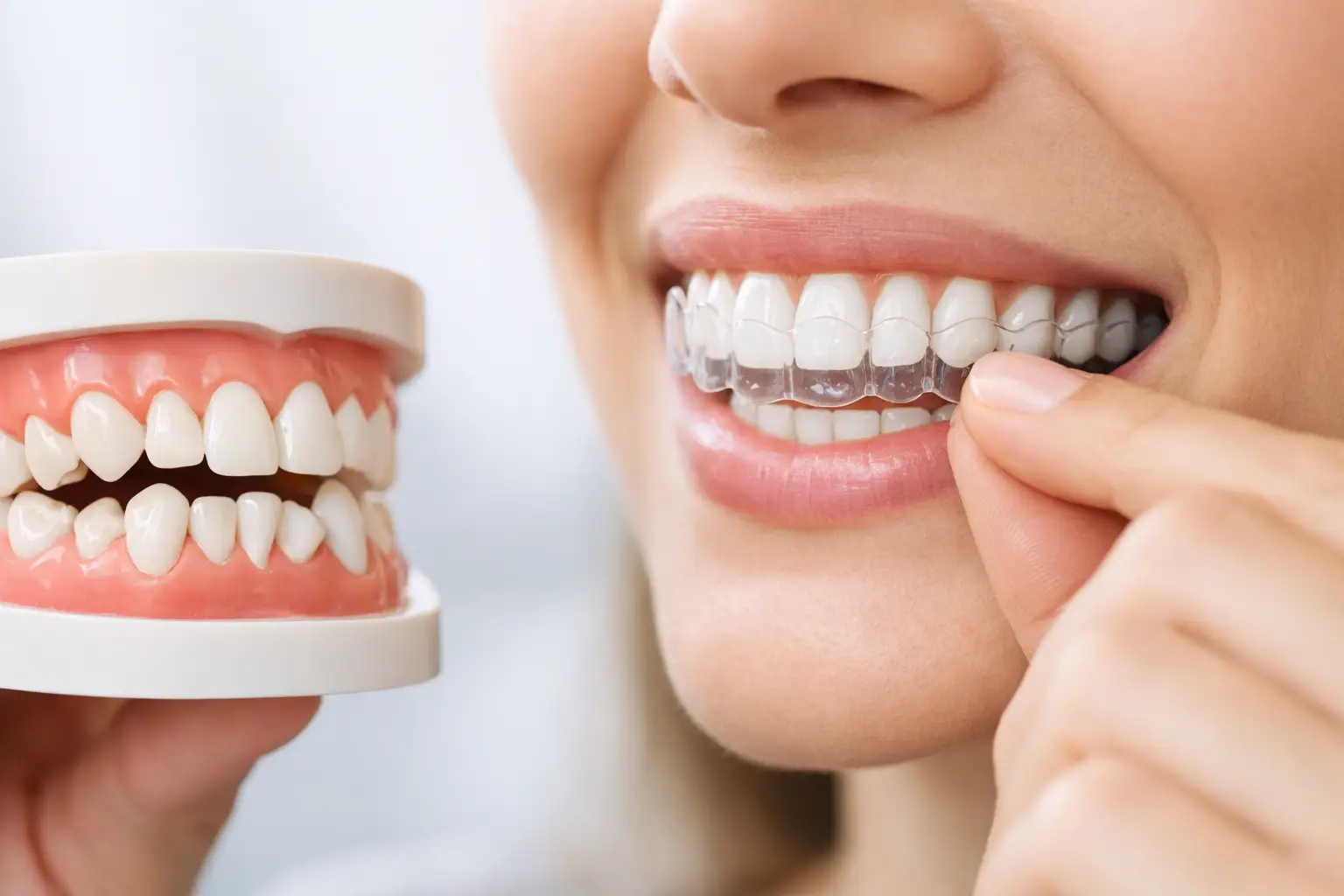
A lot of people look at a set of clear aligners and wonder how something that thin can actually move teeth. It is a fair question. If you are considering treatment for yourself or your teen, understanding how clear aligners straighten teeth can make the whole process feel a lot less mysterious – and a lot easier to trust.
Clear aligners are not simply plastic covers for your teeth. They are carefully designed orthodontic appliances that apply gentle, controlled force over time. That force encourages teeth to shift through the bone into better positions. The process is precise, gradual, and based on a treatment plan created around your individual smile and bite.
How clear aligners straighten teeth over time
Teeth are held in place by more than just the part you can see above the gums. Each tooth sits in bone and is supported by a ligament that allows for small, guided movement when steady pressure is applied. Clear aligners take advantage of that natural biological process.
Each aligner tray is shaped a little differently from the one before it. When you wear a tray, it places pressure on specific teeth that need to move. On one side of a tooth, the bone begins to break down slightly to make room. On the other side, new bone forms to support the tooth in its new position. This is how orthodontic movement works whether you are wearing braces or aligners.
The key difference is how the force is delivered. With braces, brackets and wires create continuous pressure. With clear aligners, the pressure comes from a snug-fitting custom tray that is engineered to guide very specific movements in a planned sequence.
That is why treatment is usually broken into stages. You wear one set of aligners for about one to two weeks, then switch to the next set. Each new tray continues the movement started by the one before it until your teeth reach the desired positions.
What clear aligners are actually designed to do
Clear aligners can do more than many people expect. They are often used to correct crowding, spacing, mild to moderate bite issues, and teeth that are tipped, rotated, or slightly out of line. For many teens and adults, aligners can create excellent cosmetic improvement while also addressing function.
Still, not every movement is equally simple. Some tooth movements are very predictable with aligners, while others can be more challenging. Small gaps, mild crowding, and straightforward alignment issues often respond well. More complex problems, such as severe bite discrepancies, major tooth rotations, or significant vertical changes, may require additional tools or may be better treated with braces.
This is where a specialist evaluation matters. The question is not whether aligners work in general. The real question is whether they are the right tool for your specific teeth, bite, goals, and timeline.
The role of digital planning in clear aligner treatment
Modern clear aligner treatment starts long before the first tray is worn. Digital scans, photos, and sometimes 3D imaging help your orthodontist map out tooth movement in detail. Instead of relying on guesswork, your provider can evaluate how each tooth should move, in what order, and by how much.
That planning is one of the biggest reasons aligner treatment has become so effective. Every tray is manufactured to reflect a stage of your treatment plan. In other words, the aligners are not making decisions on their own. They are carrying out a prescription.
A well-designed plan also accounts for the fact that teeth do not always move exactly as predicted. Biology is not perfectly uniform. Some patients respond quickly, while others need refinement trays or small adjustments along the way. That does not mean treatment is failing. It means your orthodontist is monitoring progress and fine-tuning the process to keep your results on track.
Why attachments are sometimes needed
If you have seen people with clear aligners and noticed tiny tooth-colored bumps on their teeth, those are attachments. They are one of the ways orthodontists make aligners more effective.
Attachments give the tray extra grip so it can guide more complex movements. Think of them as small handles that help the aligner push or pull with better control. They are often used for rotations, root movement, or teeth that need more than a simple tip into place.
Some patients are surprised to learn that clear aligner treatment is not always completely invisible. Attachments can make the aligners a little more noticeable up close. Even so, they are usually subtle, and many patients find them far less visible than braces. More importantly, they help improve precision and results.
Wear time is what makes the system work
One of the biggest advantages of clear aligners is that they are removable. One of the biggest challenges is also that they are removable.
Aligners generally need to be worn 20 to 22 hours a day to work as planned. Taking them out for meals, brushing, and special occasions is fine. Leaving them out for long stretches on a regular basis is not. If the trays are not in place enough, teeth will not track properly, and treatment can slow down or become less predictable.
This is why aligners can be a great fit for responsible teens and adults who want flexibility, but they do require consistency. For some patients, braces are the simpler option because they are always working. For others, the convenience of being able to remove aligners is exactly what makes treatment manageable.
How clear aligners compare with braces
When patients ask how clear aligners straighten teeth compared with braces, the honest answer is that both methods rely on controlled force and careful planning. The difference is in how that force is delivered and which cases each method handles best.
Clear aligners are popular because they are discreet, smooth, and easy to remove for eating and oral hygiene. Many adults and teens appreciate that they can keep brushing and flossing normally and avoid food restrictions. For school, work, and social settings, that matters.
Braces, however, can offer better control for certain complex movements and severe bite corrections. They may also be the better choice for patients who do not want the responsibility of remembering to wear trays all day. Neither option is automatically better across the board. The right choice depends on your case, your habits, and what kind of treatment experience you want.
What treatment feels like
Clear aligners should not cause sharp pain, but pressure is normal, especially when switching to a new tray. That pressure is a sign that the aligner is doing its job. Most patients describe it as tightness or soreness for a day or two rather than constant pain.
Speech can feel slightly different at first, and the trays may take a few days to feel natural. There is an adjustment period, but most people adapt quickly. If an edge feels rough or a tray does not seem to fit well, your orthodontic team can help. Comfortable treatment is not just about getting through the process. It also makes it easier to stay consistent.
Who is a good candidate for clear aligners
Clear aligners are often a strong option for adults and teens who want a more discreet treatment experience. They can work very well for people with mild to moderate crowding or spacing and for patients who are committed to wearing them as directed.
They may be less ideal for very young children, patients with significant skeletal bite problems, or anyone who knows they are likely to forget the trays for hours at a time. Some complex cases can still be treated with aligners, but they may involve attachments, elastics, refinements, or a longer timeline than a simpler case.
That is why personalized evaluation matters so much. A custom plan should reflect your bite, your goals, and your lifestyle – not just what is trending.
The last step is keeping teeth in place
Moving teeth is only part of treatment. Keeping them there is just as important. Once aligner treatment is complete, retainers help hold your new smile in position while the surrounding bone and tissues stabilize.
Without retention, teeth can gradually drift. That does not mean treatment failed. It just means teeth naturally have a memory of where they started. Wearing retainers as instructed protects the time and investment you put into treatment.
For many patients in Westminster and nearby communities, that final phase brings a lot of relief. The active movement is done, your smile feels more balanced, and your job becomes maintaining the result rather than chasing it.
If you have been curious about clear aligners, the most helpful thing to remember is this: they do not move teeth by magic or by pressure alone. They work because skilled orthodontic planning, careful monitoring, and your day-to-day consistency all come together. When those pieces are in place, clear aligners can be a comfortable, precise way to create a healthier smile that feels like your own from the start.