
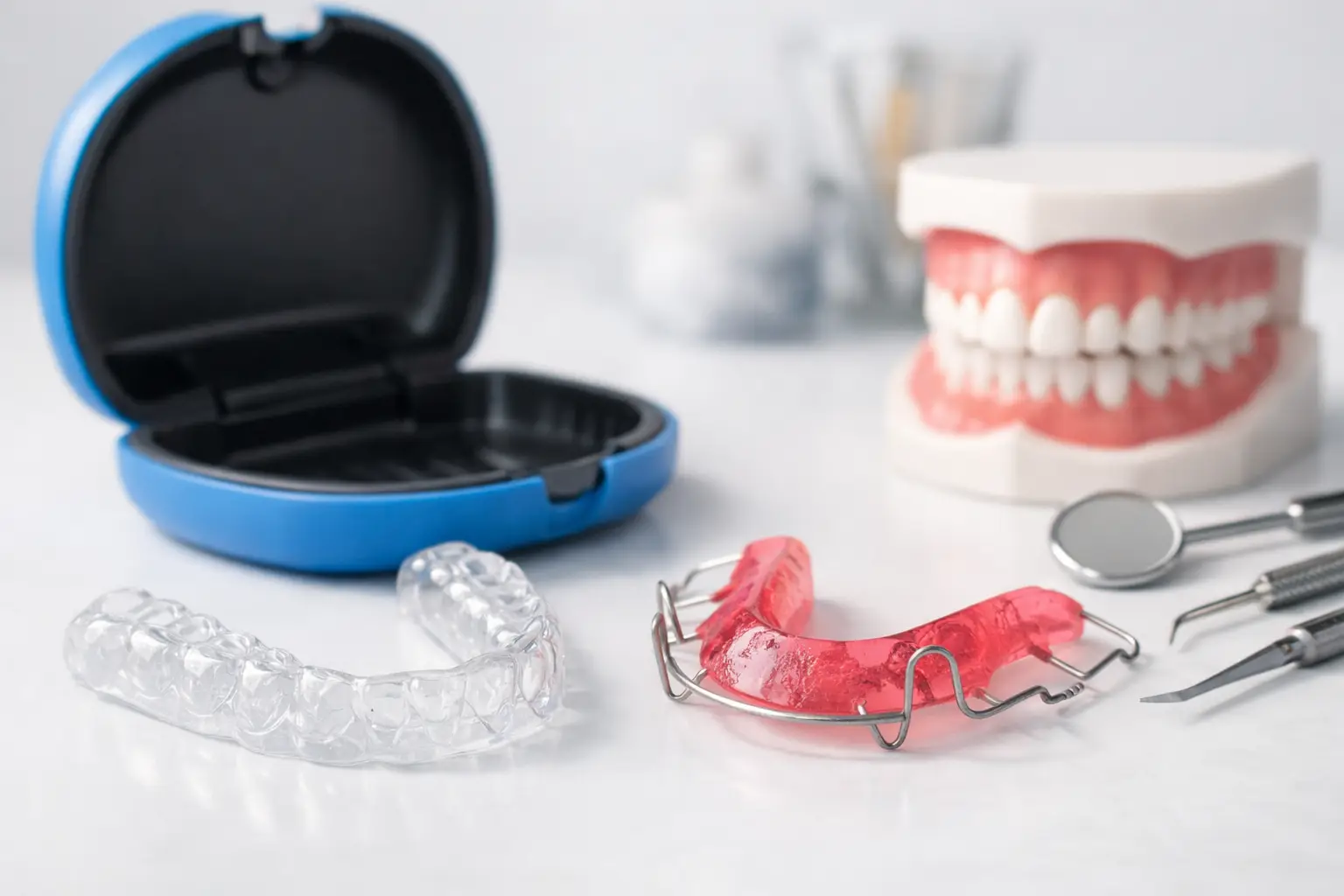
You finally finish braces or Invisalign, and it feels like the hard part is over. Then your orthodontist hands you a retainer and explains that this small appliance now has a very big job. A good guide to orthodontic retainers starts with one simple truth: retainers are what help keep your teeth where treatment moved them.
That can feel frustrating if you were hoping to be completely done. But retainers are not a setback. They are the protection plan for the time, money, and effort you already invested in your smile. When you understand how they work, which type fits your needs, and how to care for them, wearing a retainer becomes much easier to manage.
Why retainers matter after orthodontic treatment
Teeth are not set in concrete. After braces or clear aligners move them, the bone and soft tissues around them need time to stabilize. Even after that adjustment period, teeth can still shift over the years due to normal biting forces, aging, grinding, and habits like tongue thrusting or inconsistent retainer wear.
That is why retention matters so much. Without it, even beautifully finished orthodontic results can begin to change. Sometimes the shift is minor. Sometimes it is enough to affect crowding, spacing, or bite alignment in ways patients notice quickly.
For children, teens, and adults, the goal is the same – protect the result. The details, though, can vary depending on age, treatment history, and how likely someone is to wear a removable retainer consistently.
Guide to orthodontic retainers: the main types
There is no single best retainer for every patient. The right choice depends on your smile, your bite, your lifestyle, and how your orthodontist wants to maintain your result.
Removable clear retainers
These are thin, transparent retainers that fit snugly over the teeth. Many patients like them because they are discreet and easy to wear. They look similar to clear aligners, which makes them a familiar option for people who finished Invisalign or another clear aligner system.
Clear retainers are convenient, but they do require responsibility. Because they can be removed, they can also be misplaced, wrapped in a napkin at lunch, or damaged by heat if left in a hot car. They also tend to wear out over time and may need replacement sooner than some other designs.
Hawley retainers
A Hawley retainer usually has an acrylic base with a thin metal wire across the front teeth. This is a more traditional style, but it is still a very useful option in many cases. It is durable, adjustable in some situations, and often works well for long-term retention.
Some patients are less excited about the visible wire. Others appreciate that Hawley retainers can be sturdy and easier to clean than fully clear retainers. If appearance is your top concern, a clear retainer may feel more comfortable socially. If longevity matters most, a Hawley may be worth considering.
Fixed retainers
A fixed retainer is a thin wire bonded behind certain teeth, often the lower front teeth. Because it stays in place, it does not rely on memory or daily discipline in the same way removable retainers do.
That convenience comes with trade-offs. Fixed retainers need careful flossing and excellent hygiene. They can also loosen or break without being immediately obvious. For some patients, a fixed retainer is the best answer. For others, a removable retainer or a combination approach makes more sense.
How long do you need to wear a retainer?
This is one of the most common questions, and the honest answer is longer than most people expect. Many patients start with full-time wear, then move to nighttime wear after a period recommended by their orthodontist. The exact schedule depends on how recently treatment ended and how stable the tooth movement is.
What matters most is not comparing your plan to someone else’s. A teen who had severe crowding may have different retention needs than an adult who had minor alignment changes. Someone with a history of spacing may need a different strategy than someone with deep bite correction.
In practical terms, long-term nighttime wear is often the safest way to preserve results. Teeth can shift years after treatment, even when everything looked stable at first. If you stop wearing your retainer completely, the odds of unwanted movement usually go up.
What happens if you stop wearing your retainer?
Sometimes nothing dramatic happens right away. That is what catches people off guard. A few missed nights can turn into weeks, and gradual movement starts before it is obvious.
You may notice tightness when you try your retainer again. That tight feeling is often an early sign that teeth have already started shifting. If the retainer still fits with mild pressure, wearing it again as directed may help. If it does not fit, do not force it. Pushing too hard can crack the retainer or put unhealthy pressure on teeth.
This is the point where a quick orthodontic check can save time and frustration. In some cases, a replacement retainer is enough. In others, small corrections may be needed before retention can restart.
Cleaning and caring for your retainer
Retainer care is simple, but consistency matters. A dirty retainer can collect plaque, bacteria, and odor. A damaged retainer may stop fitting properly, which means it stops doing its job.
For most removable retainers, gentle brushing with a soft toothbrush and lukewarm water works well. Some orthodontists also recommend specific cleaning products designed for retainers. Hot water should be avoided because it can warp the material, especially with clear retainers.
It also helps to build a few habits that prevent the most common problems. Always store a removable retainer in its case when it is not in your mouth. Keep it away from pets, because dogs in particular seem to find retainers irresistible. Never wrap it in a tissue during meals unless you are prepared to lose it.
If you have a fixed retainer, cleaning takes a little more attention. Floss threaders or other orthodontic hygiene tools may be needed to clean around the bonded wire. That extra effort is worth it because plaque buildup around a fixed retainer can affect both gum health and the long-term success of your retention.
When should a retainer be replaced?
Retainers do not last forever. Clear retainers can crack, stretch, or become cloudy. Hawley retainers can break or lose their fit. Fixed retainers can debond from a tooth or bend slightly over time.
Signs you may need a replacement include visible damage, a poor fit, increased tightness, rough edges, or a change in how your teeth are sitting together. Even if the issue seems minor, it is smart to have it evaluated early. Waiting too long can allow shifting that makes replacement more complicated.
For busy families and working adults, this is where convenience matters. If you suspect a problem, getting it checked promptly is easier than dealing with retreatment later.
Choosing the right retainer for your lifestyle
The best retainer is not just the one that looks good on paper. It is the one you are actually likely to wear and maintain.
If you want something discreet and are comfortable with careful daily handling, a clear removable retainer may be a strong fit. If you prefer a long-lasting appliance and do not mind a visible wire, a Hawley may serve you well. If compliance is likely to be a challenge, a fixed retainer can be very helpful, especially when paired with regular checkups.
This is also where personalized care matters. A thoughtful orthodontic plan should account for school schedules, sports, work meetings, speech concerns, hygiene habits, and the details of your bite. At a practice like 1st Impressions Orthodontics, retention is not treated like an afterthought. It is part of protecting the precision of the full treatment result.
Common retainer questions patients ask
Patients often want to know whether retainers affect speech, whether they can eat with them in, and whether mild discomfort is normal. For removable retainers, slight speech changes at first are common, but they usually improve quickly with regular wear. They should be removed for eating unless your orthodontist tells you otherwise. Mild pressure when resuming wear can happen, but pain or a retainer that will not seat properly deserves attention.
Another common question is whether one lost retainer really matters. It does. Teeth can begin shifting sooner than many people expect, particularly right after active treatment ends. Replacing a lost retainer promptly is one of the easiest ways to avoid setbacks.
Retainers may not be the exciting part of orthodontic treatment, but they are the part that protects everything you worked for. If you treat your retainer like a long-term partner in your smile, it will quietly do one of the most valuable jobs in orthodontics.