
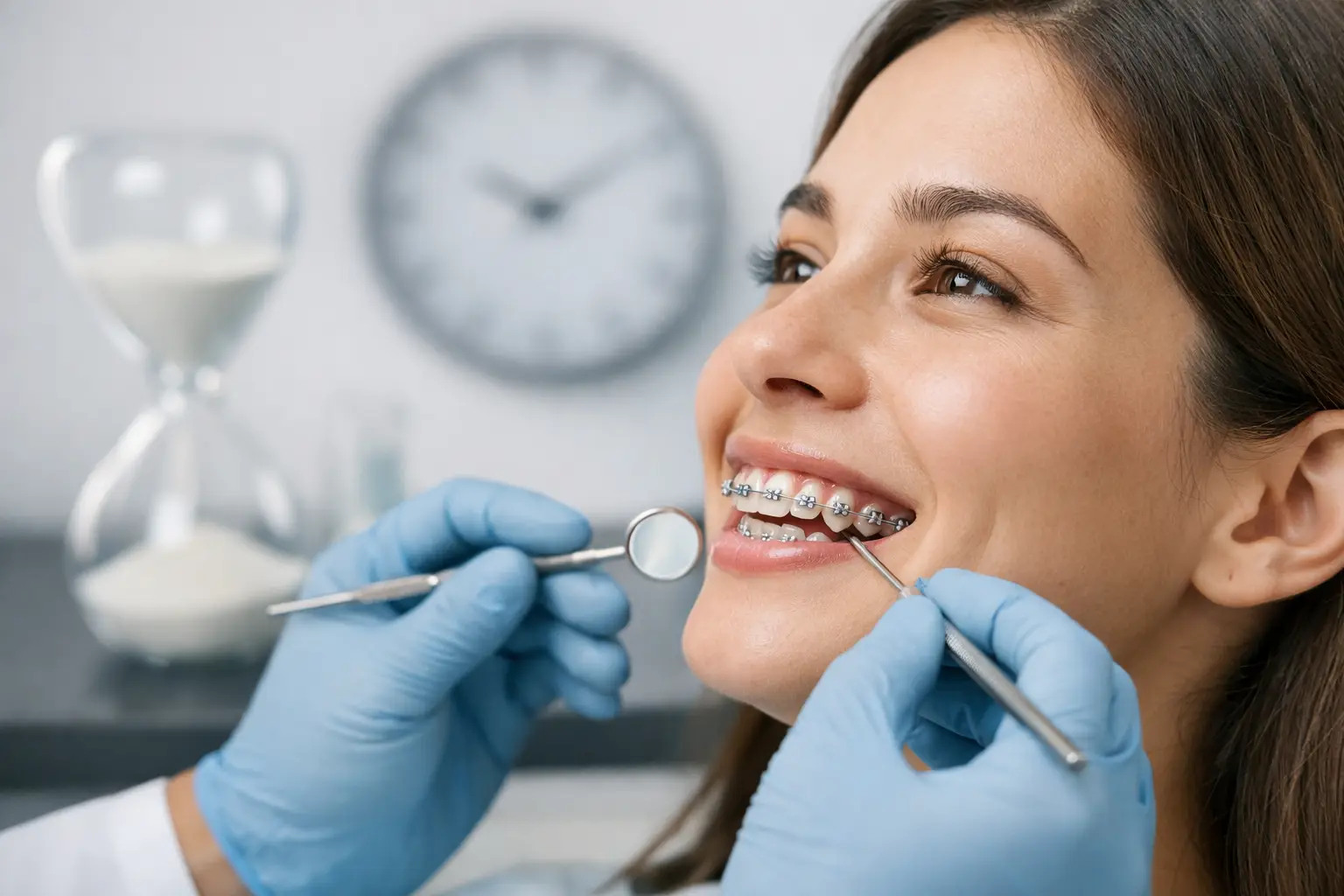
A lot of people ask this question right after learning they need orthodontic treatment, and for good reason. If you are wondering how long do braces take, the honest answer is that most patients wear them for about 12 to 24 months. But that range is only a starting point. Your actual timeline depends on what needs to move, how your bite fits together, your age, and how closely you follow your orthodontist’s instructions.
That may sound broad, but it is also reassuring. Braces are not a one-size-fits-all process. A personalized treatment plan is what makes your results healthier, more stable, and worth the time.
How long do braces take on average?
For many teens and adults, braces treatment lands somewhere between one and two years. Some mild spacing or crowding cases may be finished in 6 to 12 months. More complex cases, especially those involving bite correction, impacted teeth, or significant crowding, can take closer to 24 to 30 months.
The key point is that straightening teeth is only part of the job. Orthodontic treatment also focuses on how your upper and lower teeth meet, how your jaw functions, and how to create a result that lasts. A smile can look straighter before the bite is fully corrected, but stopping early can leave behind problems that affect comfort and long-term stability.
Why treatment time varies so much
Two patients can both get braces on the same day and finish months apart. That does not necessarily mean one treatment went better than the other. It usually means the biology and goals were different from the start.
The complexity of your case
A small gap between front teeth is very different from a deep overbite, crossbite, or severe crowding. When more tooth movement is needed, treatment naturally takes longer. If teeth need to rotate significantly or move through dense bone, progress can be slower than patients expect.
Some cases also involve phases. A child may start with early orthodontic treatment to guide jaw growth or create space, then return for full braces later as more adult teeth come in. In that situation, the total orthodontic journey is longer, but each stage has a specific purpose.
Your age
Children and teens often respond well to orthodontic treatment because they are still growing. That growth can be helpful when correcting bite issues and guiding development. Adults can absolutely get excellent results with braces too, but tooth movement may be a little less predictable or slightly slower because the jaw is fully developed.
That said, age is only one factor. Many adults are excellent orthodontic patients because they stay consistent, keep appointments, and follow directions carefully.
The type of orthodontic issue
Crowded teeth often take time because enough room has to be created before alignment is possible. Bite problems like overbites, underbites, and open bites can add complexity because the orthodontist is coordinating more than just the visible front teeth.
In other words, if your teeth look only mildly crooked, your treatment may still take longer if the bite underneath needs significant correction.
What can make braces take longer?
Most delays are not dramatic, but they do add up. A few missed appointments here and there can stretch treatment more than patients realize.
Poor elastic wear is one of the most common reasons treatment slows down. If your orthodontist gives you rubber bands and asks you to wear them a certain way, that step matters. Elastics are often essential for bite correction, and braces cannot do the full job without them.
Broken brackets and bent wires can also interfere with progress. Hard, sticky, or crunchy foods can damage appliances and interrupt the forces that are moving your teeth. Skipping check-ins has a similar effect. Orthodontic treatment works best when adjustments happen on schedule.
Oral hygiene matters too. If gums become inflamed because brushing and flossing are inconsistent, tooth movement may become less efficient, and in some cases treatment goals may need to be adjusted until the mouth is healthier.
What can help you finish on time?
The best way to stay on track is to treat the process like a partnership. Your orthodontist designs the plan, but your daily habits make a real difference.
Keep your appointments, wear elastics or other appliances exactly as instructed, protect your braces from food damage, and stay consistent with brushing and flossing. If something feels loose or broken, call the office instead of waiting for your next visit.
This is one reason many patients appreciate a practice that uses modern imaging and clear treatment planning. When your care is precise from the beginning and communication is straightforward, it is easier to understand what is happening and what your role is in keeping treatment moving.
Do metal braces work faster than clear braces?
Sometimes, but not always in a way patients would notice. Traditional metal braces are extremely effective and can be a great option for simple and complex cases alike. Clear braces can also deliver excellent results, though in some situations they may require a little more attention because the brackets are more delicate or treatment mechanics differ slightly.
The bigger factor is not usually the bracket color. It is the complexity of the case, the treatment plan, and patient cooperation. A well-managed treatment with clear braces can stay right on schedule. A poorly followed plan with metal braces can run long.
If appearance is a concern, your orthodontist can help you weigh visibility, durability, and treatment goals without overpromising a faster finish just because of the appliance type.
Are braces faster than Invisalign?
This depends on the case. For some mild to moderate alignment issues, Invisalign can be very efficient. For more complex movements, braces may offer more control. Neither option is automatically faster for everyone.
What matters most is choosing the system that fits your orthodontic needs and your lifestyle. If you are likely to forget to wear aligners for the required number of hours each day, braces may actually keep treatment more consistent. If you are disciplined and your case is a good fit, aligners may work beautifully.
A careful consultation is the best way to get a timeline that reflects your actual teeth, not a general internet estimate.
How often will you need adjustments?
Most braces patients visit the orthodontist about every 4 to 8 weeks. These visits are important because they allow your doctor to monitor progress, make wire changes, adjust mechanics, and catch small issues before they turn into bigger delays.
Patients sometimes assume longer gaps between appointments mean treatment is going faster. Usually, it just means your orthodontist has chosen a specific interval based on the stage of movement. Regular monitoring is part of efficient care, not a sign that something is wrong.
What happens after the braces come off?
Finishing treatment is exciting, but it is not the end of the process. Retainers are what protect the time and effort you invested. Without them, teeth can drift.
That does not mean braces failed. Teeth naturally respond to pressure over time, and retention is the standard way to maintain your result. Some patients wear retainers full time at first, then switch to nighttime wear. Your instructions will depend on your case.
If you are asking how long do braces take, it helps to think beyond the day they come off. The goal is not just to finish. The goal is to keep your smile and bite looking and feeling great long after treatment ends.
Getting a timeline you can trust
Online averages can be helpful, but they are still averages. The most reliable answer comes from an orthodontic exam with digital imaging and a customized review of your smile, bite, and goals. That is when you can learn not only how long treatment may take, but also why.
For families and adults trying to plan around school, work, sports, and everyday life, clarity matters. A good orthodontic experience should feel organized, supportive, and realistic from the beginning. At 1st Impressions Orthodontics, that means giving patients clear guidance, personalized care, and a treatment plan built around both precision and comfort.
If braces are in your future, the timeline matters, but so does the quality of the result. A few extra months for a healthier bite and a more stable smile can be well worth it. The right plan is the one that gets you where you want to go with confidence, not just quickly.