
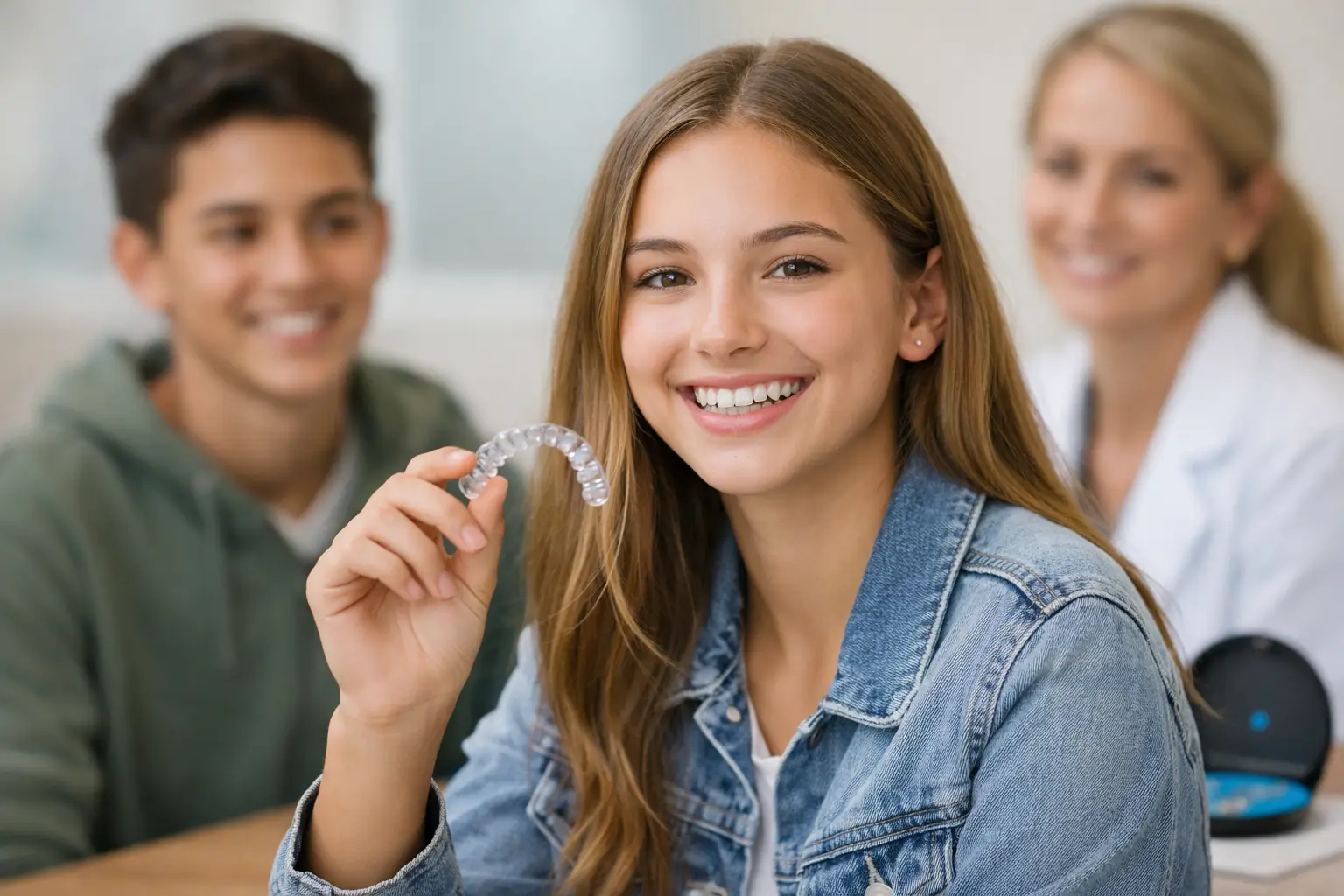
Some teens love the idea of straightening their teeth without brackets and wires. Others love it for one simple reason – fewer people notice. In this Invisalign for teens review, the real question is not whether clear aligners look better than braces. It is whether they fit your teen’s habits, bite needs, and daily routine well enough to deliver the result you want.
That is where many families get stuck. Invisalign for teens can be an excellent option, but it is not automatically the best option for every case. The most helpful review is an honest one, and honest means talking about both the benefits and the trade-offs.
Invisalign for teens review: what it does well
For the right teen, Invisalign can make orthodontic treatment feel more manageable. The aligners are clear, removable, and custom-made to move teeth in planned stages. That alone can lower a lot of the anxiety teens feel about starting treatment.
Appearance is the obvious advantage, but it is not the only one. Comfort matters too. Clear aligners do not have brackets that rub the lips and cheeks, and there are no wires that can poke or break. Most teens still feel pressure when switching to a new set of trays, but many describe that pressure as easier to handle than the soreness that can follow certain braces adjustments.
There is also a convenience factor parents appreciate. Since the trays come out for meals, teens can usually eat the foods they already enjoy without the brace-friendly restrictions that come with popcorn, sticky candy, or hard snacks. Brushing and flossing are often simpler as well, which can make it easier to keep teeth clean during treatment.
For busy families balancing school, sports, activities, and social events, Invisalign can feel less disruptive. A teen can remove aligners briefly for a school photo, band performance, or special event, then put them back in right after. That flexibility is appealing when image and routine both matter.
Where Invisalign for teens can be frustrating
The biggest downside is also the reason Invisalign works well when it works well: it depends on the patient. Aligners need to be worn about 20 to 22 hours a day. If a teen forgets them, leaves them in a napkin at lunch, or keeps them out too long after snacks, treatment can slow down fast.
Braces stay on. Invisalign has to be chosen over and over each day.
That level of responsibility is easy for some teens and surprisingly difficult for others. A very motivated teen may do beautifully with clear aligners. A teen who loses water bottles, hoodies, and homework on a regular basis may need a treatment option that does not rely so much on follow-through.
There can be a speech adjustment at first too. Most teens adapt quickly, but a slight lisp during the first few days with aligners is not unusual. It usually improves as the mouth gets used to the trays.
Another frustration is that aligners need care. They should be cleaned regularly, kept in a case when out of the mouth, and not exposed to hot temperatures that can warp the plastic. None of this is hard, but it is one more routine to maintain.
Is Invisalign as effective as braces for teens?
Sometimes yes. Sometimes no. That answer matters more than any cosmetic benefit.
Invisalign can be very effective for many teens with mild to moderate crowding, spacing, and certain bite concerns. With thoughtful planning and good wear habits, clear aligners can produce excellent results. Modern orthodontic technology has made Invisalign far more capable than many people realize.
Still, some tooth movements are more predictable with braces, especially in more complex cases. Significant bite correction, severe rotations, impacted teeth, or issues that require very precise control may make braces the more efficient and reliable choice. That does not mean Invisalign cannot help in complex situations, only that each case needs a careful evaluation.
This is why a real orthodontic consultation matters. Families often come in thinking the decision is about looks, when it is actually about which system gives the orthodontist the best control for your teen’s specific smile and bite goals.
A practical Invisalign for teens review from a parent’s perspective
Parents usually ask four things: Will it work, will my teen wear it, how long will it take, and how much stress will this create at home?
The first question depends on the diagnosis. The second often decides everything else.
If your teen is organized, appearance-conscious, and motivated to avoid braces, Invisalign may actually improve compliance because they want the treatment to succeed. These teens often wear their aligners consistently and are proud of the progress.
If your teen needs frequent reminders for basic routines, the experience can feel less smooth. Parents may end up policing wear time, checking whether trays are back in after meals, and dealing with misplaced aligners. That does not mean Invisalign is off the table, but it does mean the household should go in with realistic expectations.
Treatment time also varies. Some teens finish on a timeline similar to braces. Others need refinements, which are additional aligners used to fine-tune the result. Refinements are common and not necessarily a sign that something went wrong. Teeth do not always move exactly the way software predicts, especially when aligners are not worn consistently.
Comfort, confidence, and everyday life
One reason families give Invisalign such strong reviews is that it fits into teen life with less visible disruption. That matters more than some adults expect.
The teen years are full of moments when appearance and confidence feel very personal. A treatment option that feels discreet can help some patients start care sooner rather than postponing it out of embarrassment. That emotional side should not be dismissed. When a teen feels comfortable with the process, they are often more engaged in it.
At the same time, convenience has limits. Aligners have to come out before eating or drinking anything other than water. After snacks or meals, teeth should be brushed before the trays go back in when possible. For some teens, especially those who graze throughout the day, that can get annoying.
Athletes often do well with Invisalign, but there are details to consider. For contact sports, a proper mouth guard is still important. Musicians who play certain wind instruments may need a short adjustment period. These are not deal-breakers, but they are worth discussing before treatment starts.
Cost and value: is Invisalign for teens worth it?
Cost is one of the first things families want to know, and the honest answer is that it depends on the complexity of the case, treatment length, and the provider’s approach. In many offices, Invisalign for teens is priced similarly to braces, though fees can vary.
The better question is whether it offers good value for your teen. If clear aligners help a motivated patient stay confident, keep teeth cleaner, and complete treatment successfully, the value can be excellent. If aligners are worn inconsistently and lead to delays, replacement trays, or a switch to braces, that value picture changes.
A good orthodontic team will be transparent about costs, expectations, and what makes the most sense clinically. That kind of guidance matters more than chasing a treatment trend.
Who is a strong candidate for Invisalign for teens?
Teens tend to be the best candidates when they care about the appearance of treatment, can stick to a schedule, and are willing to follow instructions without constant reminders. It also helps when their orthodontic needs fit what aligners can correct efficiently.
The less obvious factor is maturity. Not age on paper, but day-to-day responsibility. Some 13-year-olds are excellent Invisalign patients. Some 17-year-olds are not. A consultation should look at the smile, the bite, and the person wearing the trays.
In a specialty orthodontic setting, that conversation is usually much more precise. With digital imaging and detailed treatment planning, families can get a clearer picture of whether Invisalign is likely to be smooth, frustrating, or somewhere in between.
The verdict on Invisalign for teens
If you want a short answer to this Invisalign for teens review, here it is: it is a great option for the right teen, not a magic upgrade over braces. The best reviews usually come from families who understood the responsibility involved before starting and chose it because it fit both the case and the patient.
When Invisalign is a good match, teens often appreciate the comfort, flexibility, and lower-profile look. When it is not a good match, braces may be the faster, simpler, and more dependable path to a healthy result.
The most reassuring next step is not guessing from photos online or comparing what worked for someone else’s child. It is getting a careful orthodontic evaluation that looks at your teen’s bite, goals, routine, and readiness. The right treatment should feel personalized, not pushed.
A confident smile is important, but so is the experience of getting there. The best choice is the one your teen can actually succeed with.