
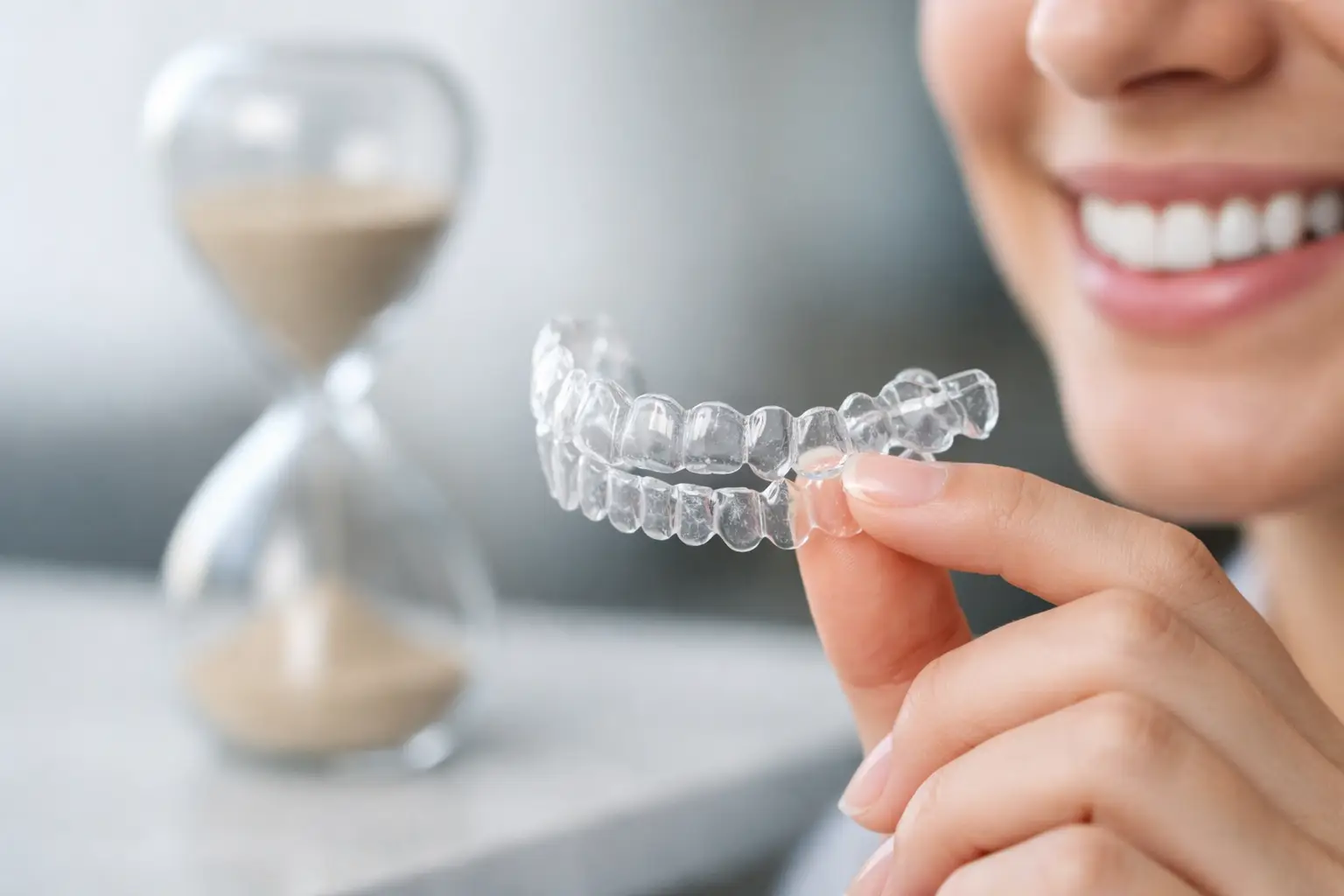
You want a straighter smile, but you also want a real timeline. That is usually the first question people ask: how long does Invisalign take? The honest answer is that Invisalign treatment can be surprisingly efficient, but it is never one-size-fits-all. Some patients finish in a matter of months, while others need more than a year to correct crowding, spacing, or bite problems safely.
If you have been hoping for a simple number, the best starting point is this: many Invisalign cases take about 6 to 18 months. Mild cosmetic adjustments may move faster. More complex cases, especially those involving bite correction, can take longer. The timeline depends on what your teeth are doing now, where they need to go, and how consistently you wear your aligners.
How long does Invisalign take for most patients?
For many teens and adults, Invisalign treatment falls somewhere in the 6- to 18-month range. That is broad, but there is a reason for it. Orthodontic treatment is not just about lining up front teeth so they look better in photos. It also involves moving roots, protecting gum and bone health, and making sure your bite fits together properly.
A patient with a small gap or minor crowding may complete treatment in closer to 6 months. Someone with moderate crowding, rotated teeth, or relapse after not wearing retainers may land closer to 12 months. If there are bigger bite issues, such as overbite, underbite, crossbite, or open bite, treatment may stretch beyond 18 months.
That range is not meant to be vague. It is meant to be realistic. Fast treatment is appealing, but moving teeth too quickly can create problems instead of lasting results.
What affects how long Invisalign takes?
The biggest factor is case complexity. If your teeth need small cosmetic changes, your aligners can usually work through those steps more quickly. If your orthodontist is correcting both appearance and function, treatment naturally takes more time because the movements are more precise and more involved.
Your age can matter, but not always in the way people expect. Teens often do very well with Invisalign because their teeth can respond efficiently to treatment. Adults can also get excellent results, but adult cases sometimes include previous dental work, gum concerns, or more established bite patterns that need careful planning.
Compliance matters just as much as the treatment plan. Invisalign is designed to be worn 20 to 22 hours a day. If aligners stay out too long for meals, coffee, events, or simple forgetfulness, teeth do not track as planned. That can add refinements, delay tray changes, and extend the overall timeline.
The biology of tooth movement also plays a role. Some teeth move exactly on schedule. Others are stubborn. That is normal. Even with advanced digital planning, real teeth do not always follow a computer simulation perfectly.
Why some Invisalign cases move faster than others
Two patients can both start Invisalign on the same day and finish months apart. One may have mild spacing and great aligner wear habits. The other may have crowding, attachments on multiple teeth, and a bite issue that requires slower, more controlled movement.
There is also a difference between cosmetic alignment and comprehensive orthodontic correction. If the goal is simply to make the front teeth look straighter, treatment may be shorter. If the goal is to create a healthy, stable bite that supports long-term comfort and function, that usually takes more planning and more time.
This is where specialist care makes a difference. A carefully designed treatment plan is not just about speed. It is about getting an attractive result that also holds up well after treatment.
How long does Invisalign take with refinements?
Refinements are additional aligners used after the initial series if small adjustments are still needed. They are common and not a sign that anything went wrong. In fact, refinements are often part of producing a polished final result.
If your teeth have improved significantly but need a few more corrections, your orthodontist may take updated scans and order refinement trays. That can add several weeks or a few months, depending on the amount of movement left.
This is one reason patients should be cautious about comparing themselves to online before-and-after posts. The short version of someone else’s treatment rarely shows the full process, including refinements, attachments, elastics, or bite correction.
What can make Invisalign take longer?
The most common cause is inconsistent wear. Invisalign only works when it is in your mouth. Taking aligners out too often or leaving them out for long stretches can slow everything down. If teeth stop tracking correctly, you may need to repeat trays or move more slowly than originally planned.
Missed appointments can also cause delays. Regular check-ins help your orthodontist confirm that teeth are moving safely and efficiently. If something needs to be adjusted, catching it early usually saves time.
Lost or damaged aligners can create setbacks too. So can poor oral hygiene. If gums become inflamed or dental issues come up during treatment, those problems may need attention before you continue.
There is also a practical reality many people do not expect: life happens. Vacations, school schedules, work travel, sports, and big events can affect routines. Invisalign offers flexibility, but successful treatment still depends on steady habits.
How to stay on track during Invisalign treatment
The simplest way to protect your timeline is to wear your aligners exactly as directed. That usually means 20 to 22 hours every day, removing them only for eating, drinking anything other than water, brushing, and flossing.
It also helps to switch trays on schedule, store aligners properly, and keep your follow-up visits. If your orthodontist recommends attachments or elastics, those details matter. They are not extras. They are often what makes certain tooth movements possible.
Patients who do best with Invisalign usually build a routine quickly. They keep a case with them, brush after meals when possible, and avoid treating aligners casually. A little consistency each day can make a big difference over months of treatment.
Is Invisalign faster than braces?
Sometimes, yes. Sometimes, no. Invisalign can be very efficient for mild to moderate cases, especially when patients are consistent. But braces may be the better tool for certain complex movements because they work continuously and do not depend on being removed and replaced correctly.
That does not mean one option is always better. It means the right treatment depends on your teeth, your bite, your goals, and your lifestyle. For a busy adult who wants a discreet option and is committed to wearing aligners properly, Invisalign can be an excellent fit. For a younger patient or someone who may struggle with compliance, braces may offer more predictability.
A good orthodontic consultation should explain that trade-off clearly instead of pushing one system for everyone.
What your consultation can tell you
The most accurate answer to how long does Invisalign take comes from an exam, digital imaging, and a personalized treatment plan. Looking at your smile in the mirror is not enough to estimate timing. Teeth can appear mildly crooked while hiding a more involved bite issue. On the other hand, a smile that feels complicated to you may be more straightforward to treat than you think.
At a consultation, your orthodontist can evaluate crowding, spacing, bite alignment, jaw relationships, and the health of the supporting tissues. From there, you can get a timeline based on your actual needs, not an internet average.
That conversation should also cover what success will require from you. Invisalign is convenient, but it is still active treatment. The more clearly that is explained upfront, the smoother the process tends to be.
A realistic timeline is better than a rushed one
Most patients would love to hear that Invisalign will be finished almost immediately. But the best orthodontic care is not about rushing. It is about moving teeth in a way that looks good, feels comfortable, and stays stable.
If you are considering Invisalign, the most helpful next step is not guessing. It is getting a professional evaluation and a treatment plan built around your smile, your bite, and your schedule. At 1st Impressions Orthodontics, that kind of personalized guidance helps patients feel informed from the start, which makes the whole process easier. The right timeline is the one that gets you to a healthy, confident result without unnecessary stress.