
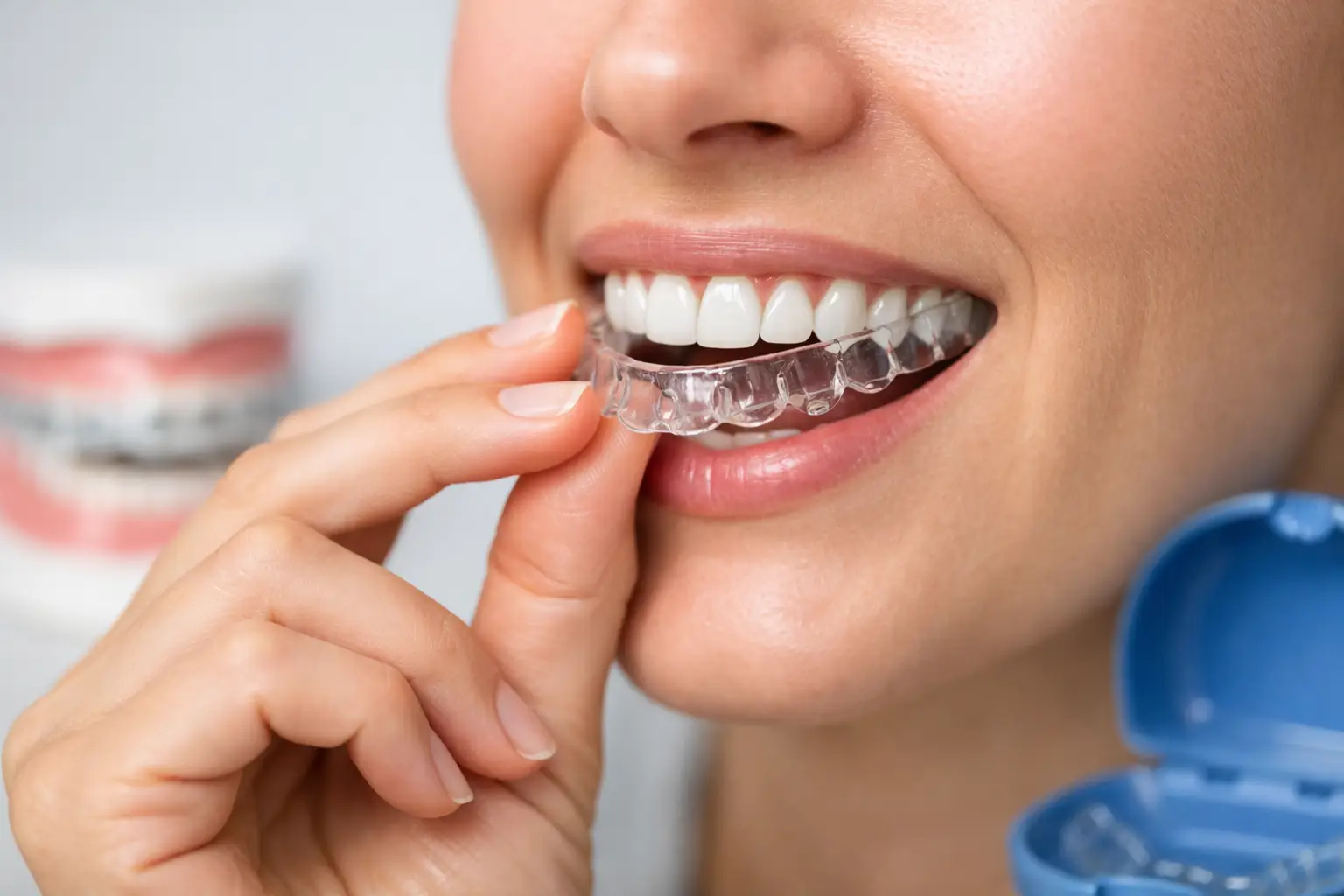
The day your braces come off or your final Invisalign tray is complete is a big moment. Your teeth look straight, your smile feels like yours again, and you may be ready to move on from orthodontic treatment. But this is also when retention begins. Understanding how retainers keep teeth straight helps protect the time, care, and investment that created your new smile.
A retainer is not simply a reminder of treatment. It is an orthodontic appliance designed to hold teeth in their corrected positions while the supporting bone and tissues adapt. Wearing it as directed is one of the most effective ways to preserve your result for years to come.
How Retainers Keep Teeth Straight After Treatment
Teeth are not fixed into the jaw like posts in concrete. They are held in place by bone, gum tissue, and tiny elastic fibers called periodontal ligaments. During braces or clear aligner treatment, gentle, controlled pressure moves teeth through the bone. Once that pressure stops, the surrounding tissues need time to reorganize around the teeth’s new positions.
A retainer applies a passive, stabilizing fit around your teeth. It does not actively move them the way braces or aligners do. Instead, it resists the small forces that can pull teeth away from their newly aligned positions. In the first months after treatment, this support is especially important because your teeth are naturally more likely to shift.
Even after the bone has adapted, teeth can continue to change over time. Everyday forces from chewing, clenching, tongue pressure, natural aging, and changes in the bite can affect alignment. That is why many orthodontists recommend long-term retainer wear, often at night, after the initial full-time retention period.
Straight Teeth Can Shift for More Than One Reason
Relapse is the orthodontic term for teeth moving after treatment. It is common, and it is not necessarily a sign that someone did anything wrong. Some people are more prone to movement because of their original crowding, spacing, bite pattern, or the shape and position of particular teeth.
Lower front teeth are often the first area where subtle shifting becomes noticeable. A tiny rotation or overlap can make a smile look less even, even if the rest of the teeth still appear straight. Spaces can also reopen, particularly between the upper front teeth. Retainers are customized to address the specific positions achieved during treatment.
Types of Retainers and How They Work
Your orthodontist may recommend a removable retainer, a fixed retainer, or a combination of both. The right choice depends on your treatment, your bite, your lifestyle, and how likely certain teeth are to shift.
Clear Removable Retainers
Clear retainers are thin, transparent trays that fit over the teeth. They are discreet, comfortable for many patients, and easy to remove for meals and brushing. Because they cover the teeth closely, they can be very effective at maintaining alignment when worn consistently.
They do require thoughtful care. Clear retainers can warp if exposed to heat, so they should never be left in a hot car or cleaned with hot water. They can also crack or become loose over time. If your retainer no longer fits fully or feels noticeably different, do not force it into place. Contact your orthodontic team for clear guidance.
Hawley Retainers
A Hawley retainer uses a molded acrylic base with a wire that runs across the front teeth. This classic design has been used successfully for generations. It is durable, adjustable in some cases, and allows the teeth to touch naturally when you bite together.
Some patients need a short adjustment period to get used to the wire, particularly when speaking. Still, many people appreciate that Hawley retainers can last a long time when cared for properly.
Fixed Retainers
A fixed retainer is a small wire bonded to the back of the front teeth, most often on the lower teeth. Because it stays in place, it is helpful for patients who are at high risk of lower front-tooth crowding or who prefer not to rely on remembering a removable appliance every night.
A fixed retainer still needs attention. Brushing and flossing around the wire takes a little more care, and the bonding can occasionally loosen. If it breaks or partially detaches, schedule an orthodontic visit promptly. A loose wire can allow teeth to shift or may irritate the tongue.
Fixed retainers are not always a replacement for removable retainers. Many patients benefit from a fixed lower retainer plus a removable retainer for the upper teeth or for nighttime support of the whole bite.
How Long Do You Need to Wear a Retainer?
The honest answer is that it depends on your orthodontic needs and your orthodontist’s instructions. Most patients begin by wearing removable retainers full-time, taking them out only to eat, drink anything other than water, brush, and floss. After a period of stability, many transition to nighttime wear.
Long-term nighttime wear is often the simplest way to maintain a straight smile. Think of it as ongoing care rather than an extension of active treatment. Your teeth can change throughout life, and a retainer gives you a practical way to limit those changes.
Your recommended schedule may differ if you had significant crowding, spaces, impacted teeth, bite correction, jaw growth concerns, or periodontal issues. Teens also need continued monitoring because growth and erupting teeth can affect the bite. For adults, clenching, gum health, and previous dental work may influence the plan.
At 1st Impressions Orthodontics, retention plans are personalized because a one-size-fits-all schedule does not account for the way each smile and bite respond after treatment.
Signs Your Retainer Needs Attention
A retainer should fit securely without excessive pressure. It may feel snug if you skipped a few nights, but it should not be painful or require force to seat completely. If it suddenly feels too tight, leaves a gap over part of a tooth, or will not fit, your teeth may have shifted.
Do not try to bend a wire retainer yourself, heat a clear retainer to reshape it, or keep wearing a cracked appliance in hopes that it will hold together. These attempts can damage the retainer or place unwanted pressure on teeth. Your orthodontist can determine whether the retainer can be repaired, adjusted, or needs to be replaced.
You should also reach out if a fixed retainer feels loose, if floss catches where it did not before, or if you notice a tooth moving near the bonded wire. Acting early can sometimes prevent a small change from becoming a larger correction later.
Simple Habits That Help Retainers Do Their Job
Consistency matters more than perfection. Put your removable retainer in its case whenever it is out of your mouth. Retainers wrapped in napkins are easy to accidentally throw away, and pets are famously drawn to them.
Clean it regularly with a soft toothbrush and a retainer-safe cleaning product recommended by your orthodontic team. Toothpaste can be too abrasive for some clear materials, leaving tiny scratches where plaque can collect. Rinse the retainer after removal and keep it away from heat.
Bring your retainer to follow-up visits when requested. These appointments allow your orthodontist to check the fit, assess bite stability, and identify wear before it becomes a problem. A replacement retainer is usually much simpler than correcting teeth that have moved significantly.
Retention Is How You Protect Your Finished Smile
Braces and Invisalign create the alignment you worked toward. Retainers help that alignment last. They give the bone and gums time to stabilize, guard against the small forces that can move teeth, and offer long-term support as your smile changes with life.
If you have lost a retainer, stopped wearing one, or noticed a change in your teeth, there is no need for judgment. The most helpful next step is to have your smile evaluated early. A comfortable, well-fitting retainer can make it much easier to keep enjoying the confident smile you worked hard to achieve.