
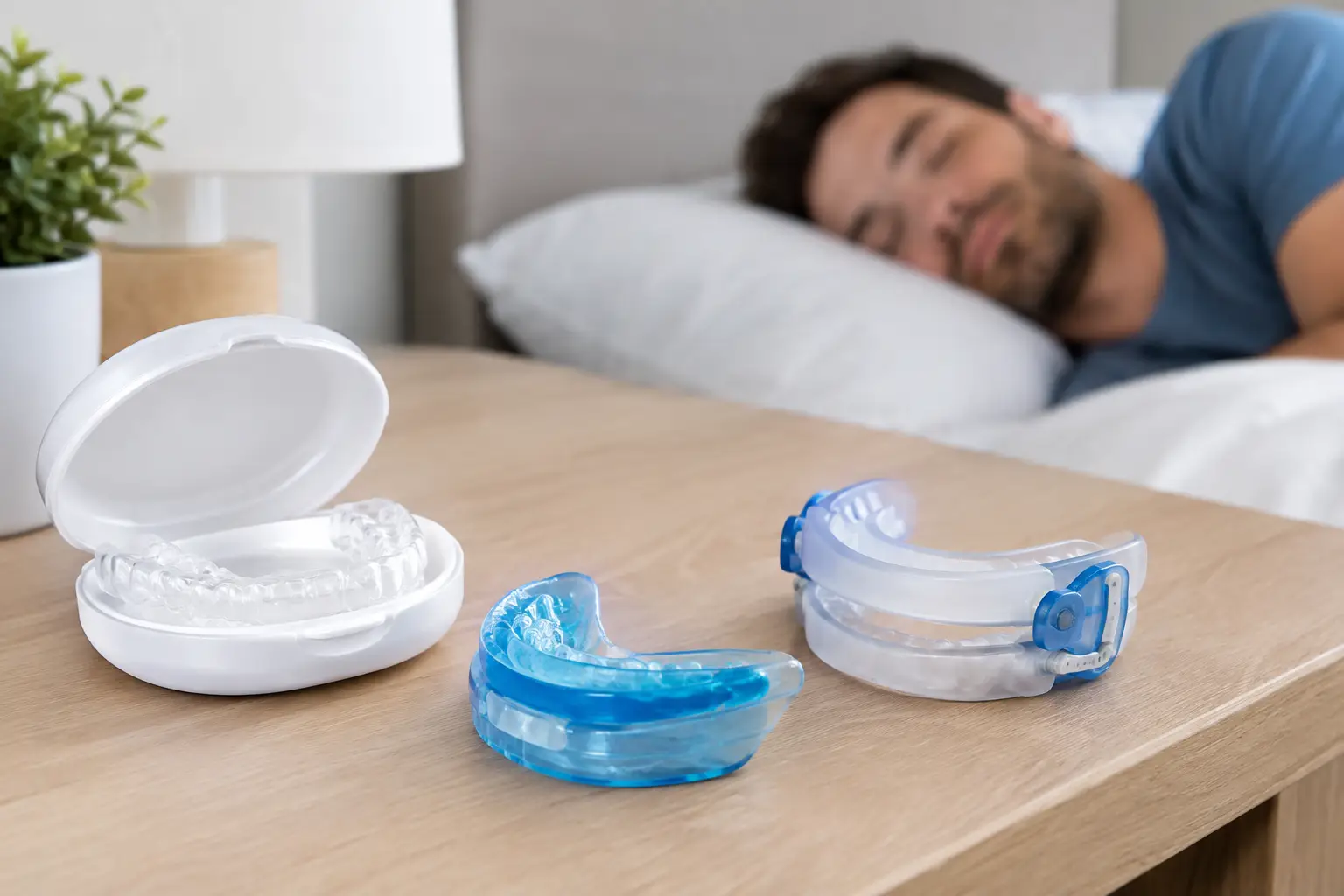
A snoring solution should not leave you with a sore jaw, loose teeth, or more questions than answers. The best oral appliances for snoring are not necessarily the ones with the biggest promises or the lowest price. They are the devices that address the reason you snore, fit comfortably, and are monitored by a qualified dental professional when appropriate.
For many adults, an oral appliance can be a practical, comfortable alternative to other treatments. But snoring can also be a sign of obstructive sleep apnea, a condition that deserves careful attention. Clear guidance at the beginning helps protect both your sleep and your long-term oral health.
Why snoring happens
Snoring occurs when air moves through a partially narrowed airway during sleep, causing the soft tissues in the throat to vibrate. Alcohol before bed, nasal congestion, sleeping on your back, weight changes, and the natural relaxation of muscles during sleep can all make it worse.
The position of the lower jaw and tongue also matters. When the jaw falls backward, the tongue and other soft tissues may narrow the airway. This is why many oral appliances are designed to bring the lower jaw forward slightly while you sleep. More room in the airway can reduce vibration and improve airflow.
That said, loud or frequent snoring is not always simple snoring. Pauses in breathing, choking or gasping at night, morning headaches, daytime exhaustion, difficulty concentrating, high blood pressure, or a partner who notices repeated breathing interruptions can point to obstructive sleep apnea. An oral appliance may still be part of treatment, but the first step should be a sleep evaluation.
The best oral appliances for snoring depend on your airway
The most effective option depends on your teeth, bite, jaw joints, tongue position, medical history, and whether sleep apnea is present. A professional evaluation is much more useful than choosing a device based on a generic product ranking.
Custom mandibular advancement devices
A custom mandibular advancement device, often called a MAD, is the most common type of oral appliance used for snoring and for certain cases of obstructive sleep apnea. It fits over the upper and lower teeth and gently holds the lower jaw in a forward position.
The forward position is adjustable in small increments. That precision matters. Too little advancement may not improve airflow; too much can create jaw soreness, muscle fatigue, or bite changes. A custom appliance is made from impressions or digital scans of your teeth, allowing it to stay in place more reliably than a one-size-fits-all option.
For adults with healthy teeth and gums, sufficient dental support, and snoring related to jaw or tongue position, a custom MAD is often the strongest starting point. It can be especially appealing for people who travel frequently or find other sleep treatments difficult to tolerate.
The trade-off is that it needs professional fitting and follow-up. It is also not right for everyone. Significant untreated gum disease, loose teeth, certain bite concerns, or active jaw-joint pain may need to be addressed first.
Tongue-retaining devices
A tongue-retaining device, or TRD, uses gentle suction to hold the tongue forward rather than moving the jaw. This may be helpful for someone who cannot comfortably use a mandibular advancement device because of limited jaw movement, missing teeth, or certain dental conditions.
TRDs can be effective in the right situation, but many people find them harder to get used to. They may cause tongue tenderness, excess saliva, or a sensation of bulkiness. Because retention relies on the tongue rather than the teeth, comfort and fit are especially personal. This is an option to discuss when a jaw-advancement appliance is not a good match, not necessarily a first choice for every snorer.
Temporary over-the-counter devices
Boil-and-bite mouthpieces and other store-bought anti-snoring devices are widely available. Some move the jaw forward; others claim to stabilize the tongue or open the airway in a different way. Their lower up-front cost can make them tempting, particularly if snoring is new.
The concern is fit. A device that does not match your teeth and bite can shift during sleep, irritate the gums, place uneven pressure on teeth, or create jaw discomfort. It also cannot tell you whether your snoring is connected to sleep apnea. A temporary device may give someone a sense of whether jaw advancement feels tolerable, but it should not replace an exam or ongoing monitoring.
Comfort is part of effective treatment
An appliance only works when you can wear it consistently. The right fit should feel secure without pinching, pressing painfully on the gums, or forcing your jaw into an uncomfortable position. A short adjustment period is common, including mild tooth pressure or increased saliva. Persistent pain is not something to push through.
Custom appliances are designed for gradual adjustment. Your provider can make controlled changes based on your symptoms, sleep feedback, and comfort. They can also check for unexpected changes in how your teeth come together. Because orthodontic care focuses on the relationship between teeth, jaws, and bite, this follow-up is particularly valuable for protecting your smile while pursuing better sleep.
If you already wear a retainer, have braces, use clear aligners, or have had substantial dental work, mention it before choosing an appliance. Your treatment needs to work with your current oral health plan, not against it.
A sleep apnea screening should come first when symptoms raise concern
A custom appliance is an evidence-based treatment option for some people with obstructive sleep apnea, usually after an evaluation by a sleep physician. For moderate to severe sleep apnea, other therapies may be recommended first, though an oral appliance can be appropriate for patients who cannot tolerate them or who meet specific clinical criteria.
Do not assume that reduced snoring means sleep apnea has been fully treated. Snoring may get quieter while breathing disruptions continue. A follow-up sleep test can confirm whether treatment is doing its job.
A thoughtful care team will ask about your sleep quality, daytime energy, medical history, medications, and jaw health. If screening suggests a sleep disorder, they can guide you toward the appropriate medical evaluation before making an appliance. That is not an unnecessary delay. It is how treatment becomes safer and more precise.
What a professional oral appliance process looks like
The process should feel clear and low-stress. First, your provider reviews your symptoms and examines your teeth, gums, bite, and jaw joints. Digital imaging or scans may be used to create a detailed model of your mouth and plan a comfortable fit.
Once the appliance is made, you receive instructions for placement, cleaning, and adjustment. Follow-up visits allow the fit to be refined and help catch side effects early. You may also receive guidance on a morning repositioning exercise or device to help your bite settle after removing the appliance.
At 1st Impressions Orthodontics, we believe every recommendation should account for the whole picture: your comfort, your bite, your existing dental needs, and the quality of your sleep. You deserve straightforward answers, not pressure to choose a device that is not right for you.
Questions worth asking before you choose
Before moving forward, ask whether the appliance is custom-made, how it will be adjusted, what follow-up is included, and how your provider will monitor your bite and jaw comfort. Ask whether your symptoms call for a sleep study and what signs should prompt you to contact your physician.
Also ask about cleaning and replacement. Oral appliances need daily care with a soft brush and appropriate cleanser, and they should be stored safely when not in use. Like retainers and other dental appliances, they can wear over time and may need repair or replacement.
Better sleep should not require guessing. A personalized evaluation can help you choose an appliance that supports easier breathing while respecting the health and comfort of your teeth, jaw, and smile.