
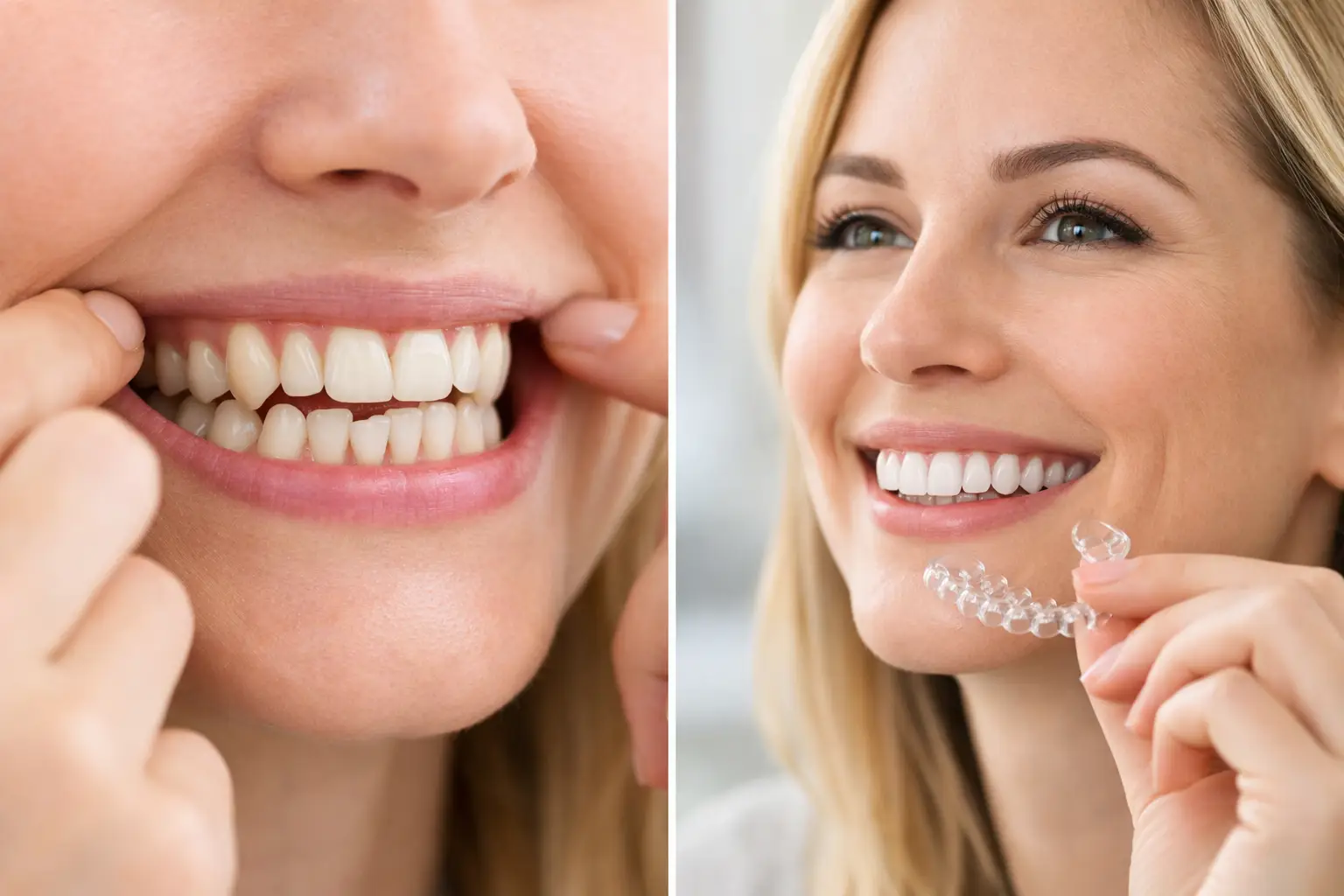
A lot of adults don’t ask whether Invisalign can work. They ask what the result will actually look like on a real person with a real job, a real schedule, and teeth that have shifted for years. That’s why an adult Invisalign before after example matters. It helps you picture not just straighter teeth, but the kind of change that feels realistic for your age, lifestyle, and starting point.
For many adults, the most meaningful change is not a dramatic makeover. It is seeing crowded front teeth line up, watching a deep bite relax, or noticing that a smile looks more balanced in photos and more comfortable during everyday conversation. The best before-and-after examples show that Invisalign can improve appearance and function at the same time, but they also show something equally important – every case is different.
What an adult Invisalign before after example really shows
A true before-and-after example is more than two photos placed side by side. It reflects a treatment plan built around bone support, tooth movement limits, bite relationship, wear consistency, and long-term stability. Adults often come in with concerns that have built up slowly over time, such as lower front crowding, spacing after dental work, bite changes, or shifting that happened years after braces.
In a typical adult Invisalign before after example, the “before” may show overlapping front teeth, a narrow-looking smile, uneven spacing, or a bite that does not fit together ideally. The “after” often shows cleaner alignment, more even spacing, improved arch shape, and a bite that functions more comfortably. Sometimes the visible cosmetic change looks simple, but the planning behind it is very precise.
That is one reason adult treatment should never be reduced to a cosmetic quick fix. Straightening teeth without considering the bite can create problems later. A strong Invisalign result should look better and feel healthier.
Before and after changes adults notice most
Adults usually notice a few specific changes first. The front teeth tend to draw the most attention because they are the most visible when speaking and smiling. If crowding is reduced, the smile often looks cleaner and less shadowed. If spacing is closed, the smile can look more polished and balanced.
The second big change is symmetry. Many adults do not realize how much one rotated tooth or a slightly off center midline affects the overall look of the smile until treatment begins correcting it. Even small adjustments can make the smile appear more even and natural.
The third change is bite comfort. This is easy to overlook in photos, but it matters in daily life. Some adults start treatment because their teeth do not fit together well, they are chipping certain teeth, or they feel strain when chewing. In those cases, the after result may include better tooth contact and less pressure on specific teeth.
A realistic adult Invisalign before after example
Imagine an adult patient in their late 30s with moderate lower crowding, slight upper spacing, and a bite that has shifted enough to make the front teeth hit harder than they should. In the before phase, the lower teeth look uneven, one upper lateral incisor sits slightly back, and the bite places extra stress on the front teeth.
After Invisalign treatment, the lower crowding is resolved, the upper spacing is closed, and the front teeth no longer absorb so much force alone. In photos, the smile looks straighter and more balanced. In function, the bite is healthier. The patient may also report that flossing is easier, cleaning is simpler, and they feel less self-conscious on video calls or in close conversation.
That kind of result is common, but the details depend on the case. Some adults need small tooth-colored attachments to guide movement. Some need interproximal reduction, which creates tiny amounts of space between certain teeth. Some may need refinement aligners at the end to fine-tune the result. None of that means treatment is going poorly. It usually means the orthodontist is being precise.
Why adult results can differ from teen results
Adult teeth can absolutely move well with Invisalign, but adults are not just older teens. They often bring a more complex dental history into treatment. Previous orthodontic relapse, missing teeth, crowns, gum recession, grinding, or bite wear can all affect the plan.
This does not mean adults are poor candidates. It means planning needs to be thoughtful. One adult may be a great fit for Invisalign with straightforward alignment goals. Another may still be a candidate, but only with closer monitoring and more detailed staging. Sometimes Invisalign is the ideal choice. Sometimes braces may offer better control for certain tooth movements. The best recommendation depends on what will safely deliver the best finish.
That is where specialty orthodontic care becomes valuable. Adults deserve a plan based on diagnosis, not guesswork.
What Invisalign can improve and what it cannot
Invisalign can treat many adult concerns very effectively, including crowding, spacing, certain overbites, underbites, crossbites, open bites, and relapse after earlier orthodontic treatment. It can also help create a better setup before cosmetic dental work or improve the spacing around existing restorations in some cases.
But there are limits. If teeth appear short, worn, chipped, or uneven because of enamel damage, aligners do not rebuild tooth shape. If the smile looks gummy because of lip movement or jaw structure, Invisalign alone may not fully change that. If gum health is unstable, that usually needs attention first.
A trustworthy before-and-after conversation includes those boundaries. Good orthodontic treatment is not about overpromising. It is about showing what can realistically improve, what may require additional dental work, and what level of change fits your goals.
How long adult Invisalign treatment usually takes
Adults often want to know how quickly the “after” happens. The honest answer is that treatment time varies. Mild alignment can sometimes be addressed in less than a year. More involved bite correction may take longer. Consistent aligner wear matters a lot. Wearing trays 20 to 22 hours a day can keep treatment on track, while inconsistent wear can slow progress and affect the quality of the finish.
It is also normal for treatment to happen in phases. You may move through your initial aligners, get re-scanned, and receive refinement trays to perfect the result. That is not unusual or discouraging. It is often part of achieving a more accurate outcome.
For adults balancing work, family, and social schedules, Invisalign is appealing because it is more flexible and less visible than traditional braces. Still, convenience only works when paired with follow-through. The trays need to be worn, cleaned, and changed as directed.
What makes a good before-and-after result last
The after photo is not the end of the story. Teeth naturally want to shift over time, especially in adulthood. That is why retainers matter so much. Without them, even a beautiful result can begin to change.
A lasting outcome also depends on healthy gums, routine dental care, and protecting the teeth from habits like clenching or grinding when needed. For some adults, retainers are simple maintenance. For others, they are the reason treatment stays stable for years.
This is one of the biggest differences between social media marketing and real orthodontic care. Online before-and-after images highlight the transformation. A responsible treatment team also talks about retention, bite stability, and long-term comfort.
How to evaluate adult Invisalign examples wisely
If you are reviewing adult cases, look beyond whether the teeth appear straight. Ask whether the bite looks coordinated, whether the arch form appears natural, and whether the final smile looks balanced rather than overly idealized. Good treatment respects the patient’s facial features, oral health, and anatomy.
It also helps to look for examples that resemble your situation. A patient with slight front crowding may have a very different plan than someone with a deep bite or complex spacing. Comparing yourself to the right type of case gives you a more useful expectation.
For adults in Westminster and nearby communities, the most helpful next step is not chasing a perfect online photo. It is getting a personalized evaluation with digital imaging and clear guidance about what your own before and after could realistically look like. At 1st Impressions Orthodontics, that conversation is designed to feel clear, supportive, and judgment free.
If you have been putting off treatment because you are unsure whether the change would be worth it, this is the part to remember: a meaningful Invisalign result does not have to look extreme to feel life-changing. Sometimes the best after is simply a smile that looks like you, only healthier, more comfortable, and easier to wear with confidence every day.