
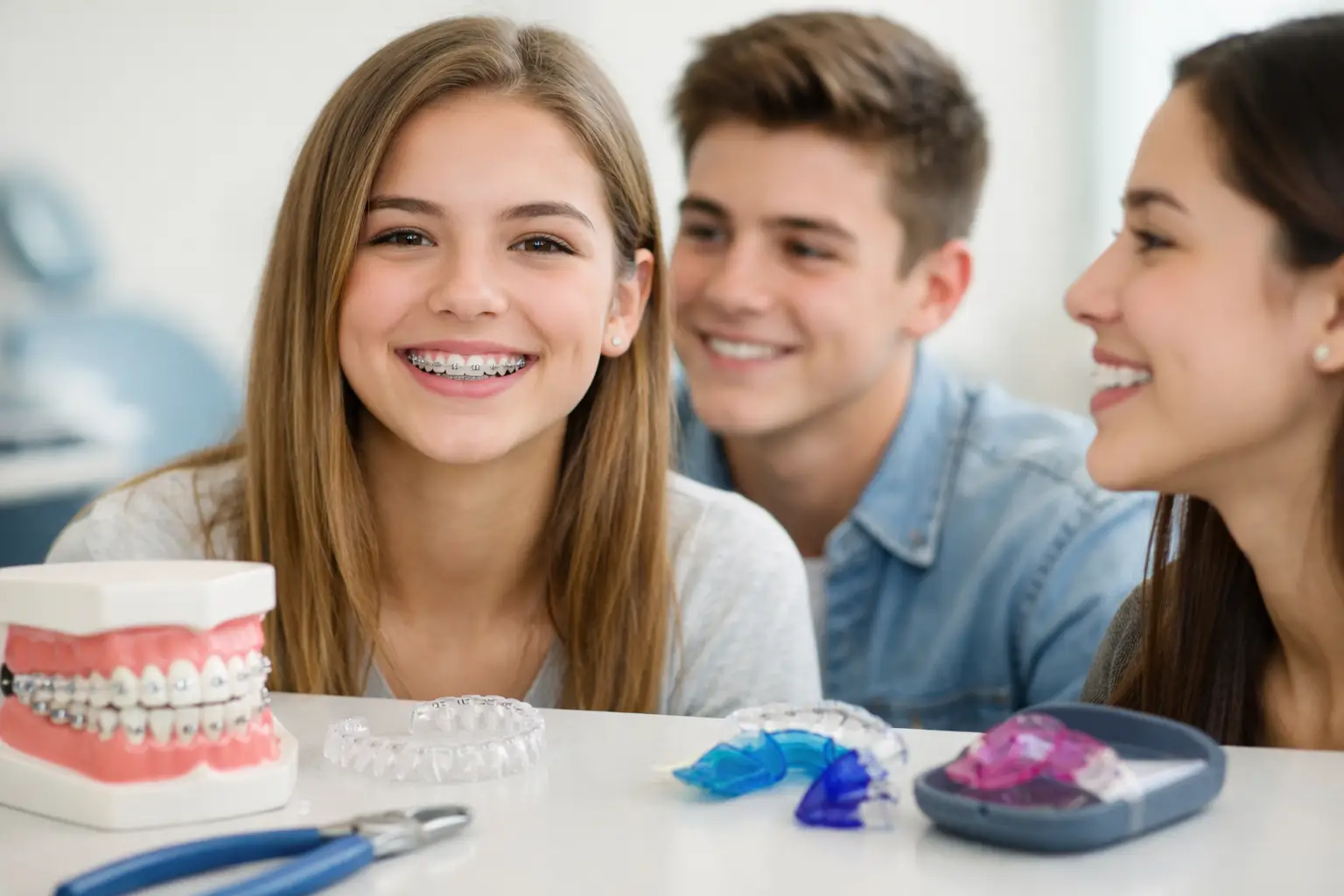
One teen wants the fastest path to a straighter smile. Another is worried about school photos, sports, or how braces will feel day to day. For most families, finding the best orthodontic options for teens is not really about picking the most popular treatment. It is about choosing the option that fits your teen’s bite, routine, goals, and comfort level.
That is why the right answer is rarely one-size-fits-all. Some teens do best with traditional braces because they need precise tooth movement and built-in consistency. Others are great candidates for clear aligners because they can handle the responsibility and want a less noticeable treatment. The best choice depends on how the teeth and jaws are developing, how complex the correction is, and how likely your teen is to follow instructions when no one is watching.
What makes a teen a good candidate for orthodontic treatment?
The teen years are often an ideal time for orthodontic care because most permanent teeth are in place, but the mouth and jaw are still responsive to treatment. That gives orthodontists a useful window to correct crowding, spacing, overbites, underbites, crossbites, and alignment issues before they become harder to manage later.
There is also a practical side to timing. Teens are usually active in school, sports, and social events, so treatment needs to work with real life. A plan that looks great on paper but is hard to stick with can lead to delays, frustration, and less predictable results. Good orthodontic care should feel organized, personalized, and manageable from the start.
Best orthodontic options for teens: what to know
When parents ask about the best orthodontic options for teens, the conversation usually comes down to braces versus clear aligners. Both can create excellent results. The differences are in appearance, comfort, responsibility, and how much control is needed to move the teeth properly.
Metal braces
Metal braces are still one of the most reliable treatments for teens, especially when the case is more complex. They are fixed to the teeth, which means they are always working. For teens who may forget to wear aligners or lose trays, that built-in consistency can be a major advantage.
Today’s metal braces are smaller and more comfortable than many parents remember. They are highly effective for correcting significant crowding, bite problems, and rotated teeth. They can also be a good choice for teens who want a treatment they do not have to think about removing and replacing throughout the day.
The trade-off is visibility. Metal braces are the most noticeable option, and food restrictions are stricter. Sticky or hard foods can damage brackets and wires, so teens need to be willing to make a few adjustments.
Clear braces
Clear braces work much like metal braces but use tooth-colored or clear brackets for a less noticeable appearance. They appeal to teens who want the strength and predictability of braces without the more obvious look of metal.
This can be a nice middle ground. Clear braces stay on the teeth, so compliance is less of an issue than it is with removable aligners. At the same time, they offer a more subtle appearance for school, events, and everyday interactions.
The main downside is that clear brackets can be a little more delicate, and they may stain if your teen is not careful with certain foods and drinks. They are still visible up close, just less so than metal braces.
Invisalign clear aligners
Invisalign is often high on a teen’s wish list, and for good reason. The trays are clear, removable, and smooth, so they tend to feel less intrusive in daily life. There are no brackets or wires, which can be especially appealing for teens who play instruments, participate in sports, or feel self-conscious about braces.
For the right teen, Invisalign can be an excellent option. It allows easier brushing and flossing, and there are no food restrictions because the trays come out during meals. That convenience matters to busy families.
Still, Invisalign only works well if it is worn as directed. A teen who forgets trays in a napkin at lunch, leaves them on the bathroom counter, or wears them only part-time may not stay on track. This option asks for maturity and follow-through. It is less about whether a teen wants aligners and more about whether they will truly use them as prescribed.
How orthodontists decide which option is best
The best treatment is based on more than appearance. A careful orthodontic evaluation looks at tooth position, jaw alignment, bite function, growth patterns, oral hygiene habits, and the level of correction needed. Digital scans and imaging help create a more accurate plan, which is one reason modern orthodontic care feels more precise and less guesswork-driven than it did years ago.
A teen with mild to moderate crowding and strong compliance may be a great fit for clear aligners. A teen with more complex bite concerns, impacted teeth, or significant rotations may get better results with braces. Sometimes families come in expecting one option and leave understanding why another will be more efficient, more comfortable long term, or more predictable.
That clarity matters. Parents do not just want a treatment recommendation. They want to know why it makes sense for their child.
Lifestyle matters more than families expect
Orthodontic treatment happens in the middle of everyday life. That is why the best orthodontic options for teens should account for habits and routines, not just clinical goals.
If your teen is involved in contact sports, braces may require a custom mouth guard for added protection. If they play a wind instrument, there may be a short adjustment period with braces, though most teens adapt well. If they struggle with organization, removable aligners may create more stress than convenience.
School schedules also matter. Teens often do best when appointments are easy to plan, instructions are clear, and everyone knows what to expect after adjustments or tray changes. A treatment plan should reduce friction, not add more of it.
What about comfort?
No orthodontic treatment is completely sensation-free, but discomfort is usually manageable and temporary. With braces, soreness is common after placement and adjustments. With aligners, pressure often shows up during the first day or two of a new tray. In either case, that pressure is usually a sign that teeth are moving as planned.
Comfort is also influenced by fit and oversight. When treatment is designed carefully and monitored consistently, small issues can be addressed before they turn into bigger frustrations. That is one reason specialist care matters. The experience should feel supportive, not confusing.
Cost, treatment time, and the real question families ask
Most parents eventually ask some version of this question: what will get the best result without making life harder than it has to be?
That is the right question. The least visible option is not always the best value if treatment drags on because trays are not worn. The most familiar option is not always the best fit if a teen is highly motivated and would thrive with aligners. Cost and treatment time vary by complexity, but the smartest choice is usually the one that balances effectiveness, lifestyle, and consistency.
Transparent communication helps here. Families should understand what the treatment involves, how long it may take, what responsibilities come with it, and what happens if things go off track. Good orthodontic care is not just about the appliance. It is about having a plan that feels realistic.
When should parents schedule an orthodontic consultation?
If your teen has crowded teeth, visible bite issues, speech concerns related to tooth position, trouble cleaning between teeth, or growing self-consciousness about their smile, it is a good time to schedule an evaluation. Even if treatment is not needed right away, an orthodontic exam can provide helpful timing guidance.
For families in Westminster and nearby communities, seeing a local specialist can make the process much easier. Consistent check-ins, digital imaging, and personalized treatment planning can turn what feels like a big decision into a clear next step.
The best orthodontic choice for a teen is the one that fits both the science and the person. When treatment is tailored to how your teen actually lives, confidence tends to follow naturally.