
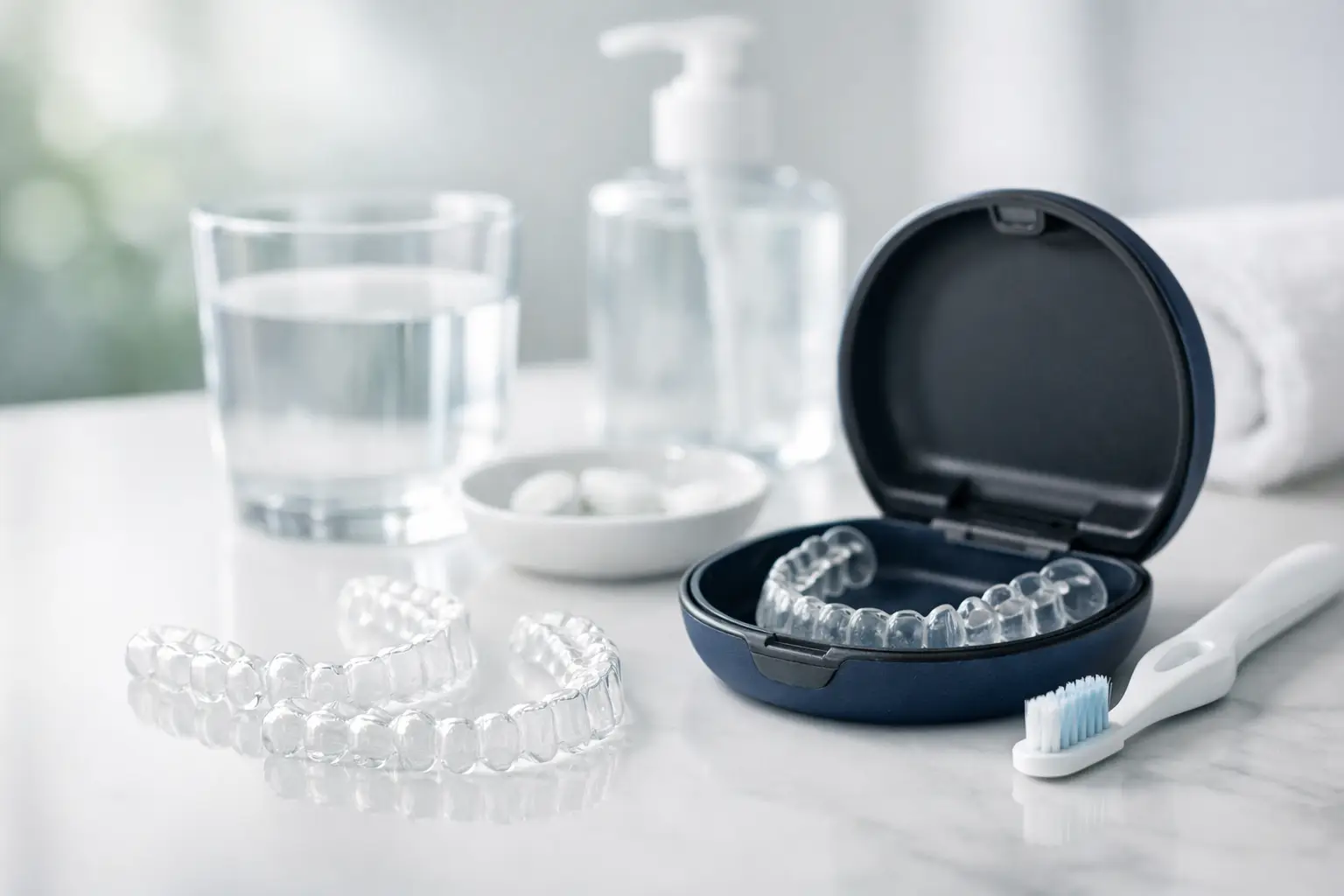
A clear aligner can look nearly invisible when it is fresh from its case. But after a few meals, a busy workday, or a night on the nightstand, it can collect plaque, saliva residue, and odor-causing bacteria. The best ways to clean aligners are simple, but consistency matters. A few thoughtful minutes each day can help your trays stay clear, comfortable, and ready to do their precise job.
Clear aligners are designed to fit closely against your teeth. That close fit is what helps guide tooth movement, but it also means anything left inside the trays – food particles, plaque, or sugary drink residue – stays right against your teeth. Keeping both your aligners and your teeth clean protects your smile throughout treatment.
The best ways to clean aligners every day
The most reliable routine begins whenever you remove your aligners. Rinse them right away under cool or lukewarm running water. This prevents saliva from drying onto the plastic, which can leave a cloudy film that is harder to remove later. Never use hot water. Heat can warp the thermoplastic material and affect how accurately your aligners fit.
At least once a day, gently brush the inside and outside of each tray with a soft-bristled toothbrush and clear, mild liquid soap. Use a separate toothbrush from the one you use on your teeth if possible. Brush gently rather than scrubbing aggressively, especially along the edges and around attachments. The goal is to remove buildup without creating scratches that make the plastic look dull.
Rinse thoroughly before placing the aligners back in your mouth. Soap residue can leave an unpleasant taste, so take a moment to make sure the trays are completely clean.
Just as important: brush and floss your teeth before reinserting your aligners. Clean trays placed over unbrushed teeth can hold bacteria and food debris against enamel. For patients who are out for the day, even a thorough rinse of the mouth and aligners is better than putting trays back over a meal. Then brush and floss as soon as you can.
Soaking can help with stubborn buildup
A daily brush handles most routine cleaning, but soaking can be useful when trays start to look cloudy, smell less fresh, or develop noticeable buildup. Orthodontist-recommended aligner cleaning crystals or tablets are generally made for this purpose. Follow the product directions exactly, including soak time and water temperature, then rinse the aligners well.
For many patients, a short soak a few times a week is enough. If you are especially prone to buildup, have morning breath, or wear each set of trays for longer than usual, daily soaking may be a practical addition to your routine. Your orthodontic team can help you choose an approach that fits your treatment plan and the specific aligner material you wear.
Some people use a diluted solution of clear, gentle liquid soap and water for a brief soak. This can be a reasonable option when you do not have cleaning tablets available, provided you rinse the trays carefully afterward. It is not necessary to use strong chemicals to get clear aligners clean.
What about ultrasonic cleaners?
Ultrasonic cleaning devices use vibration in water to loosen debris from small crevices. Some patients appreciate the convenience, particularly if they wear aligners, retainers, or other removable appliances long term. However, an ultrasonic device is an extra, not a replacement for brushing your teeth, rinsing trays, and following the cleaning guidance from your orthodontist.
The trade-off is cost and simplicity. A manual brush-and-rinse routine plus approved soaking products works very well for most people. If you are considering an ultrasonic cleaner, ask your orthodontic team whether it is appropriate for your aligners and how often to use it.
What not to use on clear aligners
Cleaning products that seem powerful can actually damage or discolor clear plastic. Avoid toothpaste, especially whitening, charcoal, or gritty formulas. Toothpaste is designed for enamel, not aligner material, and its abrasives can leave fine scratches. Those scratches make trays more likely to appear cloudy and hold onto odors.
Avoid hot water, too. Even water that feels only moderately hot may alter the shape of an aligner. A tray that no longer fits snugly may not deliver the planned tooth movement, so it is worth treating temperature as a non-negotiable part of aligner care.
Colored mouthwash and strongly colored soaps can stain trays. Harsh household cleaners, bleach, alcohol-based products, and scented cleaning agents should also stay out of your aligner routine. Denture cleaners are not automatically a safe substitute, either. Some may be too aggressive or contain ingredients not intended for clear orthodontic plastic. When in doubt, use a product your orthodontist has recommended.
Do not wrap aligners in a napkin during meals. It is one of the most common ways trays get accidentally thrown away. Place them in their protective case every time you take them out. The case protects against loss, damage, and exposure to the bacteria that can collect on a countertop, desk, or restaurant table.
Habits that keep aligners clearer between cleanings
What you do while wearing your aligners has a major effect on how clean they stay. Water is the safest drink to have with trays in. Remove them for coffee, tea, soda, sports drinks, wine, and anything else with color, sugar, acidity, or heat. These beverages can stain the trays, leave residue, and increase the time sugary liquids stay against your teeth.
If you do sip something other than water while wearing your aligners, do not panic. Remove the trays when you can, rinse them with cool water, clean your teeth, and put them back in. One imperfect moment will not ruin treatment. The goal is a dependable pattern, not anxiety over every exception.
Keep a small care kit in your bag, backpack, car, or desk. A travel toothbrush, floss, aligner case, and a few cleaning tablets can make it much easier to stay on track during school, work, travel, and family activities. Convenience is often the difference between knowing the right habit and actually keeping it.
Keep wear time on track
Most clear-aligner treatment plans require about 20 to 22 hours of daily wear. Taking trays out for meals and cleaning is expected, but leaving them out because they feel cloudy or unpleasant can make it harder to meet that goal. A quick rinse after removal and a consistent evening cleaning routine keep trays comfortable enough to wear as prescribed.
If an aligner develops cracks, sharp edges, a persistent odor, or a poor fit, contact your orthodontic office rather than trying to fix it yourself. Do not trim the tray, use heat to reshape it, or switch to a later set without guidance. Clear aligner treatment is carefully planned, and each tray has a specific role.
A simple nighttime aligner routine
Before bed, remove your aligners and rinse them with cool water. Brush them gently with a soft toothbrush and clear liquid soap, or use your approved cleaning product. Brush and floss your teeth thoroughly, rinse the trays again, and place them back in your mouth.
That routine takes only a few minutes, yet it helps prevent the dull, yellowed appearance that can make patients feel self-conscious about otherwise discreet treatment. It also gives you a chance to inspect your trays for cracks, damage, or areas that are not seating fully.
At 1st Impressions Orthodontics, we believe clear guidance makes every stage of treatment feel more manageable. If you are unsure which cleaner is right for your trays or notice a change in their fit, our team can offer judgment-free support and personalized recommendations. The best aligner-care routine is the one you can follow confidently, every day, while your smile moves steadily toward the result you want.