
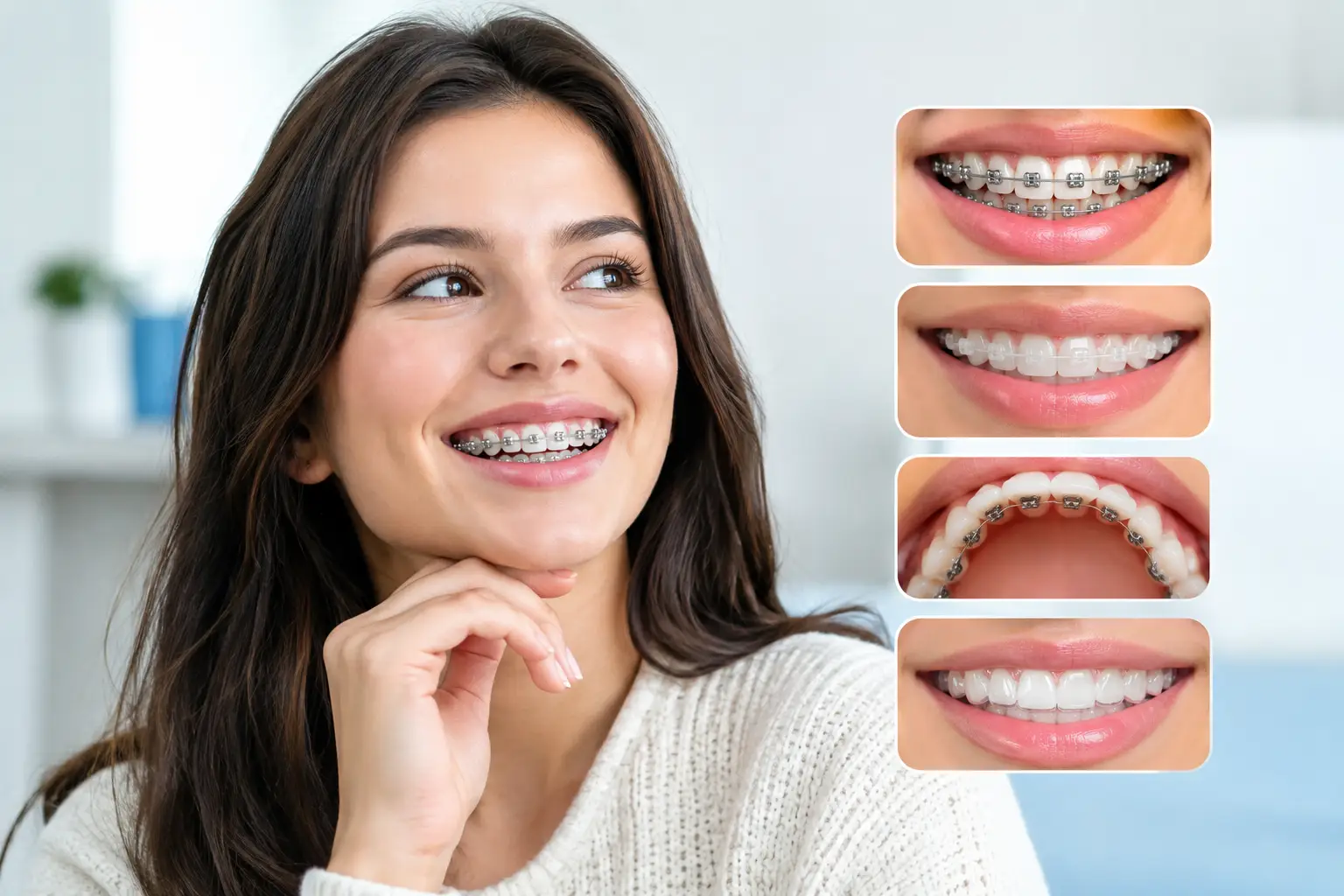
A treatment plan should fit more than your teeth. When comparing braces types, you are also weighing school photos, work meetings, favorite foods, cleaning routines, sports, comfort, and the specific bite concerns that affect your long-term oral health. The right choice is not always the least visible option or the one a friend had. It is the option that can move your teeth predictably while working realistically with your daily life.
At 1st Impressions Orthodontics, we start with clear guidance, not pressure. An orthodontic exam and digital imaging help us understand how your teeth and jaws fit together, then recommend a personalized path toward a healthy, confident smile.
The main braces types at a glance
Traditional metal braces and clear braces are fixed orthodontic appliances. Brackets are attached to the teeth, and a thin wire guides them into healthier positions over time. Because they stay in place throughout treatment, they work continuously without relying on a patient to remember to wear them.
Clear aligners, including Invisalign, are a different type of orthodontic treatment. They are removable, custom-made trays that are changed on a planned schedule. They can be an excellent option for many teens and adults, although they are not the best match for every bite or every lifestyle.
Each approach has meaningful advantages. The decision depends on the movements your smile needs, your treatment goals, and what you feel confident managing day to day.
Metal braces: reliable, versatile, and expressive
Metal braces have changed a great deal from the bulky appliances many adults remember. Today’s brackets are smaller, smoother, and designed for comfort and precise control. They remain one of the most dependable choices for correcting crowded teeth, spacing, rotations, overbites, underbites, crossbites, and more complex alignment concerns.
For kids and teens, metal braces can feel like a fun part of the experience. Many patients enjoy choosing colored elastic ties at adjustment visits. For parents, the biggest benefit is often consistency: braces cannot be misplaced, left in a napkin at lunch, or forgotten on an overnight trip.
Metal braces are visible, which may be a drawback for some patients. They also require a few food adjustments. Sticky candy, hard nuts, popcorn, and chewing ice can damage brackets or wires. Still, for patients who need detailed tooth movement or who prefer a treatment option that stays on track around the clock, metal braces are an excellent choice.
Who may benefit most from metal braces?
Metal braces are often especially helpful for younger patients, patients with complex bite needs, and anyone who would rather not manage a removable appliance. They can also be a practical choice when durability and treatment efficiency matter most.
Clear braces: a lower-profile fixed option
Clear braces use tooth-colored or translucent ceramic brackets rather than metal brackets. They work similarly to traditional braces, with brackets and wires providing controlled movement, but they blend more naturally with the teeth from a conversational distance.
For adults who want a more discreet fixed appliance, clear braces can offer a comfortable middle ground. You receive the consistent, full-time guidance of braces without the look of silver brackets across your smile. They can also be a good solution for teens who are concerned about appearance but may not be ready for the responsibility of removable aligners.
There are trade-offs. Ceramic brackets can be a little more delicate than metal, so following food guidelines matters. Clear elastic ties may also pick up color from foods and drinks such as coffee, curry, or dark sauces between visits. Good brushing habits help keep the brackets looking their best.
Invisalign clear aligners: flexibility with responsibility
Invisalign treatment uses a series of nearly transparent aligners that gradually guide teeth into position. The aligners are removed for meals, brushing, flossing, and special occasions, which can make daily routines feel simpler. There are no food restrictions while aligners are out, and patients can brush and floss as they normally would.
That flexibility is a major advantage for busy adults, students involved in music or sports, and people who want a treatment option that is less noticeable in photos and professional settings. Many patients also appreciate that aligner visits can be planned efficiently with digital treatment monitoring and clear instructions.
The key requirement is wear time. Aligners generally need to be worn about 20 to 22 hours a day to work as planned. Removing them frequently, forgetting to put them back after meals, or losing trays can slow progress. In other words, Invisalign can be wonderfully convenient, but it asks for consistent habits.
Not every smile is best treated with aligners alone. Certain tooth movements, significant bite corrections, or complex jaw relationships may be more predictable with braces, or may require a combination of approaches. A specialist can explain what is possible for your individual case instead of making a one-size-fits-all recommendation.
How to compare braces types for your lifestyle
The most helpful question is not, “Which treatment is best?” It is, “Which treatment best supports the result I need and the routine I can maintain?” A teenager who regularly forgets their retainer or sports gear may do better with fixed braces. An adult who can reliably wear aligners may prefer the discretion and meal-time flexibility of Invisalign.
Consider visibility, but do not stop there. Think about your schedule, travel, school lunches, work demands, oral hygiene habits, and the type of correction you need. If you have a wedding, graduation, or career milestone coming up, mention it during your consultation. Your orthodontist can help you understand what treatment may look like around those moments.
Comfort matters as well. All orthodontic treatment involves an adjustment period as teeth begin to move. Braces may cause temporary tenderness after an adjustment, and aligners can create pressure when you switch to a new set. Both are normal signs that the appliance is working. Wax, simple comfort tips, and prompt support for poking wires or rough spots can make the process far easier.
Treatment time and cost are personal
It is understandable to ask which option is fastest or least expensive. However, treatment time is influenced by much more than the appliance itself. The complexity of your bite, how teeth respond to movement, the need for elastics or other appliances, appointment attendance, and aligner wear habits all play a role.
Cost also varies based on the scope of treatment and the technology involved. A short cosmetic adjustment is different from comprehensive orthodontic care that corrects tooth alignment and bite function. The most useful conversation is a transparent one: what needs to be corrected, why it matters, what each option can achieve, and what financial arrangements are available.
Choosing an orthodontic specialist gives you the benefit of focused training in tooth movement and bite correction. Your plan should protect your oral health while pursuing the smile you want, not simply straighten the teeth that show in the mirror.
Don’t forget the finish: retainers protect your result
Whether you choose metal braces, clear braces, or Invisalign aligners, retainers are the next essential step. Teeth naturally have a tendency to shift after active treatment, particularly in the first months after braces come off or aligner treatment ends. Wearing retainers as directed helps preserve the time, effort, and investment you put into your smile.
Some patients receive removable retainers, while others may benefit from a fixed retainer behind the front teeth. Your orthodontist can recommend the right approach based on your final result, bite, and lifestyle. Retention is not an optional add-on. It is how your new smile stays yours.
Start with a personalized conversation
Choosing between braces types should feel clear, not overwhelming. A thoughtful consultation can answer the questions that matter most: What is causing the crowding or bite issue? Which treatment options can produce a healthy result? What will daily care look like? How can treatment fit around work, school, and family life?
The best orthodontic option is the one that combines precise clinical results with a routine you can follow confidently. With compassionate guidance and a plan built around your needs, getting started can feel much more manageable than you expect.