
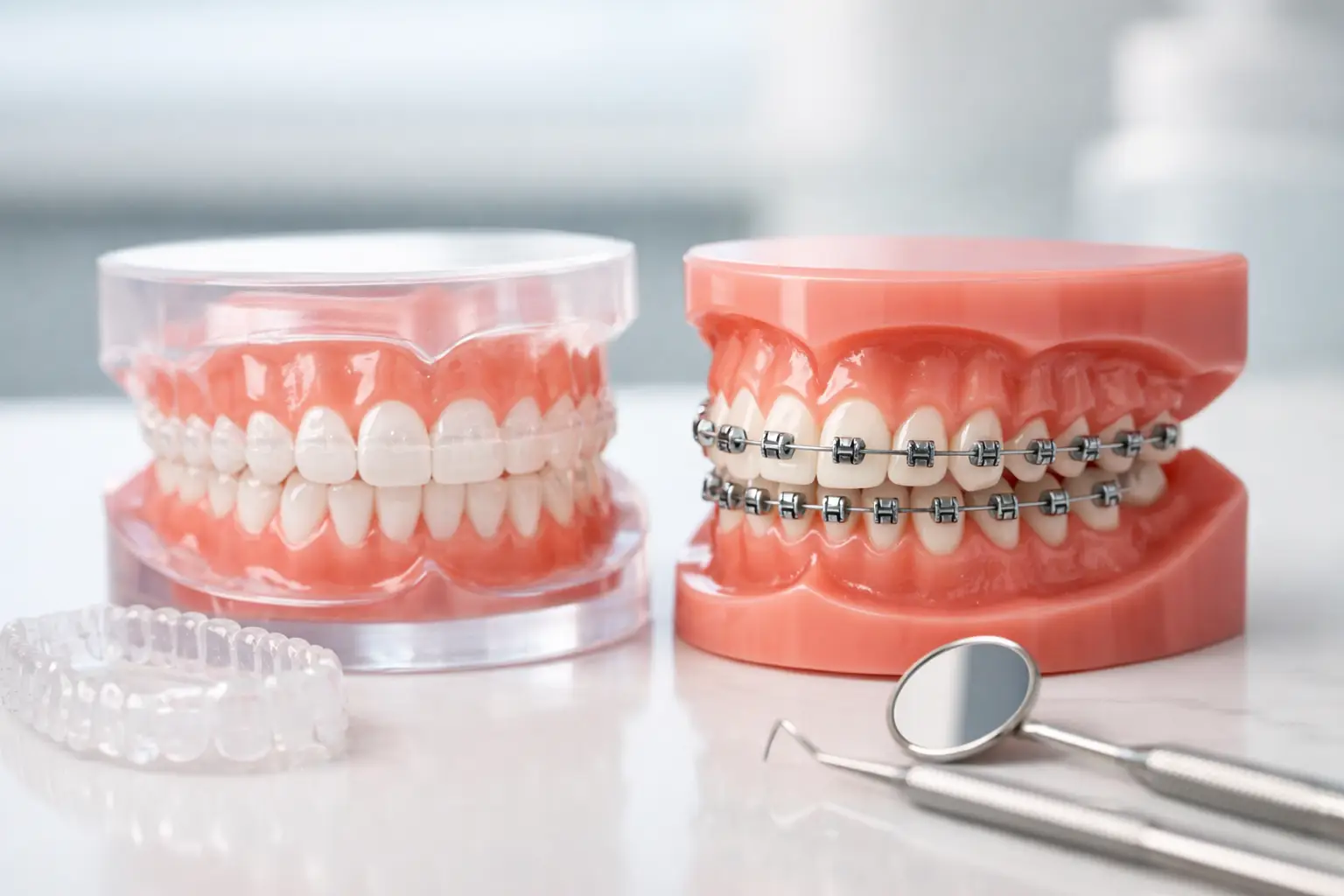
If you are weighing clear braces versus metal braces, you are probably thinking about more than straight teeth. You are also thinking about work, school photos, comfort, budget, and how confident you will feel during treatment. That is exactly how this decision should be made – not by picking the most popular option, but by choosing the one that fits your life and your orthodontic needs.
Both clear braces and metal braces can create excellent results. Both are trusted, effective orthodontic tools. The better choice depends on your bite, your goals, and how much visibility matters to you day to day. For many patients, the answer is not which one is better overall. It is which one is better for you.
Clear braces versus metal braces: what is the difference?
Metal braces use stainless steel brackets and wires to move teeth into better alignment. They are the traditional option most people recognize, and they remain one of the most efficient ways to correct everything from mild crowding to more complex bite issues.
Clear braces work in a similar way, but the brackets are made from tooth-colored or clear materials that blend in more naturally with your smile. They are designed for patients who want the control and effectiveness of braces with a less noticeable look.
That shared mechanics matter. Since both options use brackets and wires, they can often treat the same kinds of orthodontic concerns. The visible difference is the main reason many patients start comparing them, but appearance is only one part of the conversation.
Appearance matters more for some patients than others
For adults in professional settings and teens who feel self-conscious about photos or social events, clear braces can feel like a more comfortable choice emotionally. They are not invisible, but they are less noticeable from a normal conversation distance. That can make treatment feel easier to manage if you are already hesitant about getting braces.
Metal braces are more visible, but many patients adjust to that quickly. Some teens even prefer them because they can personalize their look with colored bands. Others simply want the most straightforward option and do not mind if braces show.
If visibility is your biggest concern, clear braces usually have the advantage. If your priority is function, durability, or cost, metal braces may make more sense.
Comfort and day-to-day wear
Any type of braces takes an adjustment period. Your teeth may feel sore after placement and after wire changes, especially in the first few days. That is normal and usually temporary.
When it comes to comfort, the difference between clear braces and metal braces is often smaller than patients expect. Both can rub the lips and cheeks at first, and both may require orthodontic wax occasionally. Some patients notice that clear brackets feel a bit bulkier. Metal brackets are smaller, but the experience varies from person to person.
Daily care is very similar too. You will need to brush carefully around brackets and wires, floss with the right tools, and stay consistent with check-ins. Sticky and hard foods can be a problem with either option because broken brackets can delay treatment.
The better question is not which one feels perfect, because neither does on day one. It is which one you are most likely to feel good wearing for the length of your treatment.
Treatment time and efficiency
One of the most common questions patients ask is whether clear braces take longer. The honest answer is sometimes.
Metal braces are often considered the most efficient option, especially for more complex cases involving significant crowding, rotations, or bite correction. They are very strong, durable, and precise. That gives orthodontists excellent control over tooth movement.
Clear braces can also be highly effective, but in some situations they may require a slightly more careful approach. The material used for the brackets is more aesthetic, but it can also be a little less durable than metal. For straightforward to moderate cases, treatment time may be very similar. For more complex movements, metal braces may offer a practical advantage.
This is where a personalized exam matters. Looking at photos online or comparing a friend’s experience will not tell you how your own teeth and bite are likely to respond.
Clear braces versus metal braces for teens and adults
Adults often lean toward clear braces because they want a more subtle treatment option without giving up the comprehensive control braces can provide. If you have a client-facing job, spend time on video calls, or simply want treatment to feel less obvious, clear braces can be appealing.
Teens can go either way. Some want the lower-profile appearance of clear braces. Others are completely comfortable with metal braces and like that they are durable and easy to customize. Parents often look at this decision through a practical lens, weighing cost, lifestyle, and how likely their child is to follow care instructions.
For younger patients or those with more involved bite concerns, metal braces are often the simplest and strongest choice. For older teens and adults who care deeply about aesthetics, clear braces may offer a better balance.
Cost is part of the decision
Clear braces typically cost more than metal braces. The difference is not always dramatic, but it is common. The added cost usually reflects the materials and the cosmetic benefit.
That does not mean clear braces are overpriced or metal braces are automatically the better value. It means the value depends on what matters most to you. If looking less noticeable during treatment reduces stress and helps you feel more confident, that benefit may be worth it. If you want the most budget-friendly and durable option, metal braces are often the better fit.
It also helps to look beyond the monthly payment alone. Ask about total treatment cost, what is included, whether retainers are part of the plan, and how repairs or emergency visits are handled. Clear guidance around finances can make this choice much easier.
Which option is easier to maintain?
In terms of oral hygiene, neither option is effortless. Braces create more places for food and plaque to collect, so careful brushing and flossing are essential either way.
Clear braces do come with one extra concern: staining. The brackets themselves are designed to resist discoloration, but the clear or tooth-colored ties used with them can sometimes stain between visits, especially if you regularly drink coffee, tea, red wine, or eat strongly pigmented foods. That does not harm treatment, but it can affect appearance.
Metal braces do not have the same cosmetic issue, so they may feel lower maintenance from that standpoint. If you know you are not likely to change certain eating or drinking habits, that detail is worth considering.
How orthodontists help you choose
The best recommendations are based on your bite, not just your preferences. A detailed orthodontic exam can show whether both options are suitable or whether one has a clear advantage for your case.
That conversation should include how your teeth fit together, whether you have crowding or spacing, how complex your tooth movements are likely to be, and what your daily routine looks like. A parent bringing in a teen may have different concerns than a working adult planning treatment around meetings and family schedules. Both deserve a treatment plan that feels realistic and supportive.
At a practice like 1st Impressions Orthodontics, the goal is not to push one appliance over another. It is to explain the trade-offs clearly, use imaging and clinical expertise to guide the decision, and make sure you understand what to expect before treatment starts.
So, which one should you choose?
Choose clear braces if appearance is a major priority, you want a more discreet look, and your orthodontic needs make you a good candidate. Choose metal braces if you want the most durable, efficient, and often more affordable option, especially for more complex correction.
There is no one-size-fits-all answer here, and that is actually good news. It means your treatment can be built around your goals instead of forcing you into a standard solution.
The right choice is the one that helps you feel informed, comfortable, and confident enough to begin. Once you have that, braces stop feeling like a big unknown and start feeling like a clear path forward.