
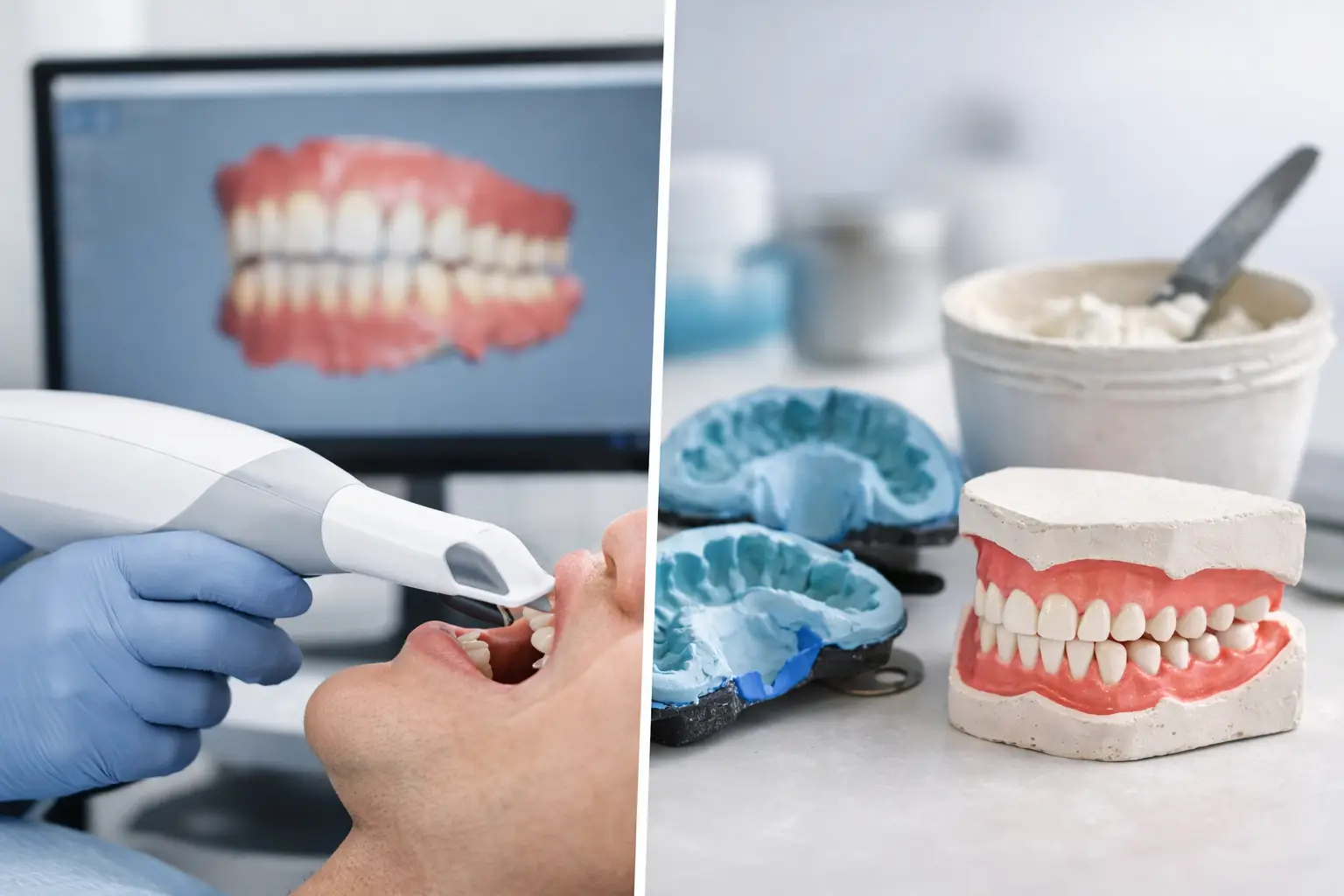
If you are weighing digital orthodontic impressions vs molds, the difference usually becomes clear the moment the tray goes in your mouth. Traditional molds can feel bulky, messy, and hard to sit through, especially for kids, teens, or anyone with a strong gag reflex. Digital impressions are designed to make that part of treatment easier while also giving your orthodontist highly detailed information to plan your care.
That said, this is not just a comfort question. The method used to capture your teeth can affect how efficiently appliances are made, how clearly your bite is evaluated, and how confident you feel during the process. For many patients, especially those balancing work, school, or family schedules, that matters more than they expect.
What are digital orthodontic impressions vs molds?
Traditional molds use a tray filled with impression material that sits over your teeth until it sets. Once removed, that material creates a physical model of your teeth and bite. This has been a standard part of orthodontics for many years, and it can still provide useful information in the right setting.
Digital impressions use a small handheld scanner to capture detailed images of your teeth and gums. Those images are combined into a 3D model on a screen, allowing your orthodontist to review your bite, spacing, crowding, and tooth positioning in real time. Instead of waiting for a plaster or stone model, you can often see the scan almost immediately.
Both approaches aim to do the same thing – create an accurate record of your mouth for diagnosis and treatment planning. The difference is how that record is captured and how efficiently it can be used.
Why many patients prefer digital scans
The biggest reason patients tend to prefer digital scans is comfort. A scanner wand is usually much easier to tolerate than a tray full of impression material. If you have ever worried about gagging, feeling claustrophobic, or sitting still while the material sets, digital imaging often feels like a major upgrade.
There is also less mess. No putty taste, no material pressing against the back of your mouth, and no waiting with your lips apart hoping the impression comes out right on the first try. For children and teens, that can reduce anxiety right away. For adults, it often means a more efficient appointment that fits better into a busy day.
Another benefit is visibility. When your orthodontist can pull up a 3D image on the screen, it becomes easier to explain what is happening with your bite and what the treatment goals are. Patients who like clear guidance often appreciate being able to actually see the crowding, spacing, or alignment issues being discussed.
Accuracy matters, but context matters too
A common question is whether digital scans are more accurate than molds. In many orthodontic situations, digital impressions are extremely precise and consistent. They reduce the risk of certain common impression problems, such as air bubbles, small distortions, or movement while the material is setting.
That precision can be especially helpful when planning clear aligners, retainers, and other customized appliances. Because the scan is digital from the start, the information can often be used more directly in treatment design and appliance fabrication.
Still, accuracy is not only about the tool. It also depends on the provider’s technique, the patient’s cooperation, and the specific clinical goal. Traditional molds can still produce good records in capable hands. The real question is not whether one method is always perfect and the other is outdated. It is which method offers the clearest, most reliable information for your treatment while keeping the experience manageable.
Digital orthodontic impressions vs molds for different patients
For patients with gag reflex issues, digital impressions often have a clear advantage. The scanning process is usually more comfortable and less likely to trigger that panicky feeling some people get with impression trays. This can be a big relief for children, teens getting braces for the first time, and adults who have avoided treatment because they dreaded the process.
For patients pursuing Invisalign or other clear aligner treatment, digital scans are often a natural fit. Aligner treatment depends on detailed modeling of tooth movement, and digital systems work well with that type of planning. Seeing a 3D image can also help patients understand why attachments, refinements, or wear time matter.
For younger children or patients with special needs, it depends. Some do very well with a quick scan because it feels less invasive. Others may have trouble holding still for the scanner and may do better with a different approach. This is where personalized care matters. A good orthodontic team will choose the method that supports both clinical accuracy and the patient’s comfort level.
What this means for braces, aligners, and retainers
Whether you are considering braces or clear aligners, impressions are part of building a treatment plan that fits your bite, not just your smile. Digital models can help your orthodontist evaluate how your teeth come together, where space needs to be created, and how movement should be sequenced.
For braces, that can support better planning for bracket placement, progress checks, and retainer design later on. For aligners, digital impressions often streamline the process because the records integrate well with digital treatment workflows. For retainers, a digital scan may make it easier to produce an accurate fit without repeating a messy impression.
This does not mean every treatment outcome depends on having the newest technology. Strong results still come from careful diagnosis, skilled orthodontic planning, and consistent follow-through. But when technology helps make treatment more comfortable and more precise, patients usually feel the difference.
Are there any downsides to digital impressions?
Digital impressions are a strong option for many patients, but there are trade-offs. The technology requires training, investment, and a team that knows how to use it well. If a scan is incomplete or the patient has difficulty staying still, the process may need to be repeated in small sections.
Some practices may also use a mix of digital records and traditional methods depending on the appliance being made or the details of the case. That is not a red flag. It often means the office is choosing the tools that best match the treatment rather than forcing every patient into one process.
The bigger point is that comfort should not come at the cost of accuracy, and accuracy should not come at the cost of patient support. The best experience happens when both are prioritized.
What to expect at your appointment
If your orthodontic office uses digital scanning, the appointment is usually straightforward. A team member or orthodontist guides the scanner around your teeth, capturing images from different angles. You may need to open wide, turn slightly, or pause for a few seconds at a time, but most patients find it easier than they expected.
You may be able to see your 3D scan right away. That can make the consultation more helpful because your orthodontist can point to specific areas of crowding, bite imbalance, or spacing while discussing your options. Instead of trying to imagine the problem from a verbal explanation alone, you can follow along visually.
In a patient-centered practice like 1st Impressions Orthodontics, that kind of technology is most valuable when it is paired with clear communication. Better images are helpful, but what most patients really want is to understand what comes next, how treatment will fit into their life, and whether they are in good hands.
Which option is better?
For most modern orthodontic patients, digital impressions are the more comfortable and convenient choice. They are often cleaner, faster, easier to tolerate, and highly effective for treatment planning. That is why many specialty orthodontic practices have adopted them as part of a more modern patient experience.
But better does not always mean identical for everyone. If your child is nervous, if you have a complex bite issue, or if a certain appliance requires a specific process, your orthodontist may recommend one method over the other for a reason. What matters most is that the records are accurate and that you feel informed, respected, and comfortable during care.
If you have been putting off orthodontic treatment because you remember old-fashioned molds and assume the process will be unpleasant, it may be worth asking what technology your orthodontist uses now. Sometimes the first step feels much easier than expected, and that can make the rest of the journey feel easier too.