
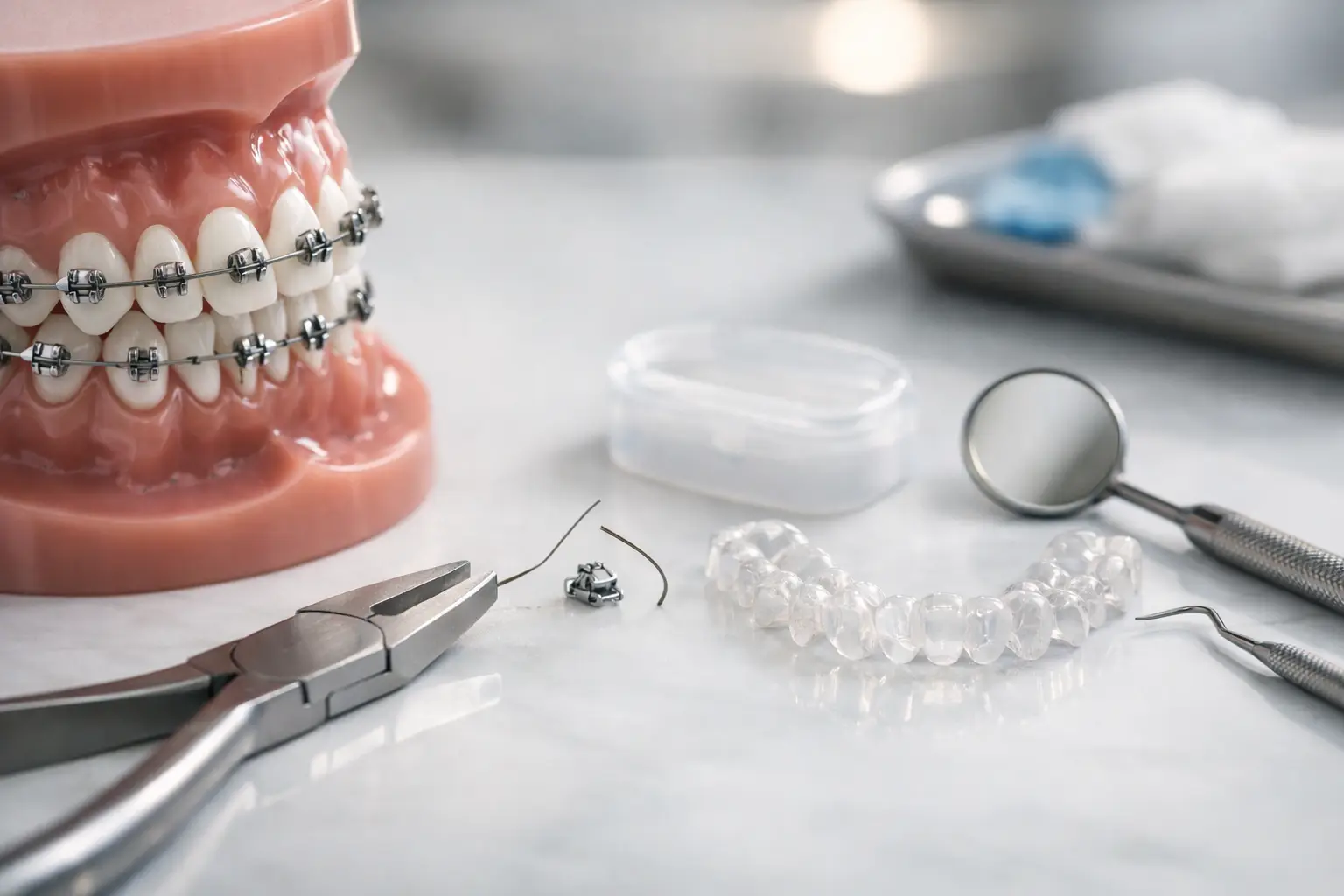
That wire started poking on a Friday night. A bracket came loose before school pictures. An aligner cracked the week before a trip. If you are in the middle of treatment, this guide to orthodontic emergencies can help you stay calm, protect your progress, and know when it is time to call your orthodontist.
Most orthodontic problems feel urgent because they are uncomfortable, unexpected, and happen at inconvenient times. The good news is that many issues can be managed safely at home until you can be seen. The key is knowing the difference between a true emergency and a temporary irritation.
What counts as an orthodontic emergency?
A lot of orthodontic issues are frustrating, but not dangerous. Mild soreness after an adjustment, a little pressure with a new aligner, or temporary irritation on the inside of the cheeks is usually part of treatment. These situations often improve with time, orthodontic wax, soft foods, and over-the-counter pain relief if your doctor says it is appropriate.
A real orthodontic emergency is different. It usually involves significant pain, trauma to the mouth or face, swelling, bleeding that does not stop, signs of infection, or an appliance problem that could be swallowed, inhaled, or cause injury. If you have had a fall, a sports injury, or a car accident that affects your teeth or jaw, that deserves prompt attention even if your braces or aligners only seem slightly damaged.
When in doubt, call. A quick conversation can save you a lot of discomfort and help you avoid making a small problem bigger.
Your guide to orthodontic emergencies at home
The first step is simple – do not panic and do not start pulling things off. Orthodontic appliances are designed to move teeth carefully and precisely. A rushed fix at home can bend parts out of place, irritate soft tissue, or delay treatment.
Start by washing your hands and looking at the area in a mirror with good light. If you wear braces, check whether the bracket is still attached to the tooth, whether the wire has moved, and whether anything is cutting your cheek or gums. If you use aligners, inspect the tray for cracks, rough edges, or warping. If there is bleeding, apply gentle pressure with clean gauze or a clean cloth.
A cold compress on the outside of the cheek can help with swelling or soreness. Warm saltwater rinses can soothe irritated tissue. Orthodontic wax is often the fastest short-term fix for a poking wire or rough bracket because it creates a buffer between the appliance and your mouth.
The right next step depends on the problem.
Poking wire
A poking wire is one of the most common reasons patients call. Sometimes a tooth has moved, and the end of the wire now sticks out farther in the back. Other times the wire has slid to one side.
If the wire is irritating your cheek, dry the area as much as you can and place orthodontic wax over the end. If wax is not available, a small piece of sugar-free gum can work temporarily, but it is not ideal for long-term use. In some cases, using a clean cotton swab or the eraser end of a pencil can gently nudge the wire into a less irritating position. Do not force it.
If the wire is deeply embedded in tissue, causing sharp pain, or cannot be covered well enough to make you comfortable, call your orthodontist.
Loose bracket or band
A bracket can loosen if it gets hit, if you eat something hard or sticky, or sometimes just from normal wear during treatment. If it is still attached to the wire and not causing pain, it usually can wait a short time until your appointment. Cover it with wax if it rubs.
If the bracket rotates around the wire or hangs low enough to bother you, that is worth a call. The same is true if a band feels loose around a molar. Avoid chewing on that side, and do not try to glue anything back in place.
Broken or bent wire
A broken wire can create immediate irritation. If a small piece has come free in your mouth, remove it carefully if you can do so easily and safely. If a longer section is still attached, do not cut large parts of it unless your orthodontist specifically instructs you to do that.
Wax is usually the safest first step. A bent wire may sometimes be eased back into place very gently, but if there is resistance, stop. The goal is comfort until professional repair, not a perfect home fix.
Soreness after adjustments
Tender teeth after an adjustment or after switching to a new aligner are common. That soreness can make eating uncomfortable for a day or two, but it usually is not an emergency. Softer foods, cold water, and the pain relief your doctor recommends are often enough.
What matters is the pattern. Normal soreness gradually improves. Pain that becomes intense, is isolated to one tooth, or comes with swelling can point to something else and should be checked.
Cracked or lost aligners
If an aligner cracks but still fits well and is not sharp, you may be able to continue wearing it until your orthodontist advises you otherwise. If it is badly split, warped, or no longer seats properly, call for instructions. Depending on where you are in treatment, you may be told to move to the next set, return to the previous set, or come in for a replacement.
Do not make that call on your own. Skipping ahead sounds efficient, but it can create tracking issues if your teeth are not ready.
If you lose an aligner, contact your orthodontist as soon as possible. Keep wearing your previous set if you have it, unless you are told differently. That can help prevent unwanted tooth movement while you wait.
Lost separators, rubber bands, or small parts
These situations are usually not emergencies, but they should still be reported. Rubber bands only work when they are worn as directed, and missing them for too long can slow bite correction. If a separator falls out close to a scheduled appointment, your office may simply note it. If it happens much earlier, they may want to replace it.
When to call right away
Any guide to orthodontic emergencies should be clear about the red flags. Call your orthodontist promptly if you have swelling in the gums, face, or jaw, bleeding that does not stop with pressure, signs of infection, a broken appliance causing significant pain, or trauma that may have injured a tooth or jaw.
Seek urgent medical or dental care right away if you have trouble breathing, trouble swallowing, severe facial swelling, uncontrolled bleeding, or you think a piece of an appliance has been swallowed or inhaled. Orthodontic care and emergency medical care are not interchangeable. Sometimes you need both, and timing matters.
What not to do
Good intentions can cause problems here. Do not use super glue, household tools, or sharp instruments in your mouth. Do not keep eating hard, crunchy, or sticky foods once something feels loose. Do not ignore persistent pain just because you assume it is part of braces.
It is also wise not to compare your situation too closely to someone else’s. Two patients can have what looks like the same broken bracket and need different next steps based on treatment stage, appliance type, and whether tooth movement has already been affected.
A little prevention goes a long way
You cannot prevent every surprise, but you can reduce the odds. Wear a mouth guard during sports if your orthodontist recommends one. Keep wax on hand. Avoid ice, hard candy, popcorn kernels, and sticky foods that put extra stress on braces. If you are using aligners, store them in their case, not wrapped in a napkin where they can get thrown away or damaged.
It also helps to keep your follow-up visits on schedule. Small issues are easier to fix when they are caught early. Practices like 1st Impressions Orthodontics focus on making that process easier with clear guidance and responsive care, which matters a lot when something unexpected happens.
Orthodontic treatment should move your smile forward, not add unnecessary stress. If something feels off, trust that instinct, protect the area, and reach out for help. A calm response today can make the rest of treatment much more comfortable.