
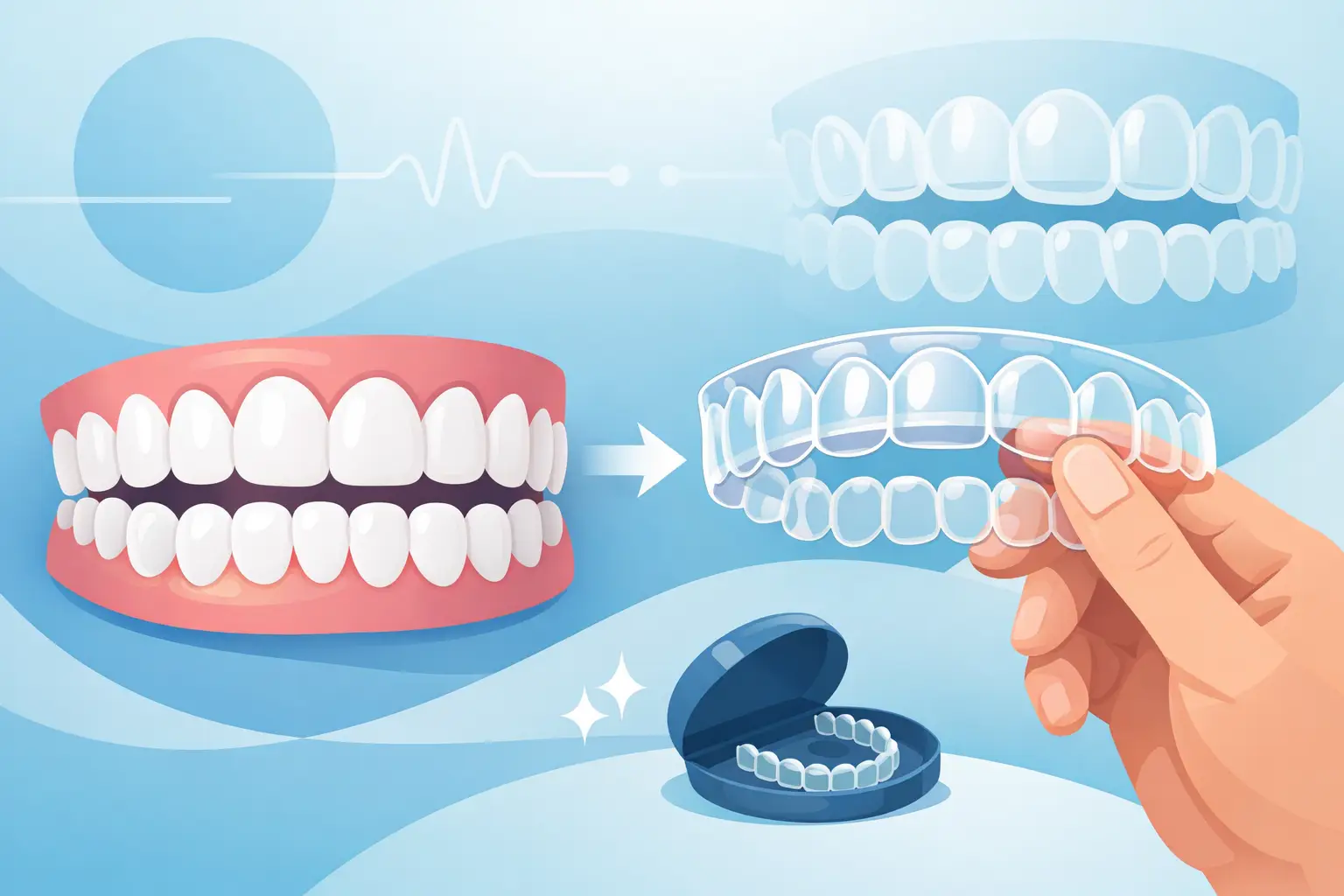
You look in the mirror and notice the same thing every time – a tooth that sits too far forward, spacing that catches your eye in photos, or a bite that just does not feel right. If you have been asking, how does Invisalign work, the short answer is this: Invisalign uses a series of custom clear aligners to apply gentle, controlled pressure that gradually moves your teeth into better positions.
That simple idea is what makes Invisalign appealing to so many teens and adults. The aligners are clear, removable, and designed around your specific smile goals. But the real value is not just that they look discreet. It is that the treatment is carefully planned, monitored, and adjusted so your teeth move in a healthy, predictable way.
How does Invisalign work to move teeth?
Your teeth are not locked in place as firmly as they may seem. Each tooth sits in bone and is supported by ligaments that allow for small, controlled movement when pressure is applied over time. Invisalign aligners are designed to create that pressure in very specific areas.
Each set of aligners is slightly different from the one before it. When you wear a tray as directed, it begins moving certain teeth by a tiny amount. After about one to two weeks, depending on your treatment plan, you switch to the next set. That next aligner continues the movement. Step by step, your teeth shift toward their planned positions.
This is why precision matters. Invisalign is not a one-size-fits-all product. The aligners are based on digital scans, detailed measurements, and an orthodontic plan that maps out how each tooth should move and when. A small change in angle or timing can matter, especially when bite alignment is involved.
The Invisalign process from consultation to final retainer
The process usually starts with a consultation and digital imaging. Instead of messy impressions in many cases, modern orthodontic offices can use advanced scanning technology to create a highly accurate 3D model of your teeth. That model helps your orthodontist evaluate crowding, spacing, bite issues, and whether Invisalign is the right option for your case.
From there, a custom treatment plan is created. This plan does more than show what straight teeth might look like. It guides how the teeth should move in a sequence that is safe, efficient, and realistic. Some patients need only minor cosmetic correction. Others need more comprehensive treatment to improve bite function as well as appearance.
Once your aligners are made, you will receive a series of trays to wear in order. Most patients wear them 20 to 22 hours a day, removing them only to eat, drink anything besides water, brush, and floss. That wear time is a big part of treatment success. Invisalign can work very well, but it depends on consistency.
You will also have check-ins along the way. These visits are important because your teeth do not always move exactly the same way on the same timeline. Monitoring allows your orthodontist to confirm that treatment is tracking properly and make adjustments if needed.
At the end of active treatment, retainers help keep your new smile in place. That final step matters just as much as the aligners themselves. Teeth have a natural tendency to shift, so retention protects the progress you worked for.
What are attachments, and why do some patients need them?
One reason people are surprised by Invisalign is that the treatment may involve small tooth-colored attachments. These are tiny shapes bonded to certain teeth to help the aligners grip and guide more complex movements.
Think of attachments as handles that give the aligner extra control. They can help rotate teeth, move them vertically, or improve the precision of certain corrections that a smooth tray alone may not achieve as effectively. They are usually subtle, but they are a sign that your treatment is being customized rather than oversimplified.
Some patients also need interproximal reduction, which means creating a very small amount of space between certain teeth. This can help relieve crowding and improve how teeth fit together. It sounds intimidating, but when it is recommended, it is done carefully and conservatively.
What does Invisalign feel like day to day?
Most patients describe Invisalign as comfortable overall, but not completely sensation-free. When you start a new aligner, it is common to feel pressure or tightness for a day or two. That sensation usually means the tray is doing its job.
The aligners themselves are smooth, so they often feel less irritating than traditional brackets and wires. There are no emergency wire pokes, and you can remove the trays for meals, which makes eating easier. Brushing and flossing are also more straightforward because there is no hardware attached to your teeth.
That said, removability can be both a benefit and a challenge. If you leave aligners out too often, treatment can slow down or become less predictable. For busy adults and teens with packed schedules, success comes from building the routine into everyday life.
Who is a good candidate for Invisalign?
Invisalign can treat many common orthodontic concerns, including mild to moderate crowding, spacing, and certain bite issues. In some cases, it can also be effective for more complex movements, especially when treatment is planned by an orthodontic specialist with the right technology and experience.
Still, not every case is best treated with clear aligners. Some patients may get better or more efficient results with braces, especially if there are significant bite problems, severe rotations, or teeth that need larger movements. This is where honest guidance matters. A good orthodontic recommendation is not about pushing one system. It is about choosing the treatment that fits your needs, anatomy, and goals.
For younger children, Invisalign may or may not be appropriate depending on development, compliance, and the type of correction needed. For teens and adults who want a less noticeable option, it is often a strong choice, provided they are willing to wear the aligners as instructed.
How long does Invisalign take?
Treatment time depends on how much movement is needed and how consistently the aligners are worn. Some patients finish in as little as several months. Others may need 12 to 18 months or longer for more comprehensive correction.
The most accurate timeline comes from an orthodontic evaluation, not an online estimate. A small gap may close quickly, but a bite problem can take more time because the teeth and jaws need to come into better functional alignment. Faster is not always better if the result is unstable or incomplete.
If your treatment includes refinements, your orthodontist may order additional aligners near the end to fine-tune the result. That is normal and often part of getting the most precise outcome possible.
Invisalign vs. braces: what is the trade-off?
For many patients, Invisalign offers clear advantages. The trays are discreet, removable, and generally easy to clean around. They fit well with work, school, social events, and family life. If convenience and appearance are high on your list, Invisalign can be very appealing.
Braces, however, have their own strengths. Because they stay on full time, they do not rely on patient wear habits in the same way. They can also be a better tool for certain kinds of tooth movement. So the decision is not simply about what looks nicer. It is about what will deliver the healthiest and most stable result for your case.
That is why a personalized consultation matters so much. At 1st Impressions Orthodontics, patients often feel more confident once they understand not only what is possible, but why one option may fit their smile better than another.
What patients often worry about most
Many people considering Invisalign are not just wondering how it works. They are wondering whether it will fit their life. Will it hurt? Will people notice it? Will it actually fix the problem, or just make small cosmetic changes?
These are fair questions. Invisalign is designed to be subtle, and many people will not notice it unless they are looking closely. Discomfort is usually manageable and temporary, especially when trays are changed on schedule. As for results, it can absolutely go beyond surface-level improvements when treatment is properly planned. Straight teeth look great, but a well-aligned bite can also make chewing more comfortable and reduce unnecessary wear on teeth.
The key is getting a clear diagnosis before starting. What looks like simple crooked teeth may actually involve spacing, jaw alignment, or bite imbalance that deserves a more complete plan.
If you have been thinking about treatment but putting it off, it helps to know that Invisalign is not magic and it is not guesswork. It is a carefully designed orthodontic system that works best when expert planning meets consistent wear. The right next step is not to decide everything on your own. It is to get answers that make the process feel clear, manageable, and worth it.