
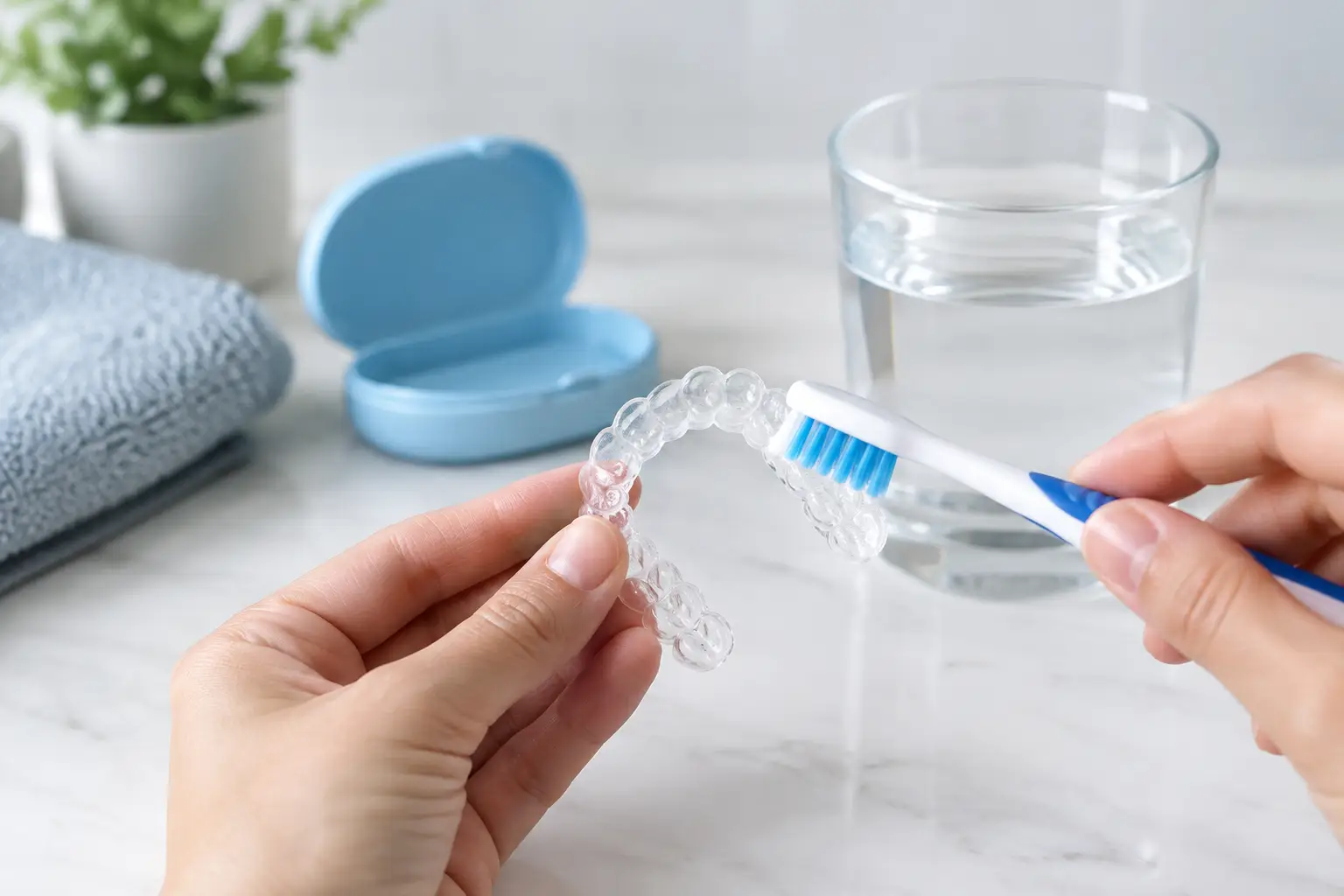
A retainer can look clean and still carry the film that causes odor, cloudiness, and an unpleasant taste. Because it sits closely against your teeth for hours at a time, it needs the same consistent attention as your toothbrush. Learning how to clean removable retainers correctly protects the appliance, supports fresh breath, and helps make wearing your retainer feel comfortable every day.
The good news is that retainer care does not need to be complicated. A few gentle habits, paired with the right products and storage, can keep your retainer clear and ready to do its job: holding your teeth in their carefully corrected positions.
How to clean removable retainers every day
The best time to clean your retainer is each time you take it out. At a minimum, rinse and clean it once daily, preferably before you put it in for the night. Plaque and saliva dry quickly on plastic and acrylic, so waiting until buildup is visible can make cleaning harder.
Start by washing your hands. Then remove the retainer and rinse it under cool or lukewarm water. This loosens fresh saliva and debris before it has a chance to harden. Avoid hot water. Heat can warp clear plastic retainers and affect how precisely they fit over your teeth.
Use a soft-bristled toothbrush that is reserved for your retainer, along with a small amount of clear, mild liquid soap. Gently brush every surface, including the inside areas that touch your teeth and the edges that rest near your gums. Rinse thoroughly so no soap residue remains.
If you have a Hawley retainer with acrylic and wire, use the same gentle approach. Brush around the wire carefully without bending it. The wire is designed to fit your teeth precisely, and even small changes can affect comfort and retention.
After cleaning, shake off excess water and place the retainer in its protective case if you are not wearing it right away. Do not wrap it in a napkin. Retainers are frequently lost at restaurants, school cafeterias, and work lunches because they were tucked into a napkin and accidentally thrown away.
Clean your teeth before putting it back in
A clean retainer cannot stay clean if it goes back over unbrushed teeth. Brush and floss before reinserting it, especially after meals or snacks. Otherwise, food particles and bacteria can become trapped between the retainer and your teeth.
This simple step is particularly helpful for teens with busy school schedules and adults who wear retainers during workdays. If brushing is not possible right away, rinse your mouth with water and clean your teeth as soon as you can before wearing the retainer for an extended period.
Give your retainer a deeper clean when needed
Daily brushing handles most fresh buildup, but a deeper clean can help if your retainer starts to look cloudy, develop an odor, or collect a white film. Use a retainer-cleaning product recommended by your orthodontist, following the package instructions carefully. These products are made to dissolve buildup without aggressively scratching the material.
A soak is not a replacement for daily brushing. Think of it as additional care, much like occasionally washing a water bottle more thoroughly after using it every day. After soaking, lightly brush the retainer with its dedicated soft brush and rinse it well under cool water.
How often you need a deeper clean depends on your saliva, how consistently you brush your teeth, and how many hours you wear the retainer. Some patients benefit from weekly cleaning, while others need it more often. Your orthodontist can give you guidance based on the type of retainer you have.
If you use a cleaning tablet, do not leave your appliance soaking longer than directed. More time does not necessarily mean a better result, and some solutions can be too harsh when overused.
What not to use on a removable retainer
Retainers are durable, but they are not indestructible. Scratches and heat damage can create places for bacteria to collect or change how the appliance fits. To protect your retainer, avoid these common mistakes:
- Hot or boiling water: Even a brief rinse can distort clear plastic or acrylic.
- Toothpaste: Most toothpaste contains abrasive ingredients that can leave tiny scratches and make a retainer look dull.
- Bleach, alcohol, or harsh household cleaners: These are not safe for an appliance that goes back into your mouth and may damage the material.
- Dishwasher or microwave cleaning: High heat can warp or ruin the retainer.
- Mouthwash soaks: Colored mouthwash may stain clear plastic, while alcohol-containing formulas can be unnecessarily harsh.
It can be tempting to use whatever is under the bathroom sink when you notice buildup. However, gentle, consistent cleaning is far safer than a strong product that damages a retainer you rely on every night.
What if your retainer smells, looks cloudy, or has buildup?
A mild odor usually means bacteria and plaque have built up, often because the retainer was stored without being rinsed or because it was worn after eating. Begin with a careful brush using mild liquid soap, followed by an orthodontist-approved retainer soak. Clean the storage case at the same time, since bacteria can transfer back onto a freshly cleaned appliance.
Cloudiness may improve with regular cleaning, but not every change in appearance is removable. Clear retainers can gradually show wear over time, particularly if they are exposed to toothpaste, heat, or frequent grinding. A retainer that is heavily scratched, cracked, or permanently discolored may need to be replaced.
Hard white deposits can be mineral buildup from saliva. Do not scrape at them with a sharp object, which can gouge the plastic or damage wire components. Bring the retainer to your orthodontic office instead. Professional guidance is the safest way to determine whether it can be cleaned or whether replacement is the better choice.
Keep the case clean, dry, and easy to find
Your retainer case is part of your oral hygiene routine. Rinse it daily and wash it with mild soap and water several times a week. Let it air-dry fully before closing it whenever possible. A damp, sealed case can encourage odors and bacterial growth.
Keep the case with you when you leave home. This is especially useful for families juggling after-school activities, adults eating meals away from home, and anyone transitioning between daytime and nighttime wear. A bright, sturdy case is easier to spot in a backpack, purse, or lunch bag.
Pets are another surprisingly common retainer hazard. Dogs are drawn to the scent and texture of retainers, and a chewed retainer is rarely repairable. Store yours in its closed case on a counter or shelf, well out of reach.
When to call your orthodontist
Contact your orthodontist if your retainer no longer fits comfortably, feels tighter than usual, has a crack, or has a loose or bent wire. Do not try to reshape it at home. A retainer that has changed shape may not hold your teeth correctly and can cause unwanted pressure.
You should also call if you have lost your retainer. Teeth can begin shifting sooner than many people expect, so it is better to act promptly than wait to see what happens. At 1st Impressions Orthodontics, our team can help you understand the next steps and make the replacement process feel clear and manageable.
A clean retainer is easier to wear, easier to trust, and more likely to last. Build the habit around moments already in your day, such as brushing your teeth before bed, and your smile will have the steady support it needs long after active orthodontic treatment ends.