
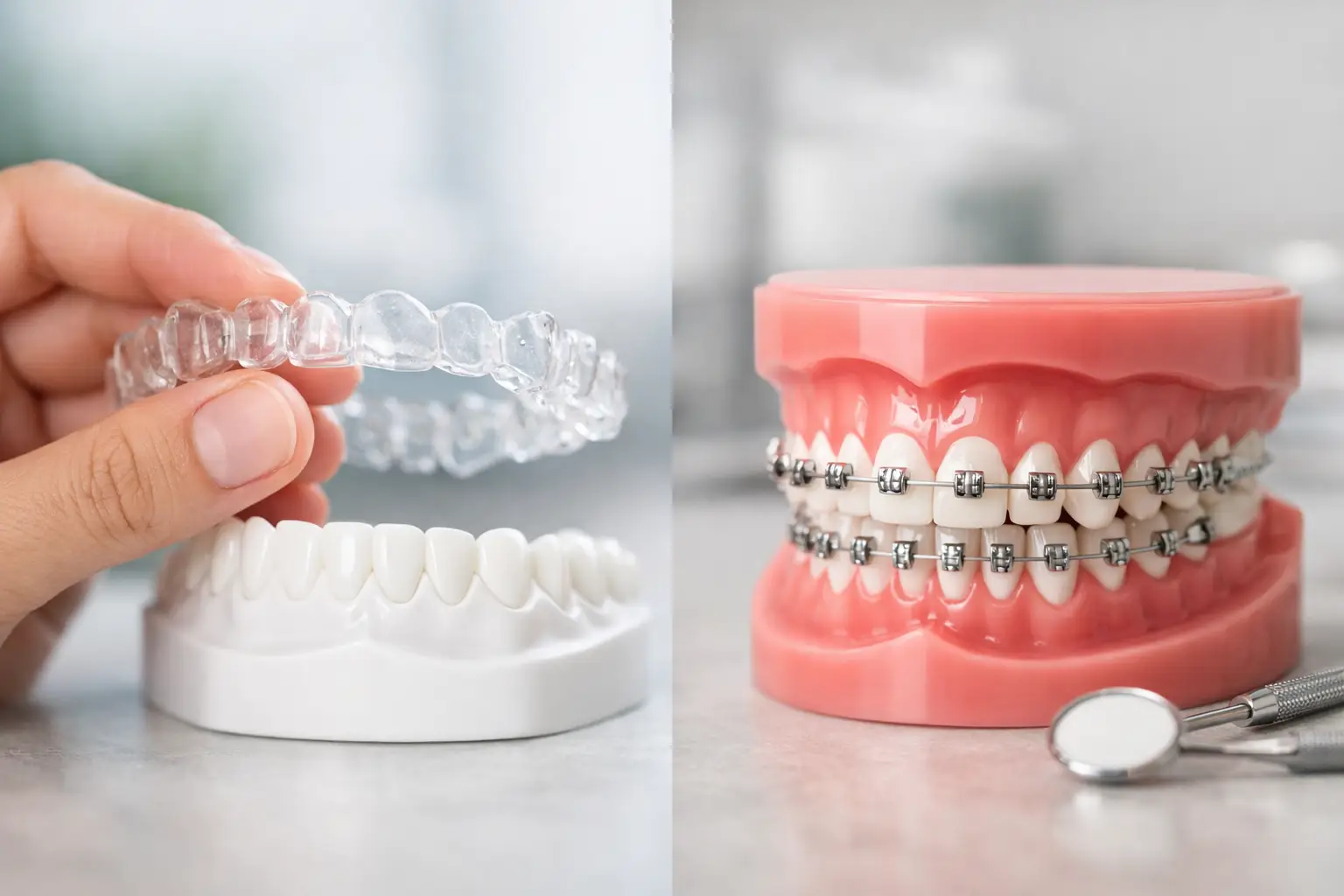
Choosing orthodontic treatment usually starts with one very real question: how will this fit into everyday life? When patients ask about invisalign versus braces treatment, they are often thinking about more than straight teeth. They are thinking about school photos, work meetings, meals out, comfort, cleaning, sports, and how long treatment will take.
The good news is that both options can create healthy, confident smiles. The better choice depends on your bite, your goals, and how much flexibility you want during treatment. A personalized exam matters because what works beautifully for one patient may not be the best fit for another. A great place to start is a free consultation at 1ST IMPRESSIONS Orthodontics in North Denver, CO!
Invisalign versus braces treatment: what is the difference?
Invisalign uses a series of clear, removable aligners that gradually move teeth in small, planned stages. Each set is worn for a specific period before moving on to the next one. The trays are custom-made and designed to fit closely over your teeth, which makes them far less noticeable than traditional braces.
Braces use brackets attached to the teeth and connected by wires. Those wires are adjusted over time to guide teeth into better positions. Modern braces are more comfortable and streamlined than many people expect, and they remain one of the most effective tools for treating a wide range of orthodontic concerns.
At a basic level, the biggest difference is simple. Invisalign is removable. Braces are not. That single detail affects comfort, appearance, eating, hygiene, and even how much responsibility the patient has during treatment.
Appearance and confidence in daily life
For many teens and adults, appearance is the first thing they notice when comparing options. Invisalign is popular because the aligners are clear and discreet. In photos, conversations, and professional settings, they are often much less noticeable than braces.
That said, braces are not automatically a poor aesthetic choice. Many patients wear them confidently, and clear braces can offer a less visible alternative to metal. For younger patients especially, braces may feel completely normal among peers. The right question is not only which option looks better, but which one will make you feel most comfortable day to day.
If you have an important presentation at work, social events on the calendar, or simply want a lower-profile treatment, Invisalign may have an advantage. If appearance matters but reliability matters more, braces may still be the better investment.
Comfort and adjustment
Both Invisalign and braces involve pressure because that is how teeth move. You should expect some soreness when treatment begins and after progressions or adjustments. The difference is usually in the type of discomfort.
With Invisalign, patients often describe the feeling as tightness when switching to a new set of trays. Because there are no brackets or wires, there may be less irritation to the lips and cheeks. The smooth plastic can feel easier to get used to.
With braces, you may notice tenderness after adjustments and occasional rubbing from brackets or wires. Orthodontic wax can help with that, and most patients adapt over time. Braces are very manageable, but they do require a little more patience during the early stage.
Comfort also depends on compliance. If aligners are taken out too often, teeth may not track as planned, which can lead to delays and additional refinements. Braces remove that variable because they are always working.
Eating, cleaning, and convenience
This is where lifestyle often becomes the deciding factor.
With Invisalign, you remove the aligners to eat and drink anything other than water. That means no food restrictions. You can enjoy popcorn, crunchy foods, chewy foods, and other meals that are more complicated with braces. Brushing and flossing are also more straightforward because you clean your teeth without brackets and wires in the way.
The trade-off is responsibility. Invisalign needs to be worn as directed, typically 20 to 22 hours a day. If trays stay in a napkin at lunch, on a nightstand, or in a backpack too often, treatment can stall. For organized adults and responsible teens, this may be no problem. For patients who know they are likely to forget, braces can be the simpler option.
Braces stay on all the time, which means no risk of losing them and no temptation to leave them out. But food choices need more care, and oral hygiene takes more effort. Patients need to brush thoroughly around brackets and use flossing tools or techniques that work around wires.
Which works faster?
There is no honest one-size-fits-all answer here.
Some mild to moderate cases can move very efficiently with Invisalign. In other situations, braces may offer more control and predictability, especially when tooth rotation, significant bite correction, or complex movement is involved. The complexity of the case matters more than the marketing.
Treatment time also depends on patient habits. Invisalign can be very effective, but only if it is worn consistently. Braces may be more efficient for patients who would struggle with removable aligners because there is less room for missed wear time.
This is one reason an orthodontic evaluation is so valuable. Digital imaging and a detailed exam can help map out what your teeth and bite actually need, instead of guessing based on appearances alone.
Invisalign versus braces treatment for complex cases
A lot of people assume Invisalign is only for minor cosmetic changes. That is outdated. Clear aligner treatment has come a long way and can address many concerns, including crowding, spacing, and certain bite problems.
Still, braces remain an excellent option for complex orthodontic issues. If a patient has significant bite discrepancies, impacted teeth, substantial rotations, or movements that require more precise control, braces may offer an advantage. That does not mean Invisalign is off the table, but it may mean braces are the more efficient or predictable route.
The goal should never be choosing the trendier option. The goal is choosing the treatment that will get the healthiest, most stable result with the least stress possible.
Cost and value
Patients naturally want to know whether Invisalign or braces costs more. The answer depends on the complexity of the case, the length of treatment, and the type of braces being considered. In many offices, the difference is not as dramatic as people expect.
The better way to think about cost is value. If clear aligners fit your lifestyle so well that you stay fully engaged in treatment, that value matters. If braces are likely to give you a more dependable result without relying on daily discipline, that value matters too.
A clear financial conversation should include what is covered, what the payment options look like, and whether one treatment plan is likely to need more refinements than another. Patients deserve that transparency.
What tends to work best for different patients?
Working adults often appreciate Invisalign because it is discreet and flexible. It can fit well into professional settings and busy schedules, especially for patients who are committed to wearing aligners exactly as instructed.
Teens can do well with either option. Some love the subtle look of Invisalign. Others are better candidates for braces because treatment does not depend on remembering to put trays back in after lunch, sports, or band practice.
For younger children who need early orthodontic care, braces or other appliances are often more common than Invisalign, depending on the developmental stage and the specific issue being treated.
Patients with jaw discomfort or bite concerns may need a more detailed evaluation before choosing either option. Straight teeth are only part of the picture. A balanced bite and healthy function matter just as much.
How to make the right decision
If you are deciding between Invisalign and braces, try not to frame it as a beauty contest. It is a treatment decision, and the best choice is the one that matches your clinical needs and your daily routine.
Ask yourself a few practical questions. Do you want the most discreet option possible? Are you disciplined enough to wear aligners consistently? Do you want fewer food restrictions, or would you rather not worry about removing and tracking trays throughout the day? Are your concerns mostly cosmetic, or is there a more complex bite issue involved?
At 1st Impressions Orthodontics, this conversation is meant to feel supportive, not overwhelming. A good consultation should leave you with clear guidance about what is possible, what is realistic, and what will help you feel confident from start to finish.
The right treatment is the one that fits your life well enough that you can stick with it and trust the process. When that happens, the smile at the end feels a lot easier to reach.
Contact 1ST IMPRESSIONS Orthodontics in North Denver, CO to schedule a free orthodontic consultation today.