
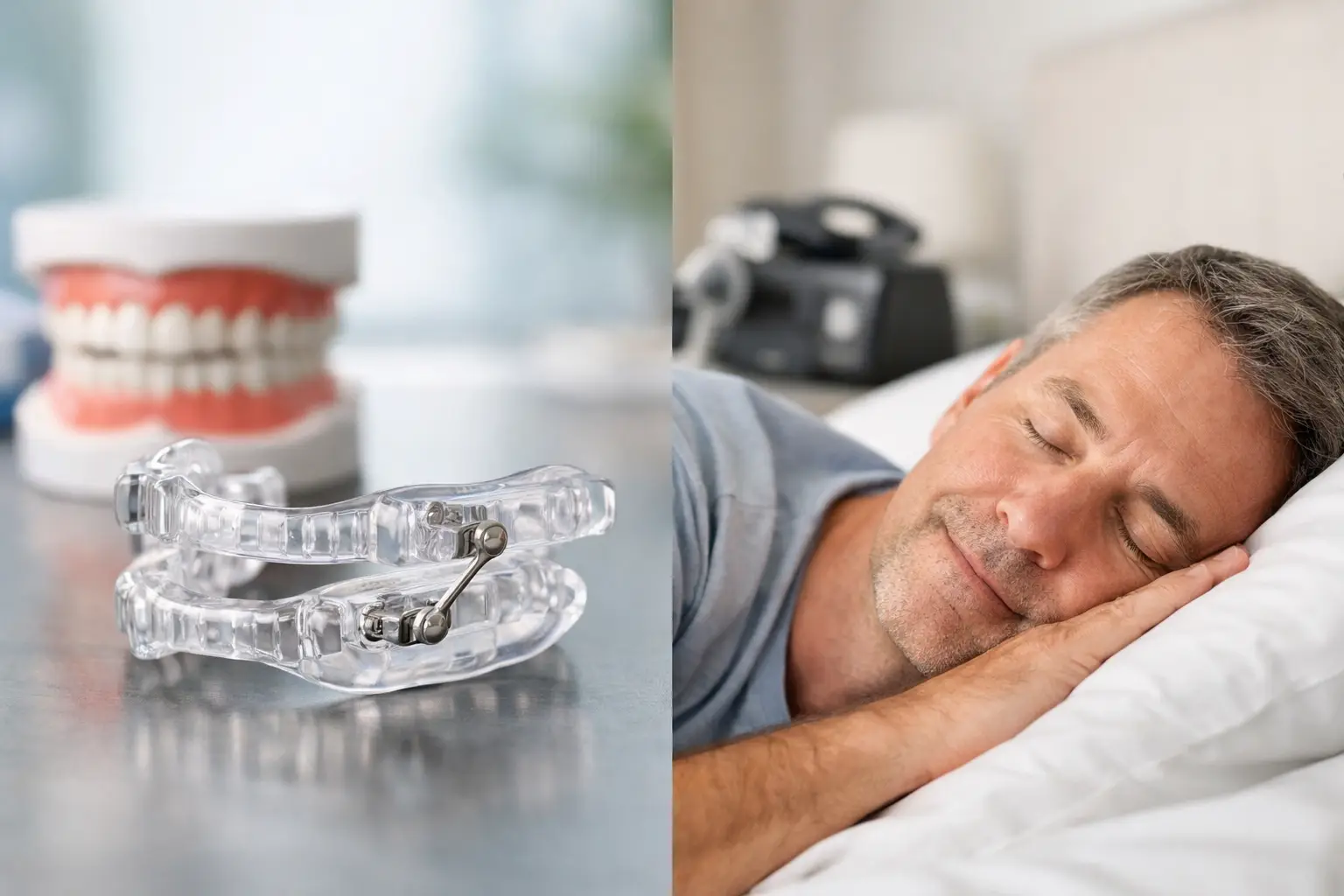
Snoring that shakes the room is easy to joke about until it turns into morning headaches, dry mouth, daytime fatigue, or a partner nudging you awake because you stopped breathing again. For many adults, an oral appliance for sleep apnea can be a practical option when a CPAP feels difficult to tolerate or simply does not fit daily life well.
That said, this is not a one-size-fits-all solution. Sleep apnea varies in severity, jaw structure, airway anatomy, and health history, so the right treatment depends on more than whether a device looks comfortable. The goal is not just quieter sleep. It is safer, more restful breathing night after night.
What is an oral appliance for sleep apnea?
An oral appliance for sleep apnea is a custom-made device worn during sleep to help keep the airway more open. Most designs fit over the teeth like a retainer or orthodontic tray and gently reposition the lower jaw, tongue, or both. By moving these structures forward, the appliance can reduce airway collapse that contributes to obstructive sleep apnea.
The key word here is custom. Over-the-counter snoring devices are easy to find, but they are not the same as a professionally designed appliance based on your bite, jaw position, and airway needs. A custom appliance is made to fit securely, minimize unwanted tooth pressure, and allow for adjustments over time.
For many patients, comfort is the reason this option stands out. It is small, portable, quiet, and does not involve hoses or a mask. That can make it more realistic for travel, shared bedrooms, and people who struggle to sleep with bulky equipment.
Who is a good candidate?
In many cases, oral appliances are most effective for people with mild to moderate obstructive sleep apnea. They may also help patients with primary snoring or those who have been prescribed CPAP but cannot wear it consistently. If a treatment works well in theory but stays on the nightstand, it is not doing much good.
This option can be especially appealing to adults who want something simple and low-profile. Working professionals, frequent travelers, and patients who value convenience often like the idea of a device that slips in easily and does not change the bedtime routine too much.
Still, candidacy depends on more than preference. Your teeth, gums, jaw joints, and bite all matter. If you have significant TMJ pain, loose teeth, advanced gum disease, or certain bite patterns, the appliance may need special design changes or may not be the best first choice. This is one reason evaluation by a trained dental provider matters.
How an oral appliance works during sleep
Obstructive sleep apnea happens when soft tissues in the airway collapse and block airflow during sleep. That can lower oxygen levels and interrupt sleep over and over, even if you do not fully remember waking up. The result is often fragmented rest and stress on the body.
A mandibular advancement device, which is the most common type of oral appliance, works by holding the lower jaw slightly forward. That forward position can help tighten the soft tissues around the airway and reduce obstruction. Some appliances also help control tongue position.
The amount of movement is not random. Too little advancement may not improve the airway enough. Too much may strain the jaw or teeth. The appliance is usually adjusted gradually to balance effectiveness and comfort.
Benefits patients often notice
The most obvious benefit is often reduced snoring. For couples, that can be a major quality-of-life improvement right away. But the bigger goal is better breathing and more restorative sleep.
Some patients notice they wake up feeling clearer, less groggy, and less dependent on coffee to get moving. Others find they have fewer morning headaches or less dry mouth. If poor sleep has been affecting mood, concentration, or patience, those improvements can matter just as much as quieter nights.
Another benefit is convenience. A custom appliance is easy to pack, easy to clean, and usually easy to wear once you adjust to it. For patients who have tried CPAP and felt overwhelmed by the equipment, that simplicity can make treatment feel manageable instead of stressful.
The trade-offs to know before choosing one
Comfort does not mean perfect for everyone. Oral appliances can cause temporary side effects, especially during the adjustment phase. Mild tooth soreness, jaw tightness, excess saliva, or a feeling that your bite is off in the morning are all possible.
Most of these issues can be managed with careful fitting and follow-up, but they should not be ignored. Over time, some patients can experience bite changes if the appliance is not monitored properly. That does not mean the treatment is unsafe. It means follow-up care is part of doing it well.
Effectiveness is another important trade-off. An oral appliance can work very well for some people and only partially for others. Severe obstructive sleep apnea, certain airway patterns, higher body mass index, or nasal and soft tissue factors may make CPAP or another treatment more effective. It depends on the individual.
Oral appliance vs CPAP
This is where many patients feel stuck. CPAP is often considered the gold standard because it can be highly effective at preventing airway collapse, especially in moderate to severe cases. But effectiveness on paper is only part of the story. Real-world success depends on whether the patient can actually use it consistently.
An oral appliance generally does not produce the same level of airflow support as CPAP. What it offers instead is wearability. For some people, that leads to better adherence and meaningful symptom relief. For others, especially those with more severe sleep apnea or medical complications, CPAP remains the better option.
This is not a contest between two devices. It is a question of what will safely and realistically improve your sleep. In some cases, providers even recommend a combination approach depending on your diagnosis and response to treatment.
Why a custom fit matters
A sleep appliance should do more than fit in your mouth. It should fit your bite, your jaw movement, and your treatment goals. That usually starts with a detailed exam, digital imaging or impressions, and a review of your sleep study results.
A custom device can then be fabricated to match your anatomy and adjusted in a controlled way. That level of precision matters for both comfort and outcome. If an appliance is too loose, too bulky, or pushes the jaw in the wrong way, patients are less likely to wear it and more likely to develop soreness.
At a specialty practice that understands both bite function and airway concerns, the process is typically more personalized. That can be especially helpful if you already have orthodontic history, jaw discomfort, or questions about how treatment may affect your teeth over time.
What the treatment process usually looks like
Most patients begin with a consultation and exam. If sleep apnea has already been diagnosed through a sleep study, that information helps guide planning. If it has not, the first step may be referral for proper diagnosis before an appliance is considered.
Once the appliance is prescribed, records are taken to design the device around your mouth and jaw position. When it is delivered, you will receive instructions on how to insert it, remove it, clean it, and ease into wear. Follow-up visits are important because small adjustments can make a big difference in comfort and effectiveness.
Some patients adapt within a few nights. Others need a few weeks. That is normal. The goal is not to rush. It is to get to a position where you can wear the appliance regularly and sleep more comfortably with it.
When to talk with a provider
If you snore heavily, wake up tired, have been told you stop breathing in your sleep, or feel exhausted even after a full night in bed, it is worth getting answers. Untreated sleep apnea can affect more than energy levels. It can also place strain on heart health, blood pressure, and daily functioning.
If you already know you have obstructive sleep apnea and are looking for an alternative to CPAP, asking about a custom oral appliance is a reasonable next step. The best conversations are honest ones. Share what has or has not worked for you, whether you have jaw pain, and what kind of treatment feels realistic for your lifestyle.
For patients in Westminster and nearby communities, a practice like 1st Impressions Orthodontics can help evaluate whether this option fits both your airway needs and your bite. That matters because successful treatment should feel personalized, not generic.
Better sleep often starts with a simple question: what can I actually stick with every night? If an oral appliance is the right fit, it can make restful sleep feel a lot more possible.