
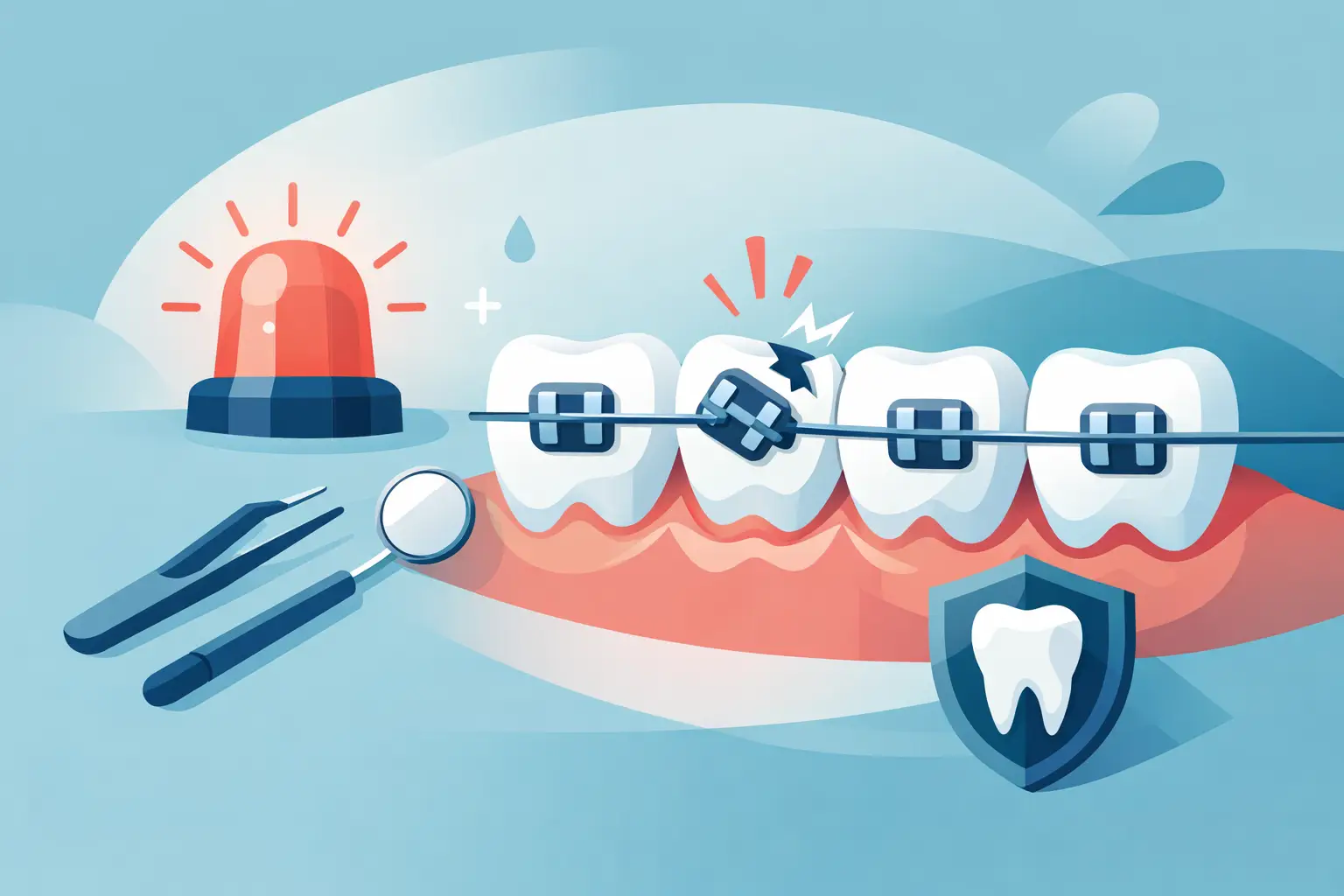
You are halfway through lunch, you bite into something a little harder than expected, and suddenly a bracket feels loose. That moment can be frustrating, especially if you are worried your treatment is now off track. An orthodontic emergency broken bracket is common, and while it usually is not dangerous, it does need the right next steps to protect your comfort and your progress.
What counts as an orthodontic emergency broken bracket?
A broken bracket means the small metal or clear attachment bonded to your tooth has loosened, shifted, or come off completely. Sometimes it is still attached to the wire and sliding around. Other times it pops off entirely. In many cases, this is not a medical emergency like severe swelling, trauma, or uncontrolled bleeding. It is still an orthodontic issue that should be handled promptly.
The reason is simple. Braces work by applying steady, controlled pressure. If one bracket is no longer doing its job, that tooth may stop moving as planned or begin moving in a way your orthodontist did not intend. The longer it stays broken, the more likely it is that treatment timing or efficiency can be affected.
What to do right away
Start by staying calm and taking a close look in the mirror. If the bracket is loose but still connected to the wire, do not try to pull it off. If it has fully come off and you can safely retrieve it, place it in a small clean container or plastic bag and bring it to your appointment.
Next, check whether the wire or bracket is irritating your cheek, lip, or gum. Orthodontic wax can help cover a sharp edge and make things more comfortable until you are seen. If you do not have wax, a small piece of sugar-free gum can work temporarily in a pinch, but wax is usually the better option.
Soft foods are a good idea until the bracket is repaired. Think yogurt, pasta, soup, eggs, smoothies, oatmeal, or soft rice. The goal is to avoid putting extra force on the damaged area.
Then call your orthodontic office. Even if you are not in pain, it is worth letting them know what happened. They can tell you whether you should come in right away or if it can safely wait a short time until the next available visit.
What not to do
The biggest mistake is trying to fix the bracket yourself. Household glue, tweezers, nail clippers, or online DIY advice can make a small problem much harder to correct. Brackets need to be placed with precision on a clean, dry surface using the right materials. Even if a home fix seems to hold for a day or two, it can interfere with the accuracy of treatment.
It is also best not to keep testing the loose bracket with your fingers or tongue. That usually increases irritation and may loosen the bond even more. Avoid crunchy foods, sticky snacks, hard candy, ice, nuts, and anything chewy until your orthodontist has repaired the area.
When a broken bracket needs faster attention
Not every loose bracket requires a same-day visit, but some situations do call for quicker care. If the wire is poking into soft tissue and wax is not helping, if a bracket is creating significant pain, or if the problem happened after a hit to the mouth, contact your orthodontist as soon as possible.
There is also a difference between inconvenience and urgency. A bracket sliding on the wire may be manageable for a day or two. A bracket that comes with swelling, bleeding, a cracked tooth, or facial injury is a different situation and deserves more immediate evaluation.
For parents, it can be hard to tell whether a child or teen is overreacting or underreporting discomfort. A good rule is this: if your child cannot eat normally, cannot sleep comfortably, or has visible irritation that is getting worse, call.
Why brackets break in the first place
Most broken brackets are caused by force. Hard foods are one of the most common reasons, especially popcorn kernels, crusty bread, hard pizza edges, ice, nuts, and crunchy chips. Sticky foods like caramel and taffy can also pull on brackets in ways they were never meant to handle.
Sports and accidental bumps are another common cause. Even a mild impact can loosen a bracket. That is one reason custom mouth guards matter for athletes wearing braces.
Sometimes the issue is less dramatic. A bracket may loosen because of normal wear, a weakened bond, tooth shape, or a tooth that is under heavier bite pressure than expected. That does not always mean anyone did something wrong. Orthodontic treatment happens in real life, and real life includes meals, school, work, practices, and the occasional surprise.
Will a broken bracket delay treatment?
It can, but not always. It depends on which tooth is involved, how long the bracket has been loose, and what stage of treatment you are in. A bracket on a front tooth that is actively being aligned may matter more than one on a tooth that is in a more stable phase. If the wire is no longer engaged properly, movement may pause in that area.
That is why communication matters. The earlier your orthodontist knows about the problem, the easier it usually is to correct it with minimal disruption. Waiting several weeks and mentioning it only at the next scheduled visit can sometimes create a bigger setback than patients expect.
What to expect at the repair visit
Most broken bracket appointments are straightforward. Your orthodontist or team will evaluate the tooth, remove any remaining adhesive if needed, and decide whether the same bracket can be rebonded or if a replacement is better. They will also check the wire and surrounding brackets to make sure everything is working together the way it should.
In some cases, the tooth surface needs to be cleaned thoroughly before a new bond is placed. In others, the wire may need adjustment at the same time. If the broken bracket caused unwanted tooth movement or irritation, your treatment plan may need a small modification. That is normal and part of careful orthodontic management.
Patients often worry that a repair visit will be long or complicated. Usually, it is much simpler than they expect. The bigger issue is not the visit itself. It is delaying the visit.
How to stay comfortable until you are seen
Comfort matters, especially for busy adults, kids with school schedules, and teens already adjusting to braces. If the area feels sore, stick with softer foods and avoid chewing on the affected side. Warm saltwater rinses can help soothe irritated tissue. Orthodontic wax is still the best option for a bracket or wire rubbing the inside of the mouth.
If you are dealing with mild tenderness, over-the-counter pain relief may help if it is appropriate for you or your child. Follow label instructions and your physician’s advice. If pain feels sharp, worsening, or out of proportion to what you see, that is another reason to call rather than wait it out.
How to reduce the chances of it happening again
Prevention is never perfect, but a few habits make a real difference. Cutting apples instead of biting into them, skipping ice chewing, avoiding sticky candy, and wearing a mouth guard during sports all help protect brackets. Patients who snack frequently on crunchy convenience foods often have more bracket issues than they realize.
For adults, workplace habits matter too. Chewing pens, opening packages with your teeth, or absentmindedly crunching ice during the day can easily undo a bracket bond. For younger patients, reminders help. Not because they are careless, but because braces are easy to forget until something pops loose.
A supportive orthodontic team should never make you feel embarrassed about a broken bracket. These things happen. What matters most is getting clear guidance and timely care so you can move forward comfortably.
When reassurance matters as much as repair
An orthodontic emergency broken bracket can feel bigger than it is, especially if treatment is already a big investment of time and energy. The good news is that this is one of the most common issues orthodontists see, and it is usually very manageable with prompt attention.
At 1st Impressions Orthodontics, that kind of situation is exactly why responsive, personalized care matters. Patients should know what to do, feel supported when something goes wrong, and have confidence that their smile is still moving in the right direction.
If a bracket breaks, do not panic and do not try to power through for weeks. Protect the area, keep things soft, and reach out. A small problem handled early is usually just that – small.