
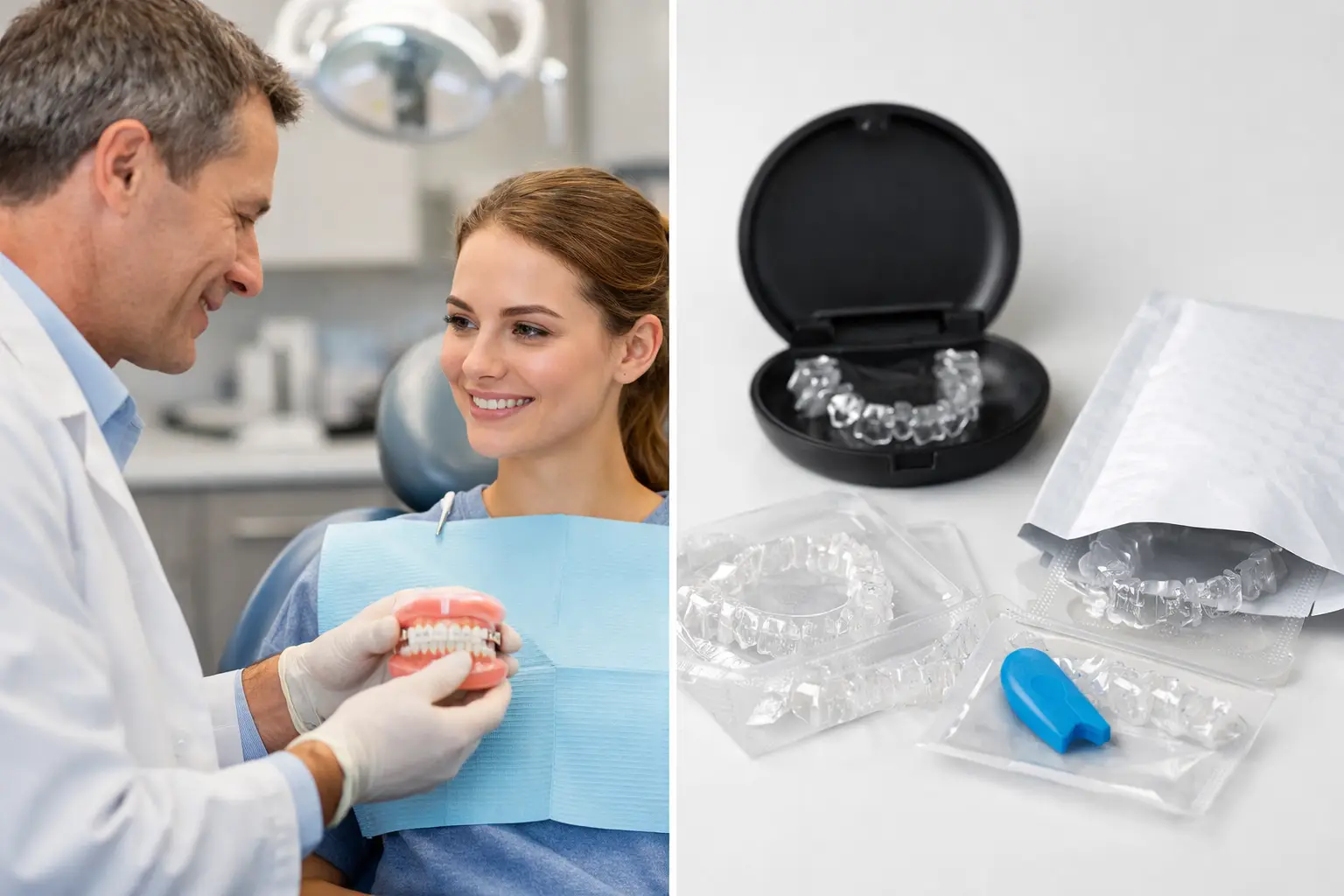
A straighter smile can look simple from the outside. A few trays, a few months, and done – that is often how mail-order aligners are advertised. But when you are deciding between an orthodontist versus mail order aligners, the real question is not just how your teeth will look. It is whether your teeth, bite, gums, and jaw are being moved in a healthy, carefully monitored way.
That difference matters more than most people realize. Teeth do not move through bone like pieces on a board. Every adjustment affects surrounding teeth, your bite, and the health of the tissues supporting them. What seems like a cosmetic change can quickly become a functional issue if treatment is not planned well.
Orthodontist versus mail order aligners: what changes?
At a glance, both options may involve clear plastic trays. That is where the similarity often ends.
With an orthodontist, treatment starts with a full evaluation. That may include photos, digital scans, X-rays, and a bite assessment. The goal is to understand not only whether teeth are crowded or spaced, but also whether there are hidden issues such as impacted teeth, bone loss, gum concerns, jaw alignment problems, or uneven bite forces. From there, your treatment plan is customized and adjusted as your teeth respond.
Mail-order aligners are designed around a remote model. In many cases, the process begins with an at-home impression kit or a scan at a storefront. That information is used to create trays without the same level of in-person diagnostic review and ongoing supervision. For a very limited cosmetic case, that may sound appealing. But it also means there is less opportunity to catch problems early or correct the plan when teeth do not track as expected.
Orthodontic treatment is rarely as predictable as an ad suggests. Biology does not always cooperate with software.
The biggest difference is diagnosis
This is the part patients often do not see, because diagnosis happens before the first tray is ever worn.
An orthodontist is trained to evaluate how the teeth and jaws fit together, how facial growth may affect treatment, and whether moving one tooth will create problems somewhere else. That matters for adults with old dental work, teens whose mouths are still developing, and children who may need early guidance rather than just alignment.
X-rays are especially important. They can reveal root positions, missing teeth, extra teeth, bone support, and other issues that are impossible to assess from a photo or impression alone. If a tooth root is already short, if gum support is compromised, or if a tooth is blocked beneath the gums, a tray-only plan may not be appropriate.
Mail-order systems usually focus on what is visible. Orthodontists plan for what is visible and what is not.
Convenience is real, but so are the limits
There is a reason mail-order aligners attracted so much attention. They promise less time in an office, a lower upfront price, and a process that feels easy to start. For busy adults and parents juggling work, school, and activities, that convenience can be tempting.
And to be fair, convenience matters. Orthodontic care should fit into real life. Flexible scheduling, digital imaging, and clear treatment planning can make a big difference in how manageable treatment feels.
But convenience should not come at the cost of oversight. Teeth do not always move on schedule. Some aligners stop fitting. Some teeth lag behind. Sometimes attachments, enamel shaping, or a different approach altogether is needed to get a safe result. Those are not small details. They are often what make the difference between a smooth finish and a frustrating setback.
A good orthodontic experience can still be convenient. It just includes actual clinical support when you need it.
Cost matters, but value matters more
Many patients start here, and that makes sense. Mail-order aligners are often marketed as the lower-cost option. In some cases, they are. But the lowest price is not always the lowest overall cost.
If treatment does not work, if your bite worsens, or if you need retreatment later, the initial savings can disappear quickly. Some patients end up paying for a second round of care with an orthodontist to correct problems that should have been addressed from the beginning.
Orthodontist-guided treatment usually costs more because it includes diagnostics, supervision, refinements, and the ability to respond to changes during treatment. You are not only paying for trays. You are paying for expertise, monitoring, and a treatment plan built around your actual mouth rather than an idealized digital simulation.
For many families and adults, the better question is not Which option is cheapest today? It is Which option gives me the best chance of getting the right result the first time?
Who may be a candidate for mail-order aligners?
There is some nuance here. Not every alignment concern is severe, and not every patient needs complex correction. A very mild spacing issue or slight relapse after past orthodontic treatment may look like a simple tray case.
Even then, it is smart to have an orthodontist evaluate the situation first. What appears minor on the surface may involve bite interference, tooth rotation, or gum concerns that need a different approach. Mild cases can still go off track.
If your goals are strictly cosmetic and your bite is already healthy, you may be wondering whether remote aligners are enough. Sometimes the answer may be yes in a limited sense. But patients should understand what they are giving up: hands-on exams, more complete diagnostics, and the ability to make in-person corrections as treatment unfolds.
When an orthodontist is the better choice
If you have crowding, bite problems, crossbite, overbite, underbite, jaw discomfort, a history of shifting teeth, or any uncertainty about what is happening beneath the surface, orthodontist-supervised care is the stronger option.
It is also the better choice for children and teens. Growth changes the equation. A young patient may need early interceptive care, space management, or timing that aligns with development. That cannot be handled well through a mail-order model.
Adults often benefit from orthodontic supervision too, especially if they have crowns, bridges, missing teeth, gum recession, or TMJ concerns. These are common situations, and they require thoughtful planning. Straightening teeth without accounting for the bite can create new discomfort instead of solving the original concern.
Orthodontist versus mail order aligners for long-term results
A straighter smile is not the only goal. A stable bite, healthy roots, and long-term retention matter too.
Orthodontists monitor not just tooth movement, but how your teeth come together at the end of treatment. If the front teeth look straighter but the back teeth do not meet properly, that can affect chewing, comfort, and stability. Finishing details are where professional oversight really shows.
Retention is another issue patients underestimate. Teeth naturally want to shift after treatment. An orthodontist can guide you on retainers, wear schedules, and follow-up based on your specific risk factors. That kind of support helps protect the time and money you invested.
Mail-order systems may provide retainers, but they typically do not offer the same level of long-term relationship or individualized follow-through.
What patients often want most
Most people are not looking for the most technical explanation. They want to know three things: Will this work, will it be safe, and will someone help me if something feels off?
That is where specialist care tends to feel different. You are not left guessing whether a tray fits correctly or whether discomfort is normal. You have a team who can assess progress, answer questions clearly, and make adjustments before small issues become bigger ones.
For patients in Westminster and nearby communities who want treatment to feel straightforward, that support can be just as valuable as the aligners themselves. The process feels less stressful when you know someone is paying close attention.
The right choice depends on your teeth, not just the ad
Clear aligners can be an excellent treatment option. Many orthodontists use them every day and achieve precise, healthy results. The real decision is not aligners or no aligners. It is whether your treatment is being guided by a specialist who can diagnose fully, monitor carefully, and adjust when needed.
If your case is truly minor, you may still decide a remote option fits your priorities. But if you want a complete understanding of your smile, your bite, and your safest path forward, an orthodontic evaluation is the better place to start.
A confident smile should not come with avoidable guesswork. The best treatment plan is the one built around your health, your goals, and the kind of support that helps you feel cared for from the first scan to the final retainer.