
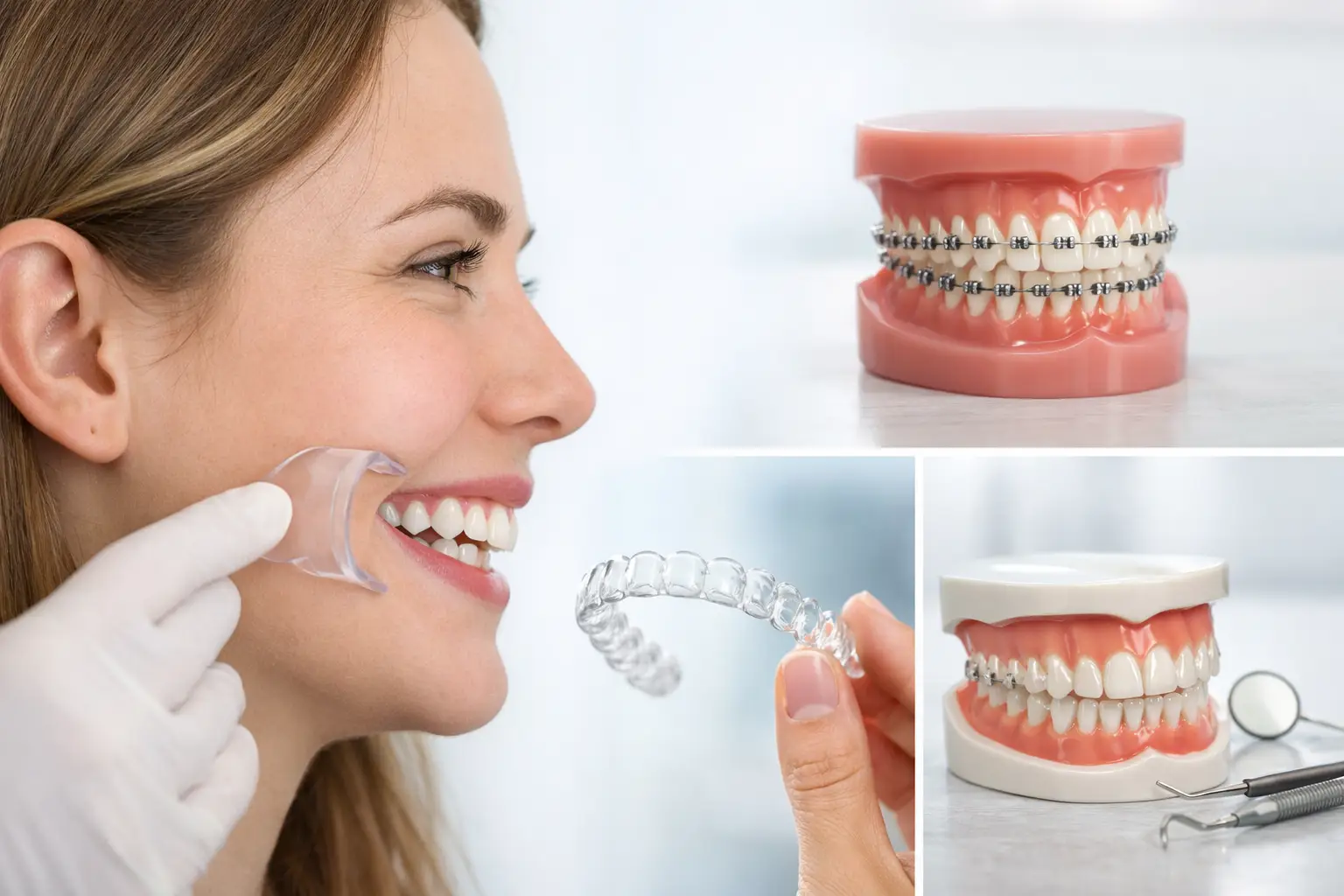
A lot of people don’t realize their front teeth covering too much of the lower teeth is more than a cosmetic issue until they start noticing wear, jaw tension, or trouble biting comfortably. If you’ve been looking into overbite correction options, the best place to start is understanding that treatment depends on how severe the bite is, what’s causing it, and whether the patient is still growing.
An overbite happens when the upper front teeth overlap the lower front teeth more than they should. A small amount of overlap is normal. The concern is when that overlap becomes deep enough to affect tooth wear, gum health, jaw function, or the appearance of the smile. For some patients, it shows up as lower teeth that seem hidden. For others, it feels like clenching, irritation behind the front teeth, or a bite that never feels settled.
What causes an overbite?
Not all overbites develop for the same reason, and that matters when choosing treatment. In some cases, the issue is mostly dental, meaning the teeth have shifted into a deep bite position even though the jaws themselves are fairly balanced. In other cases, the upper and lower jaws grew in a way that created a more pronounced vertical overlap.
Habits and timing can also play a role. Thumb sucking, tongue posture, early loss of baby teeth, crowding, and natural growth patterns may all contribute. Adults sometimes assume they missed their chance to fix it, but that is not usually the case. While growth-based treatment works differently in children than in adults, there are still effective options later on.
Overbite correction options for kids, teens, and adults
The right treatment is not one-size-fits-all. A child with developing jaws, a teen with a deep dental bite, and an adult with significant jaw imbalance may all need very different plans.
Braces for overbite correction
Braces are one of the most reliable overbite correction options because they give orthodontists precise control over tooth movement. Metal braces and clear braces can both be used to level the bite, improve tooth position, and reduce excessive overlap.
For many patients, braces are especially effective when the overbite is paired with crowding, rotations, or a more complex bite pattern. Small adjustments over time can intrude certain teeth, move others into better alignment, and help the upper and lower arches fit together more comfortably. The advantage here is control. The trade-off is visibility and, for some patients, a little more day-to-day maintenance.
Invisalign and clear aligners
Invisalign is a popular choice for teens and adults who want a lower-profile treatment experience. Clear aligners can correct many types of overbites, especially when the case is mild to moderate and the patient is consistent about wear time.
This option appeals to patients who want flexibility at work, school, or social events. Aligners are removable, which makes brushing and eating easier than with braces. That said, they only work well if they are worn as directed. If someone tends to forget them or leaves them out for long stretches, treatment may take longer or be less predictable.
For the right patient, clear aligners can be a very comfortable and convenient way to improve both smile appearance and bite function. A detailed exam and digital imaging help determine whether aligners can provide the level of correction needed.
Early orthodontic treatment
When overbite concerns show up in childhood, early evaluation can be helpful. This does not mean every child needs immediate treatment. It means there is value in checking growth, bite development, and tooth eruption while the mouth is still changing.
Some younger patients benefit from interceptive treatment that guides jaw development, creates room for incoming teeth, or reduces a bite problem before it becomes more complicated. In growing patients, timing can make a real difference. The goal is not to rush treatment, but to use the right window of growth when it offers an advantage.
Parents often appreciate having a clear plan, even if that plan is simply to monitor. Knowing what is developing and when to act can remove a lot of uncertainty.
Rubber bands and bite-correcting appliances
Sometimes braces or aligners are only part of the answer. Elastics, also called rubber bands, and other bite-correcting appliances may be used to help improve how the upper and lower arches relate to each other.
These tools can be very effective, but they depend heavily on cooperation. If a patient does not wear elastics as instructed, progress can stall. That can be frustrating, especially when the rest of treatment is going well. When used consistently, though, these add-ons often make a meaningful difference in correcting bite relationships.
Tooth removal in select cases
Some overbites happen alongside severe crowding or protrusion, and in select situations, removing certain teeth may create the space needed to achieve a healthier bite. This is never a routine recommendation made lightly. It depends on facial balance, tooth position, crowding level, and long-term goals.
For the right case, extractions can improve both function and stability. For the wrong case, they can be unnecessary. That is why a personalized diagnosis matters more than broad advice you may see online.
Jaw surgery for severe skeletal overbite
When an overbite is caused mainly by jaw position rather than tooth position, orthodontic treatment alone may not fully correct it. In more severe skeletal cases, orthognathic surgery may be part of the treatment plan, usually combined with braces or aligners.
This is generally reserved for adults with significant functional or structural concerns. It is a bigger commitment, and not everyone needs it. But for patients with major jaw discrepancies, surgery can provide results that tooth movement alone cannot. A thoughtful consultation helps clarify whether the issue is dental, skeletal, or a mix of both.
How orthodontists decide which overbite correction option is best
The best treatment starts with the cause, not just the appearance. Two people can look like they have a similar overbite and still need completely different care. That is why a proper exam matters.
Orthodontists look at tooth position, jaw relationship, facial proportions, airway considerations, signs of wear, gum health, and whether the patient is still growing. Digital scans and 3D imaging can make this process more precise and more comfortable. Instead of guessing based on one photo or a quick mirror check, your provider can evaluate how the bite functions as a whole.
Lifestyle matters too. A teen athlete, a busy parent, and a professional who spends all day in meetings may prioritize different treatment experiences. The best plan balances clinical effectiveness with what a patient can realistically stick with.
What treatment feels like in real life
Patients usually want to know two things right away: how long will it take, and will it be difficult to manage? The honest answer is that it depends on the complexity of the bite and the type of treatment chosen.
Some overbites can improve in under two years. More complex cases may take longer, especially if jaw growth, severe crowding, or compliance issues are involved. Mild soreness is common when treatment starts or changes, but it is usually temporary and manageable.
Daily life often gets easier once patients settle into a routine. Braces require more careful brushing and some food adjustments. Aligners require discipline and regular wear. Neither option is completely effortless, but both are very manageable with clear guidance and support.
Why waiting can make treatment more complicated
A deep overbite does not always get worse quickly, but it rarely fixes itself. Over time, excessive overlap can contribute to uneven wear on the front teeth, irritation to the gums or palate, and strain on the bite. Some patients also notice chipping, recession, or discomfort in the jaw muscles.
There is also the confidence piece. Many teens and adults spend years smiling carefully in photos or feeling self-conscious about how their teeth come together. When the bite is improved, patients often notice not just a straighter smile, but a more comfortable one.
At practices like 1st Impressions Orthodontics, the goal is not to push one treatment for everyone. It is to give patients clear guidance, modern diagnostic tools, and a plan that fits their needs without adding unnecessary stress.
If you suspect your bite is deeper than it should be, getting answers early can make the next step feel much simpler. The most helpful place to start is a personalized orthodontic evaluation, because the right treatment is not just about fixing an overbite on paper. It is about creating a bite that feels healthier, functions better, and supports your smile for the long run.