
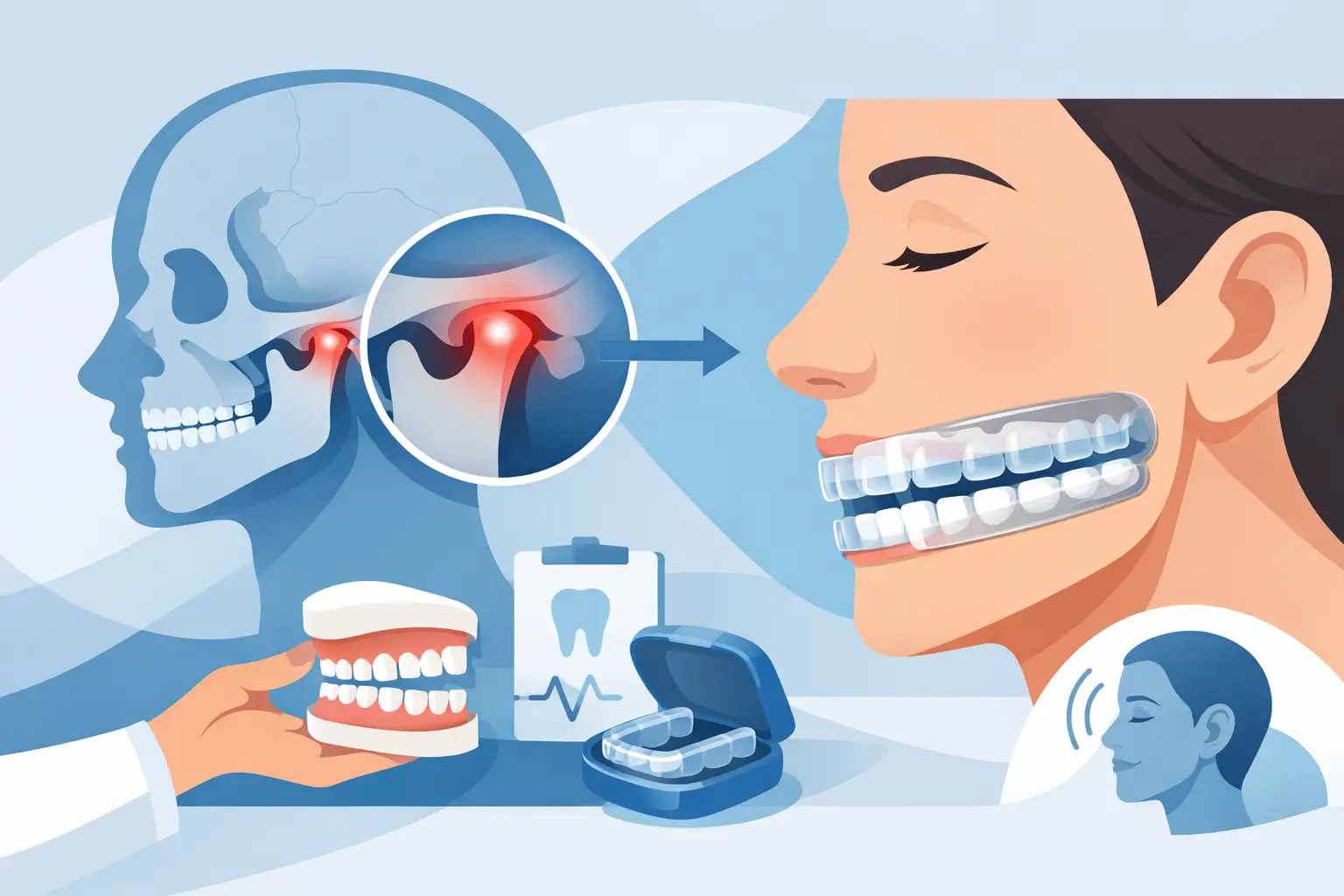
Jaw pain has a way of affecting everything. You may notice it when you wake up with tension in your face, when chewing feels tiring, or when a click in your jaw starts turning into real discomfort. For many patients, tmj treatment with oral appliance offers a practical, non-surgical way to reduce strain on the jaw and make daily life more comfortable.
The key is understanding what the appliance actually does and whether it matches the cause of your symptoms. TMJ problems are not one-size-fits-all. Some patients clench or grind at night. Others have bite imbalances, muscle tension, joint irritation, or a combination of several factors. That is why a careful evaluation matters just as much as the appliance itself.
What TMJ treatment with oral appliance is
An oral appliance for TMJ is a custom-made device that fits over the teeth, somewhat like a retainer or night guard, but designed for a specific purpose. It helps reduce pressure on the jaw joints and muscles by improving the way the teeth come together and by limiting the effects of clenching or grinding.
When the jaw is under constant strain, the muscles around it can become overworked. The joint may become irritated, and that can lead to headaches, facial soreness, popping, limited opening, neck tension, or pain around the ears. A properly designed appliance can help create a more stable, protected position for the jaw so those tissues have a chance to calm down.
For many people, this approach is appealing because it is conservative. It does not involve surgery, and it is reversible. That said, it is not the right solution for every case, and it works best when it is customized rather than bought over the counter.
Who may benefit from an oral appliance for TMJ
Patients often assume that jaw pain always comes from the joint itself, but that is not always true. Sometimes the larger problem is muscle tension from clenching. Sometimes the bite places uneven pressure on certain teeth and muscles. Sometimes stress, sleep habits, or existing orthodontic issues add to the strain.
TMJ treatment with oral appliance may help if you have jaw soreness, morning headaches, teeth grinding, clicking or popping, facial fatigue, or tenderness when chewing. It can also be worth discussing if you have worn teeth, a history of clenching, or symptoms that come and go but keep returning.
There are limits, though. If a patient has a more advanced joint disorder, significant arthritis in the joint, trauma, or symptoms that point to another medical issue, an oral appliance may be only one part of the plan or may not be the main treatment at all. Good care starts with sorting out what is actually driving the discomfort.
How a custom oral appliance helps the jaw
A custom appliance is designed to fit your teeth precisely. That fit matters because even small pressure imbalances can affect comfort. When an appliance is made specifically for your bite, it can help reduce muscle overactivity, lessen the effects of nighttime grinding, and support a more relaxed jaw position.
Some appliances mainly protect the teeth and reduce the intensity of clenching. Others are designed to guide the jaw into a more favorable position. The right style depends on your symptoms, bite relationship, and the condition of the jaw joints. This is one reason self-diagnosing or buying a generic night guard online can be frustrating. What helps one person may aggravate another.
A well-made appliance should feel intentional, not bulky and random. Patients often describe relief as gradual rather than dramatic. You may notice less morning tightness first, then fewer headaches, then a reduction in jaw fatigue over time. The process can be subtle, but that does not mean it is not working.
Why a custom appliance is different from a store-bought night guard
This is an important distinction. A store-bought night guard may create a barrier between the upper and lower teeth, but it is not built around your bite, your jaw function, or your specific TMJ symptoms. In some cases, it may help with simple grinding. In others, it can create more uneven contact and increase strain.
A custom oral appliance is based on a professional exam and detailed records of your teeth and bite. The goal is not just to put something between your teeth. The goal is to create a therapeutic appliance that supports healthier jaw function.
That custom approach also allows for adjustments. If a patient starts treatment and the appliance needs fine-tuning, those changes can make a major difference in comfort and effectiveness. TMJ care often improves through small, precise refinements rather than a one-time fix.
What to expect during evaluation and treatment
A thoughtful TMJ evaluation usually begins with a conversation about your symptoms. When does the discomfort happen? Is it worse in the morning or later in the day? Do you hear clicking, feel locking, or notice pain when chewing? A provider will also look at your bite, jaw movement, muscle tenderness, and signs of wear on the teeth.
Digital imaging or 3D imaging may also be helpful, especially when bite relationships and joint position need a closer look. This kind of technology supports more precise planning and helps rule out other concerns that may affect treatment.
If an oral appliance is recommended, impressions or digital scans are used to create a custom fit. Once the appliance is ready, it is checked carefully and adjusted as needed. Follow-up visits matter because the first version may not be the final version. The goal is a comfortable fit and measurable symptom improvement, not just getting the appliance delivered.
Oral appliance therapy works best with the right overall plan
One of the most common misunderstandings about TMJ treatment is that a single device can solve every cause of jaw pain. Sometimes it can do a great deal on its own. Other times, it works best as part of a larger plan.
For example, if a patient has bite issues that contribute to jaw strain, orthodontic treatment may need to be part of the long-term solution. If stress-related clenching is a major factor, lifestyle changes and awareness strategies may help support better results. If muscle inflammation is high, short-term supportive care may be recommended while the appliance starts doing its job.
That does not mean treatment has to become complicated. It means personalized care matters. A plan should reflect your symptoms, your schedule, and your goals, while staying as conservative and comfortable as possible.
How long does TMJ treatment with oral appliance take?
This depends on the patient. Some people feel relief within a few weeks. Others improve more gradually over a few months, especially if symptoms have been present for a long time. The severity of clenching, the condition of the muscles and joints, and how consistently the appliance is worn all play a role.
In many cases, the appliance is worn at night. Some patients may need daytime wear for part of treatment, depending on symptoms and the type of appliance. That recommendation should be individualized. More wear is not automatically better if it interferes with comfort or daily life.
It is also worth knowing that progress is not always perfectly linear. You might feel much better, then have a stressful week and notice symptoms flare again. That does not mean treatment failed. It usually means the jaw is sensitive to several factors, and your care plan may need small adjustments.
Choosing care that feels precise and supportive
TMJ symptoms can make people feel unsure about where to start. The pain is real, but the cause is not always obvious. That is why it helps to work with a provider who looks at the full picture, not just the symptom of the day.
At 1st Impressions Orthodontics, that means combining compassionate care with a careful evaluation, modern imaging, and a treatment plan tailored to the patient in front of us. For adults balancing work and family, for teens dealing with clenching or bite issues, and for parents trying to make the right decision for their child, clear guidance matters.
If you are considering tmj treatment with oral appliance, the best next step is not guessing. It is getting answers that are specific to your bite, your symptoms, and your comfort. Relief often starts there, with a plan that feels manageable and a team that takes the time to get it right.
Jaw discomfort can wear you down slowly, but treatment does not have to feel overwhelming. With the right diagnosis and a custom approach, small changes in how your jaw functions can lead to meaningful changes in how you feel every day.