
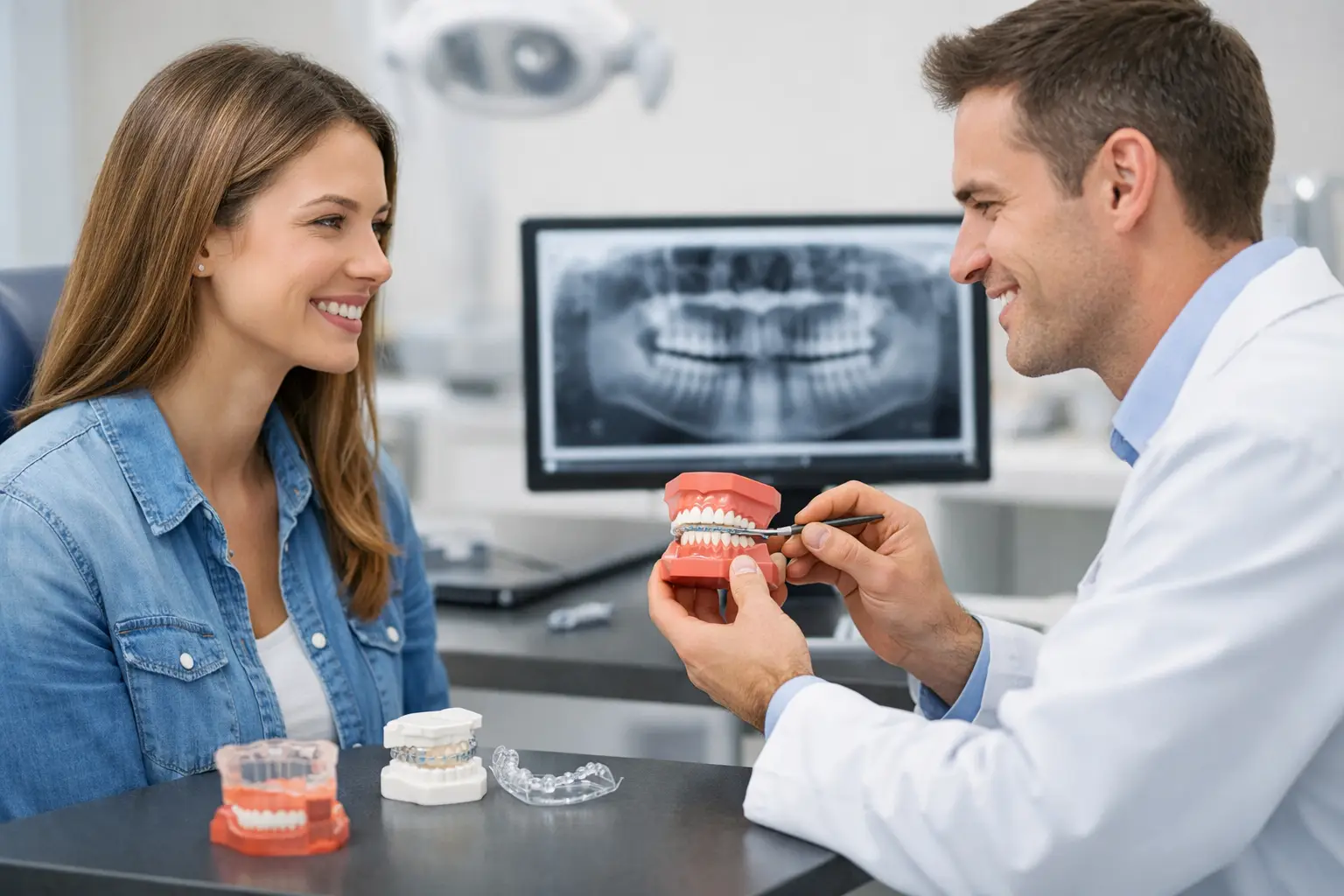
Walking into your first orthodontic visit can bring a mix of curiosity and nerves. If you are wondering what happens at orthodontic consultation, the short answer is this: you get clear answers, a close look at your teeth and bite, and a personalized plan for what comes next.
For many patients, the biggest relief is finding out that the first visit is usually more comfortable and more straightforward than expected. It is not about pressure. It is about understanding your smile, your bite, your concerns, and the treatment options that make the most sense for your life.
What happens at an orthodontic consultation first?
Most consultations begin with a conversation. Before anyone talks about braces or aligners, the orthodontic team usually wants to know what brought you in. Maybe your child’s dentist recommended an evaluation. Maybe your teen is ready for braces. Maybe you are an adult who has been thinking about Invisalign for years and finally decided to ask questions.
That first conversation matters because orthodontic care is not one-size-fits-all. Two people can both have crowded teeth and still need very different treatment plans. One may mainly want cosmetic improvement, while the other has a bite issue that affects comfort, chewing, or long-term tooth wear.
You will likely be asked about dental history, medical history, jaw discomfort, breathing or sleep concerns, and any habits or symptoms that may affect treatment. If you have had prior orthodontic work, retainers, tooth extractions, or dental injuries, that information helps shape the evaluation.
A close look at your teeth, bite, and facial balance
After the initial discussion, the orthodontist performs an exam. This is the part many patients expect, but it is usually more detailed than just checking whether teeth are straight.
The orthodontist looks at how your upper and lower teeth fit together, whether there is crowding or spacing, how the jaws are aligned, and whether there are signs of problems like crossbite, overbite, underbite, or open bite. They may also evaluate how your smile appears when you talk or smile naturally, as well as how your lips and jaw balance with your facial features.
This broader view is important because orthodontics is about more than appearance. Straight teeth matter, but so do function, comfort, stability, and long-term oral health. A treatment plan that looks good but ignores bite problems may not be the best plan.
If the patient is a child, the orthodontist may also look at how the permanent teeth are developing and whether early treatment could help guide growth. Early orthodontic treatment is not necessary for every child, so this visit often helps parents sort out whether treatment should start now or wait until more development has happened.
Digital imaging and records
In many modern practices, the consultation also includes diagnostic records. These may involve digital photos, X-rays, and sometimes 3D imaging or scans of the teeth.
These records help the orthodontist see what is happening below the surface. Teeth that look mildly crowded on the outside can have root positions or eruption patterns that change the treatment approach. Imaging also helps assess jaw relationships, impacted teeth, bone support, and overall dental development.
For patients, this part is often reassuring because it makes the discussion more concrete. Instead of hearing general comments, you can actually see the bite, tooth positions, and treatment concerns being discussed. That kind of visual explanation tends to make the process feel less overwhelming.
Talking through your treatment options
Once the exam and records are complete, the orthodontist usually reviews findings and explains your options. This is where many people finally get answers to questions they have had for months or years.
If treatment is recommended, you may hear about metal braces, clear braces, Invisalign clear aligners, limited treatment, retainers, or early interceptive options for children. In some cases, the recommendation may be to wait and monitor growth or tooth eruption rather than begin treatment right away.
This is where experience really matters. The best recommendation is not always the least visible option or the fastest option. It depends on your bite, tooth movement needs, age, compliance, and goals. Invisalign can be an excellent choice for many teens and adults, but some cases are better handled with braces. In other situations, both options may work well, and the decision comes down to lifestyle preferences.
A good consultation should explain those trade-offs clearly. For example, clear aligners can be more discreet and easier for brushing and flossing, but they need to be worn consistently. Braces stay on full time, which removes some of the responsibility, but they are more visible and may require some food restrictions. Neither option is automatically better for everyone.
What happens at orthodontic consultation when costs come up?
Cost is one of the biggest concerns patients bring to a first visit, and it should be discussed openly. A strong consultation does not avoid that part of the conversation.
After reviewing the recommended treatment, the team will often go over fees, payment options, insurance benefits, and financing. The exact timing varies by office, but financial clarity should be part of the process. You should leave with a realistic understanding of what treatment may cost and what your options are for making it manageable.
This is also a good time to ask what is included. Some treatment fees cover retainers and follow-up visits, while others may handle those separately. If the plan includes phased treatment for a child, ask how future treatment may be handled as well.
For adults balancing work, family, and monthly budgets, this part matters just as much as the clinical recommendation. The right treatment plan has to work for your smile and your life.
Questions you should feel comfortable asking
A consultation should feel informative, not rushed. If you are not sure what to ask, start with the questions that affect your day-to-day life.
Ask how long treatment may take, what kind of results you can reasonably expect, how often appointments are needed, and whether there are any lifestyle changes involved. If you are considering Invisalign, ask whether you are a strong candidate and what would happen if aligners are not worn as prescribed. If braces are being recommended, ask why they may be the better fit for your case.
Parents often want to know whether treatment is urgent, whether growth can be guided now, and how orthodontics may affect school, sports, and oral hygiene. Adults may want to know how visible treatment will be in professional settings or whether jaw discomfort and bite strain might improve.
Good orthodontic care includes clear guidance. You should never feel like you are supposed to just nod along and commit without understanding the plan.
What if no treatment is needed yet?
Sometimes the most helpful outcome of a consultation is hearing that now is not the right time to start. That may happen with younger children who need monitoring as more permanent teeth come in, or with patients whose development should be observed before making a final decision.
That does not mean the visit was unnecessary. It means you now have a professional baseline and a timeline for reevaluation. In orthodontics, timing can make a real difference. Starting too early can create extra treatment time, while waiting too long in some cases can make correction more difficult. A thoughtful consultation helps avoid both extremes.
What the experience should feel like
The technical side of the visit matters, but so does the way you are treated. A quality orthodontic consultation should feel judgment free, personalized, and easy to follow.
You should feel listened to if you are self-conscious about your smile, worried about your child, or unsure whether treatment is worth it. You should not feel talked down to or pushed toward the most expensive option. The goal is to combine clinical precision with practical guidance, so you can make an informed decision with confidence.
That is especially important for nervous patients. Many people delay orthodontic care because they assume the process will be complicated, uncomfortable, or full of sales pressure. In reality, a well-run consultation is designed to reduce uncertainty, not add to it.
At a practice like 1st Impressions Orthodontics, that often means using modern imaging, explaining findings clearly, and building a treatment plan around comfort, convenience, and real-life goals.
After the consultation
By the end of your visit, you should know whether treatment is recommended, what your options are, how long treatment may take, and what the financial picture looks like. In some cases, you may be able to schedule the next step right away. In others, you may choose to go home, think it over, and come back when you are ready.
Either way, the consultation is not just a formality. It is the point where uncertainty starts to turn into a plan. And for most patients, that is the hardest part.
If you have been putting off that first visit, it helps to remember that the consultation is not about being pressured into treatment. It is about getting honest answers, seeing what is possible, and finding out whether the next step feels right for you or your child.