
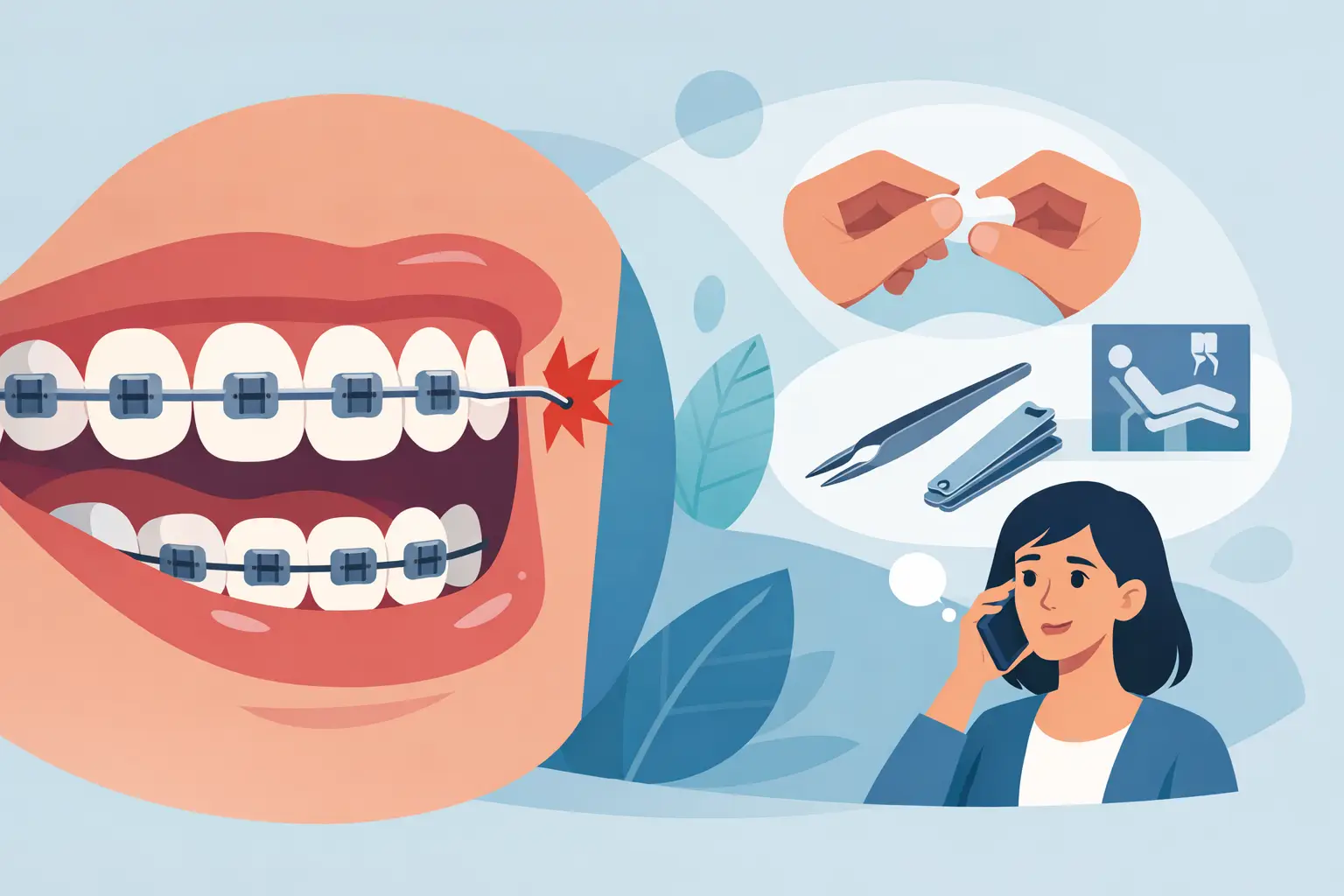
That sharp little jab in your cheek can turn a normal day into a frustrating one fast. If you are wondering what to do with poking braces wire, the good news is that this is a common orthodontic issue, and in many cases, there are safe ways to make yourself more comfortable until you can be seen.
A poking wire usually is not a true emergency, but it does deserve attention. The right next step depends on why the wire is sticking out, how much irritation it is causing, and whether anything else with your braces feels loose or broken. A calm, careful approach can help you avoid making the problem worse.
What causes a braces wire to poke?
Braces wires can start poking for a few different reasons. Sometimes teeth have shifted the way they are supposed to during treatment, which leaves more wire extending out near the back bracket. In other cases, a bracket may have come loose, the wire may have slid out of place, or the end of the wire may simply be irritating a sensitive spot inside your mouth.
This can happen with both newer braces and braces that have been on for a while. It does not always mean something went wrong. Often, it means your treatment is working and your wire now needs to be trimmed or adjusted.
That said, not every poking wire should be handled the same way. A slightly annoying wire end is different from a wire that has come completely loose or is causing significant pain.
What to do with poking braces wire at home
If the wire is bothering your cheek, lip, or gum, start with the least invasive fix. In many situations, you can protect the area and reduce irritation until your orthodontic appointment.
Try orthodontic wax first
Orthodontic wax is usually the easiest and most effective first step. Dry the area as best you can with a clean tissue or cotton swab, then place a small piece of wax over the part of the wire that is poking. This creates a smoother surface so your cheek or lip is not rubbing directly against the metal.
If the wax will not stick at first, do not worry. The area may just be too wet. Blot gently, try again, and press the wax into place. You may need to replace it after eating or brushing.
Rinse with warm salt water
If the wire has already irritated the inside of your mouth, warm salt water can help soothe the tissue. Mix a small amount of salt into a cup of warm water and swish gently for about 30 seconds. This will not fix the wire, but it can make the area feel better while it heals.
This is especially helpful if you have a small sore spot from repeated rubbing.
Use a clean cotton swab to nudge it
If the wire has shifted slightly and is easy to reach, you may be able to carefully move it away from the irritated area with a clean cotton swab or the eraser end of a pencil. The goal is not to bend it dramatically. You are only trying to reposition it enough to reduce the poking.
Be gentle. If it does not move easily, stop. Forcing it can bend the wire in a way that affects your treatment or creates more discomfort.
Take over-the-counter pain relief if needed
If your mouth is sore, an over-the-counter pain reliever may help, as long as you follow the package directions and any advice from your doctor. This is not a long-term solution, but it can make the wait for an appointment more manageable.
Soft foods can help too. Crunchy, hard, or chewy foods can make an already irritated area feel worse.
When trimming a poking wire may be okay
People often search what to do with poking braces wire because they want to know whether they can cut it at home. Sometimes the answer is yes, but only in a very specific situation.
If the very end of a thin wire is clearly extending out in the back and causing significant irritation, your orthodontist may advise trimming it with a properly cleaned nail clipper or cuticle clipper. This is usually a last resort when wax is not helping and you cannot get into the office right away.
Even then, caution matters. You want good lighting, clean hands, a steady position, and help from a parent or another adult if needed. Place gauze or tissue under the area if possible so the clipped piece does not fall into the mouth.
Do not cut a wire unless you have been instructed to do so or you are confident it is only the tiny protruding end. Cutting the wrong part of the wire can interfere with treatment and create a bigger problem than the original poke.
What not to do
When your mouth hurts, it is tempting to improvise. A few choices can make things worse.
Do not use household glue to reattach anything. Do not bend the wire aggressively with tweezers or pliers. Do not keep pushing through the pain for days if the wire is cutting your cheek. And do not ignore swelling, bleeding that does not stop, or a bracket and wire combination that feels unstable.
If something feels more broken than mildly irritating, it is better to call your orthodontist than try to solve it yourself.
When to call your orthodontist right away
A poking wire often can wait a short time, but there are situations where you should contact your orthodontist promptly. Call if the wire is causing significant pain, if wax is not helping, if the wire has come loose entirely, or if a bracket is broken and moving around.
You should also call if the irritation is creating a sore that keeps getting worse, if you cannot close your mouth comfortably, or if the wire is sticking into your gum rather than just rubbing your cheek.
For parents, it can be hard to tell whether a child or teen is reacting to normal discomfort or something that really needs attention. A good rule is this: if your child cannot eat normally, sleep comfortably, or stop focusing on the pain, it is worth calling.
How your orthodontist will fix a poking wire
The in-office fix is usually quick. Your orthodontist may trim the wire, slide it back into place, replace it, or adjust a loose bracket that is changing the wire position. The exact solution depends on what caused the problem in the first place.
This is why a professional evaluation matters. A wire that looks like a simple poke may actually be tied to a loose bracket or a shifting archwire that needs a more precise adjustment.
At 1st Impressions Orthodontics, helping patients feel comfortable through little treatment bumps like this is part of making care feel low-stress and manageable. Fast guidance and a simple adjustment often make a big difference.
Can a poking braces wire affect treatment?
Sometimes yes, sometimes no. If it is just the end of a wire that now extends farther back because your teeth have moved, the issue is usually more about comfort than treatment progress. But if the wire has slipped, bent, or detached from a bracket, it can affect how force is being applied to the teeth.
That is one reason not to wait too long. Even if you can manage the discomfort with wax, you still want your orthodontist to decide whether the wire needs professional attention.
How to prevent braces wire from poking again
You cannot prevent every braces irritation, because tooth movement is part of the process. Still, a few habits can lower the chances of dealing with another sharp wire.
Try to avoid hard, sticky, and crunchy foods that can loosen brackets or distort wires. Keep your scheduled adjustment visits, since delayed appointments can sometimes allow minor issues to become more noticeable. If you play sports, wear the recommended mouth guard. And if something feels off, speak up early rather than waiting for your next regular visit.
It also helps to keep a small braces care kit with wax, a travel toothbrush, flossing tools, and salt packets or access to warm water. That way, if a poke starts when you are at work, school, or out with family, you are not stuck without options.
A reassuring word if this happens to you
Braces are very effective, but they are not always perfectly comfortable every day. A poking wire can feel alarming, especially if it happens suddenly, but it is usually fixable and often easier to manage than people expect.
Start with wax, protect the irritated area, and call your orthodontist if the wire is painful, loose, or not improving. You do not have to guess your way through it. The right support can turn a miserable day back into a manageable one.