
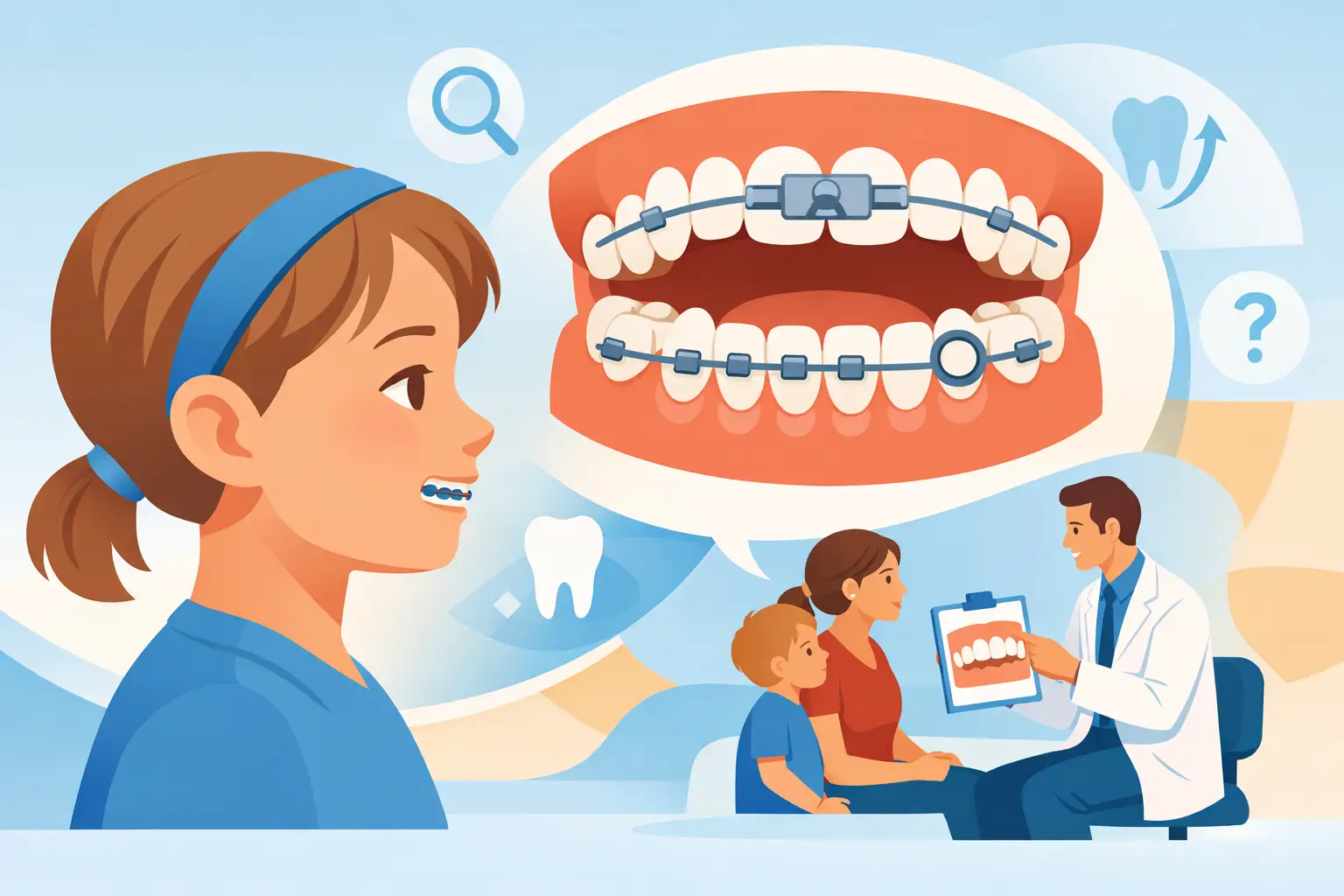
A lot of parents expect orthodontic treatment to start in the teen years, so hearing that a younger child may benefit from early care can feel surprising. Phase 1 orthodontic treatment is designed for children whose teeth, jaws, or bite are developing in a way that may cause bigger problems later. In the right situation, starting early can make treatment simpler, protect oral health, and create more room for healthy growth.
What phase 1 orthodontic treatment means
Phase 1 orthodontic treatment, sometimes called early interceptive treatment, happens while a child still has a mix of baby teeth and permanent teeth. The goal is not always to create a perfect final smile at that stage. Instead, the focus is on guiding jaw development, improving bite function, creating space for incoming teeth, and reducing the risk of more complex issues in the future.
This is different from comprehensive orthodontic treatment in the teen years, when all or most permanent teeth are in place and the goal is final alignment. Phase 1 is more targeted. It addresses specific concerns at the right moment in growth, when a child is still developing and the jaws may be more responsive to treatment.
For some children, that timing matters a great deal. For others, the best plan is simply to monitor growth and wait. Early treatment is helpful when there is a real orthodontic reason to intervene, not just because a child is young.
When phase 1 orthodontic treatment is recommended
A child may benefit from phase 1 orthodontic treatment if an orthodontist sees signs that the bite or jaw relationship is not developing normally. One common example is severe crowding, especially when there does not appear to be enough space for adult teeth to erupt properly. Another is a crossbite, where upper teeth fit inside lower teeth instead of outside them. Left alone, that can affect jaw growth and tooth wear.
Early treatment may also be recommended for significant overbite, underbite, or protruding front teeth that are more likely to be injured. Some children have habits such as thumb sucking or tongue thrust that are influencing tooth position and jaw development. Others may show facial asymmetry, shifting when they bite, or signs that the upper and lower jaws are not growing in balance.
Sometimes the issue is not just cosmetic. A child may have trouble chewing comfortably, speaking clearly, or keeping certain teeth clean because of crowding or bite problems. In those cases, early orthodontic care can support both function and long-term oral health.
Signs parents may notice at home
Parents are often the first to spot that something looks off, even if they cannot name the exact issue. Teeth that seem blocked out, front teeth that stick out noticeably, early or late loss of baby teeth, and jaws that appear to shift when a child closes can all be worth checking.
Mouth breathing, frequent biting of the cheeks, difficulty chewing, or a bite that never seems to come together comfortably can also be clues. Not every unusual pattern means treatment is needed right away, but it does mean a professional evaluation can be helpful.
The American Association of Orthodontists recommends an orthodontic screening by age 7. That does not mean every 7-year-old needs braces. It means this is a good age to identify whether growth is on track or whether a developing problem should be watched or treated early.
What phase 1 treatment can help correct
Bite and jaw development
One of the biggest reasons to consider phase 1 orthodontic treatment is to influence jaw growth while a child is still growing. If the upper jaw is too narrow, expanding it at the right age may improve bite fit and create better space for permanent teeth. If the lower jaw appears ahead of the upper jaw, early intervention may help guide development in a healthier direction, depending on the child and the severity of the issue.
This is where timing matters. Certain bite problems respond better during active growth than they do later, when the jaws are more mature.
Crowding and eruption problems
Phase 1 can also help when permanent teeth are coming in without enough room. In some cases, orthodontic appliances can preserve or create space so adult teeth have a better path to erupt. That may reduce the severity of crowding later, though it does not guarantee a child will never need braces in the future.
Protection for prominent teeth
Children with front teeth that project outward may be at greater risk of dental injury from falls, sports, or everyday accidents. Bringing those teeth into a safer position earlier can lower that risk and often helps children feel more confident socially as well.
What treatment may involve
Phase 1 orthodontic treatment is not one single appliance or one standard plan. It depends on what the child needs. Some children benefit from a palatal expander to widen the upper jaw. Others may need limited braces on selected teeth, a space maintainer, or an appliance designed to correct a specific bite relationship.
Treatment is usually shorter and more focused than full orthodontic care. After the active phase ends, there is often a resting period where growth and tooth eruption are monitored. If a second phase is needed later, it is typically done once most permanent teeth have come in.
That two-phase approach can sound like more treatment, and sometimes it is. But when phase 1 is recommended appropriately, it is because early correction may prevent more difficult problems, reduce risk to teeth and gums, or improve the way the jaws develop.
Will every child need a second phase?
Usually, yes. Many children who complete phase 1 orthodontic treatment still need phase 2 treatment later to fine-tune tooth positions and complete their bite correction. That is normal and does not mean phase 1 failed.
The first phase addresses the problem that needs attention during growth. The second phase focuses on final alignment once more permanent teeth are present. In some cases, early treatment can shorten or simplify the later phase. In others, the main benefit is that it prevents a problem from getting worse.
This is why clear communication matters. Families should understand what early treatment is intended to accomplish, what it may not accomplish, and what the likely long-term plan looks like.
When waiting is the better choice
Not every orthodontic issue should be treated early. Mild crowding, small spacing issues, or concerns that are likely to be easier to correct after more adult teeth erupt may be better handled with observation. Starting too soon without a clear reason can add time and cost without adding much benefit.
A thoughtful orthodontic evaluation should include that judgment. Sometimes the best recommendation is watchful waiting with periodic growth checks. For families, that can be reassuring. It means treatment is being timed for benefit, not rushed.
Why a specialist evaluation makes a difference
Early orthodontic decisions are not just about crooked teeth. They involve facial growth, jaw position, airway considerations, bite function, and the sequence of tooth eruption. That is why a specialist orthodontic evaluation is so valuable.
With modern digital imaging and careful clinical planning, an orthodontist can see whether a child has a condition that truly benefits from early care or whether monitoring is the smarter approach. The right plan should feel personalized, clear, and manageable for both the child and the parent.
At 1st Impressions Orthodontics, that means looking at the full picture, not just one tooth out of place. Families deserve answers that are precise, honest, and easy to understand.
How parents can think about the timing
If your child has been told they may need phase 1 orthodontic treatment, the first question should not be, “Isn’t this too early?” The better question is, “What problem are we trying to solve now that may be harder to solve later?” That shifts the conversation from age alone to actual benefit.
Some children truly do better with early intervention. Others do better with observation and a plan for later treatment. The right answer depends on growth, bite pattern, tooth eruption, and the severity of the issue. A good orthodontic plan should match your child, not a one-size-fits-all timeline.
If you are unsure whether your child needs treatment now or later, that uncertainty is normal. A clear, supportive orthodontic evaluation can give you the confidence to move forward with the right timing and the right level of care.