
You finish your last Invisalign tray, look in the mirror, and finally see the smile you worked for. Then comes the question almost every patient asks: are retainers needed after Invisalign? In most cases, yes. Retainers are the part of treatment that helps protect your results, because teeth can shift back even after beautifully planned aligner treatment.
That can feel frustrating at first. After months of wearing aligners, most people hope they are completely done. But retention is not extra treatment for no reason. It is how orthodontic results stay stable over time, especially as your teeth and bite continue to respond to everyday pressure from chewing, clenching, aging, and normal oral habits.
Why retainers matter after Invisalign
Invisalign moves teeth through controlled pressure over time. As those teeth shift, the bone and supporting tissues around them also remodel. Even when your final aligners fit well and your teeth look straight, those tissues need time to stabilize in their new positions.
Without a retainer, teeth often begin to drift. Sometimes the change is small at first, like slight crowding in the lower front teeth or a tiny gap reopening. Sometimes it is more noticeable. Either way, movement after orthodontic treatment is common, and it does not mean anything went wrong. It means your teeth naturally want to settle unless something is holding them in place.
This is why the answer to are retainers needed after Invisalign is usually straightforward. If you want to maintain the result you achieved, retainers are part of the plan.
Are retainers needed after Invisalign for everyone?
For most patients, yes. Children, teens, and adults all have some risk of teeth shifting after treatment. The exact level of risk depends on factors like your original crowding or spacing, your bite, whether rotations were corrected, and how your teeth fit together at the end of treatment.
Some cases are especially prone to relapse. Teeth that were severely crowded, spaces that were closed, and teeth that had significant rotation often have a stronger tendency to move again. Patients who grind their teeth, have tongue thrust habits, or had bite issues corrected may also need especially consistent retainer wear.
There is some nuance here. Not every patient will follow the exact same retainer schedule forever, and some people stay stable more easily than others. But that is different from saying retainers are optional. In orthodontics, long-term success depends on keeping the teeth where they were moved.
What kind of retainer do you wear after Invisalign?
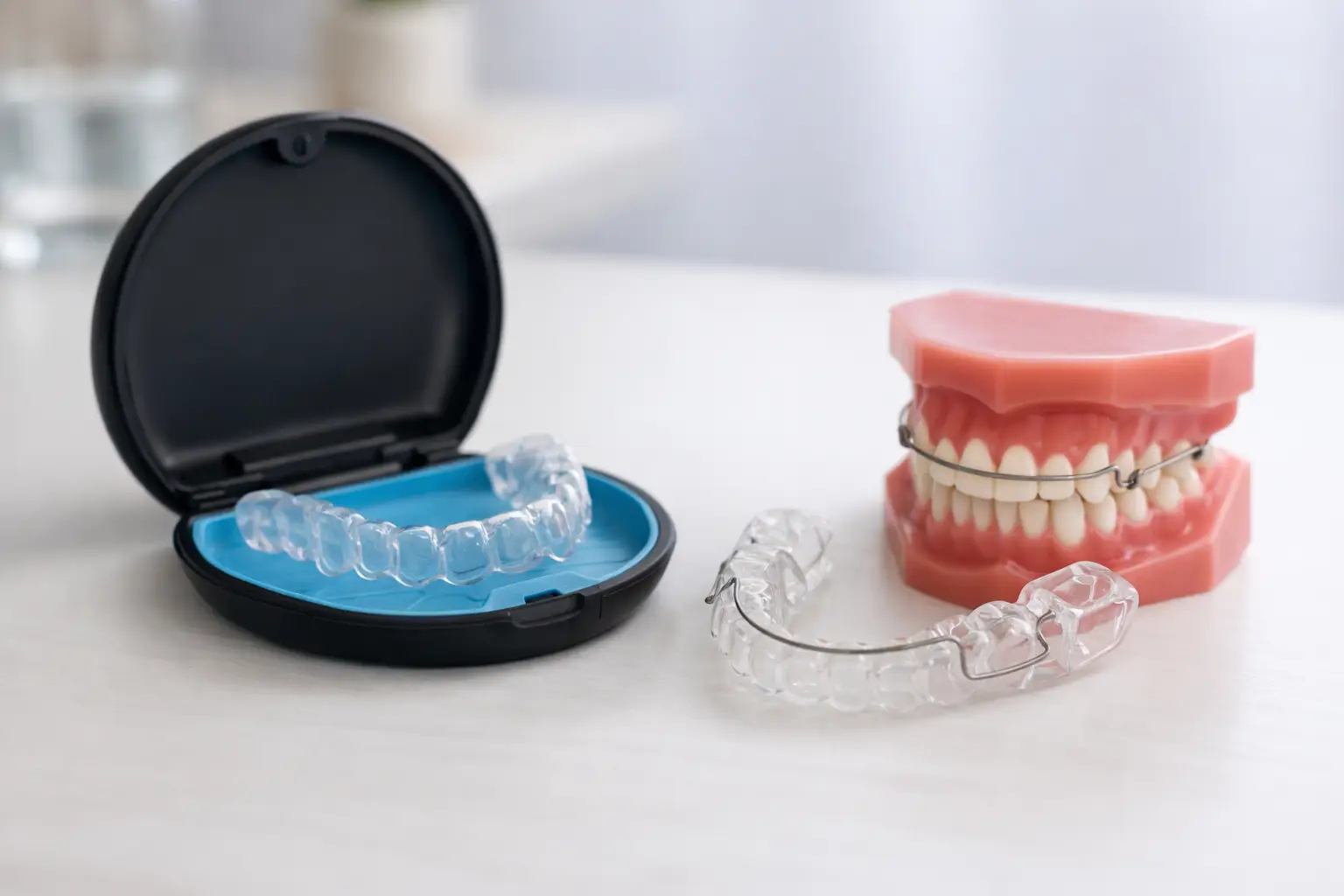
Many Invisalign patients receive clear removable retainers that look similar to aligners but are designed for retention rather than active tooth movement. These are a popular option because they are discreet, comfortable, and easy to fit into everyday life.
In some situations, a fixed retainer may also be recommended. This is a small wire bonded behind certain teeth, often the lower front teeth, to help prevent crowding from returning. Some patients benefit from a combination of both fixed and removable retainers, depending on how their teeth were positioned before treatment and how much stability they need.
The best choice depends on your smile, your bite, and your routine. A removable retainer offers flexibility and easy cleaning, but it only works if it is worn as directed. A fixed retainer provides constant support, but it requires careful hygiene and regular monitoring. There is no one-size-fits-all answer, which is why personalized guidance matters.
How long do you have to wear retainers?
This is the part many patients really want to know. The short answer is that full-time wear is often recommended at first, followed by nighttime wear long term. Your orthodontist may advise you to wear your retainers all day and night, except when eating and brushing, for a period after Invisalign ends. After that, many patients transition to wearing them only while sleeping.
Long term really does mean long term. Teeth can shift years after treatment, not just in the first few months. That is true whether you had Invisalign or braces. If you stop wearing retainers too soon, your teeth may gradually move enough to affect your smile or bite.
The schedule can vary based on your age, your treatment details, and how stable your final result is. For example, a teen whose bite is still developing may have different instructions than an adult with minor spacing corrections. The key is following the plan given for your specific case rather than assuming your friend’s schedule applies to you.
What happens if you do not wear your retainer?
At first, you may notice that the retainer feels tight when you put it back in. That is often an early sign your teeth have started to shift. If the movement is minor, wearing the retainer consistently again may help, but that is not always enough.
If more time passes, the retainer may stop fitting altogether. At that point, you may need a new retainer, refinement trays, or additional orthodontic treatment to correct the changes. What started as skipping a few nights can turn into a setback that costs more time and money.
This is one reason we talk about retainers as protection for your investment. You have already put in the effort to improve your smile. Retainers help make sure that effort lasts.
Retainers after Invisalign vs braces
Patients sometimes assume retainers are only necessary after braces, but the same principle applies after Invisalign. Both treatments move teeth. Any time teeth are moved orthodontically, there is a retention phase.
The main difference is often the type of retainer used and how familiar the patient already is with wearing a removable appliance. Invisalign patients may adapt quickly to clear retainers because the routine feels similar to aligner wear. Still, it is important not to think of the retainer as a lighter version of treatment that can be taken less seriously. It serves a different purpose, but it is just as important.
How to make retainer wear easier
The patients who do best with retainers usually make them part of a simple routine. Keep the case with you, store the retainer properly when eating, and clean it consistently. If you wear it at night, place it somewhere visible as part of your bedtime routine so it does not get forgotten.
It also helps to protect the retainer from damage. Pets love to chew them, napkins get thrown away, and heat can warp plastic. Small habits make a big difference. When retainers are easy to find, clean, and wear, staying on track feels much less stressful.
If your retainer starts to feel different, looks cracked, or no longer fits the way it should, do not wait. Getting it checked early is much easier than trying to reverse unwanted tooth movement later.
Why follow-up care still matters
Retention is not just about handing you a retainer and sending you on your way. Ongoing check-ins can help confirm that your teeth remain stable, your retainer still fits correctly, and your bite is functioning the way it should.
This is especially valuable for growing teens, adults with grinding habits, or patients whose treatment involved more complex bite correction. A careful retention plan should match real life. It should support your smile in a way that is practical, comfortable, and sustainable.
At a practice like 1st Impressions Orthodontics, that means giving patients clear guidance instead of vague instructions. When people understand why retainers matter and what to expect, they are much more likely to protect their results with confidence.
The bottom line on are retainers needed after Invisalign
If you are asking whether retainers are needed after Invisalign, the honest answer is yes for nearly everyone who wants to keep their teeth in the right position. Invisalign creates the movement, but retainers help preserve it. They are not an optional add-on. They are part of finishing treatment well.
The good news is that retainer wear is usually simple, comfortable, and far easier than repeating treatment because of preventable shifting. If you have questions about what type of retainer you need or how often to wear it, the best next step is getting guidance tailored to your smile, your bite, and your long-term goals. A straight smile is worth protecting, and a well-planned retainer routine makes that protection much easier.