
That work presentation, wedding date, or long-overdue family photos often become the moment adults finally ask the question: Invisalign vs braces for adults – which one actually makes more sense for real life? The honest answer is that both can create excellent results, but they fit different priorities, different bite issues, and different routines.
For many adults, the choice is not just about straight teeth. It is about comfort during a busy workday, confidence in social settings, how often treatment will interrupt meals or meetings, and whether the plan feels manageable for the next year or two. That is why the best decision usually comes from looking beyond appearance alone.
Invisalign vs braces for adults: what really changes the decision?
Adults often come in with a more complicated starting point than teens. Teeth may have shifted after not wearing retainers. There may be crowding, spacing, bite issues, worn enamel, past dental work, or even jaw discomfort. That matters because the right treatment is not always the less visible one. It is the one that can move teeth predictably while fitting your goals and lifestyle.
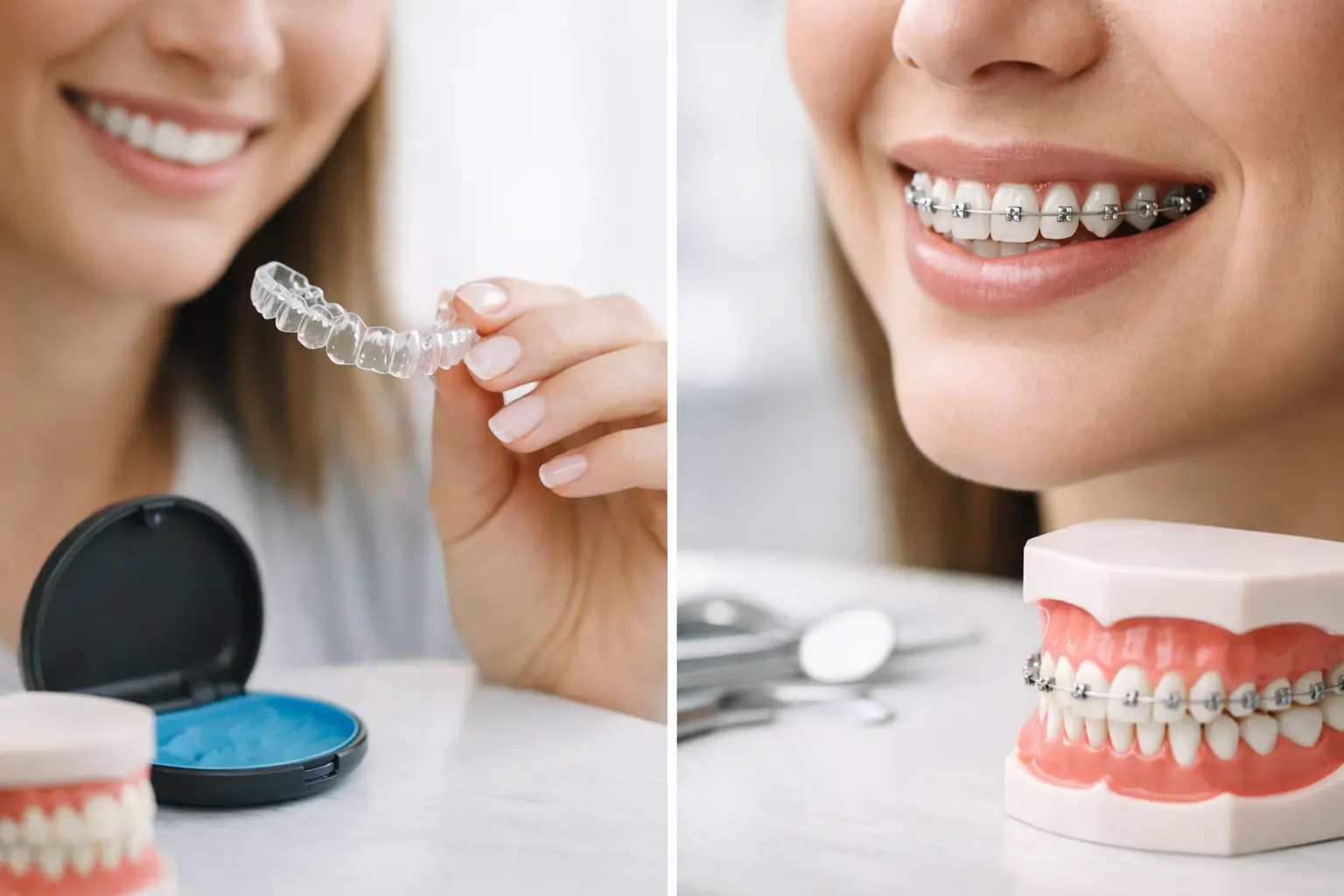
Invisalign uses a series of clear, removable aligners to guide teeth into place over time. Braces use brackets and wires that stay on the teeth and apply continuous pressure. Both are orthodontic tools, and both can be highly effective. The difference is in how they work day to day and how much patient cooperation they require.
Why adults often prefer Invisalign
The appeal of Invisalign is easy to understand. The aligners are clear, removable, and generally less noticeable in professional and social settings. For adults who speak frequently for work, attend events, or simply want a more discreet option, that can be a major advantage.
There is also the convenience of removing aligners for meals. You do not have to work around brackets and wires when eating crunchy, sticky, or chewy foods. Brushing and flossing are usually simpler too, since you take the trays out and clean your teeth normally.
Comfort is another reason many adults lean toward aligners. Instead of adjustments involving tightening wires, Invisalign treatment typically involves switching to a new set of trays on schedule. You may still feel pressure for a day or two, but there are no brackets rubbing the inside of your lips and cheeks.
That said, Invisalign only works well when it is worn consistently. Most adults need to wear aligners 20 to 22 hours a day. If they come out too often for coffee, snacks, meetings, or social events, tooth movement can slow down and treatment can become less predictable.
Where braces still have the edge
Braces remain an excellent choice for adults, especially when tooth movement is more complex. If there are significant bite problems, severe crowding, large rotations, or teeth that need very precise control, braces may offer more efficiency and reliability.
Because braces stay on around the clock, they do not depend on patient compliance in the same way aligners do. That can be a real benefit for adults with demanding schedules who know they may struggle to keep trays in for the recommended time each day.
Braces have come a long way in terms of appearance as well. Traditional metal braces are smaller and more comfortable than many adults expect, and clear braces can offer a less noticeable look while still providing fixed treatment. For some patients, the idea of not having to remember anything except regular hygiene and appointments is actually a relief.
Appearance, comfort, and convenience
If your top priority is discretion, Invisalign usually wins. In person and in photos, clear aligners are far less noticeable than braces. Many adults feel more comfortable smiling, speaking, and going about professional life without drawing attention to treatment.
If your top priority is not having to think about treatment throughout the day, braces may feel easier. You do not need to remove them before eating, store them in a case, or remember to put them back in after lunch. They become part of your routine rather than a decision you make over and over.
Comfort depends on what kind of irritation bothers you more. Invisalign can feel smoother because there are no brackets, but the trays cover the teeth completely and can feel snug, especially with a new aligner. Braces can create sore spots on the cheeks or lips, particularly early on or after adjustments. Neither option is pain-free, but both are manageable for most adults.
Invisalign vs braces for adults with busy schedules
This is where lifestyle matters more than people expect. Invisalign tends to work well for adults who are organized and consistent. If you are already disciplined about routines, keeping aligners in place and switching trays on schedule may feel simple. If your days are unpredictable and meals happen on the go, removable aligners can become frustrating.
Braces are often better for adults who want less day-to-day responsibility. There is no temptation to leave them out for a few extra hours, and no risk of misplacing them during a hectic workday. The trade-off is that food choices need more attention, and cleaning around brackets takes more time.
For adults who travel often or juggle work and family schedules, the right choice usually comes down to this: do you want flexibility, or do you want a system that keeps working no matter what kind of day you have?
Treatment time and results
Adults commonly assume Invisalign is always faster, but that is not necessarily true. Treatment time depends on the complexity of the case, how well the teeth respond, and how consistently the treatment is followed.
For mild to moderate alignment issues, Invisalign can be very efficient. For more involved corrections, braces may move teeth more predictably and sometimes more effectively. In some cases, either option could work well, but one may offer a smoother path with fewer refinements.
This is one reason a personalized orthodontic evaluation matters. A digital scan and detailed bite assessment can show what is realistically achievable with each option, not just what sounds appealing on the surface.
Cost considerations
Cost is an important part of the Invisalign vs braces for adults conversation, but it is rarely one-size-fits-all. Pricing depends on case complexity, treatment length, and the type of braces or aligner system being used.
In many adult cases, Invisalign and braces are closer in cost than people expect. Sometimes Invisalign is slightly higher. Sometimes the difference is minimal. What matters more is understanding the full treatment plan, what is included, and whether financing options make the monthly investment manageable.
Adults often appreciate straightforward guidance here. A good consultation should explain not only the price, but the reason behind the recommendation. If one option costs more, you should understand whether that reflects materials, treatment complexity, or a better fit for your goals.
Which option is better for your bite?
There is no universal winner. Invisalign can do an excellent job for many adults, including those with mild to moderate crowding, spacing, and certain bite concerns. Braces may be the stronger option when movements need tighter control or when the bite is more complex.
If you have had orthodontic treatment before and your teeth have relapsed, Invisalign may be a very appealing solution. If you have significant crowding or a challenging bite relationship, braces may offer more confidence from the start.
That is why the best orthodontic care is never cookie-cutter. At a specialty practice like 1st Impressions Orthodontics, the goal is not to push one treatment over another. It is to match the right tool to your anatomy, schedule, and priorities, then make the process feel clear and low-stress.
How adults can make the right choice
A useful way to decide is to ask yourself a few practical questions. How important is a nearly invisible look? Will you realistically wear aligners 20 to 22 hours a day? Do you want the freedom to remove your appliance, or would you rather not think about it? Is your case mostly cosmetic, or does your bite need more complex correction?
Those answers often reveal the better fit quickly. Some adults are ideal Invisalign patients because they value discretion and are very consistent. Others are better served by braces because they want dependable mechanics with less daily responsibility.
The right choice should feel realistic, not aspirational. Orthodontic treatment works best when it fits your actual life.
If you are deciding between the two, the most helpful next step is not guessing from photos online. It is getting a professional evaluation that looks at your teeth, bite, goals, and routine together. When the recommendation is tailored to you, the choice becomes a lot less confusing – and a lot more reassuring.