
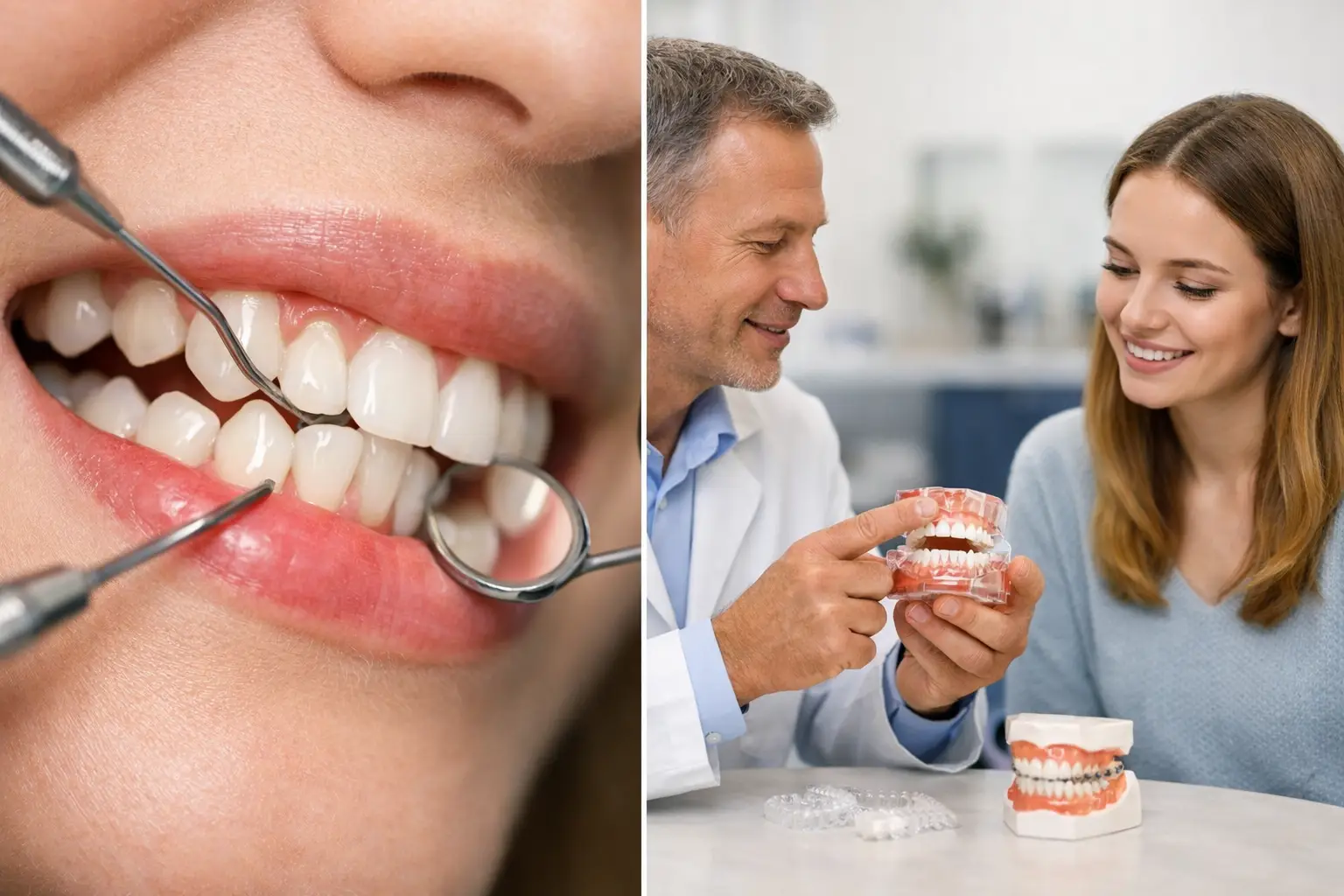
A crossbite can be easy to miss in a school photo or a quick glance in the mirror. It becomes more noticeable when teeth meet unevenly, chewing feels awkward, or a child’s lower jaw shifts to one side to find a comfortable bite. This crossbite correction treatment example shows how orthodontic care is designed around the person, not just the position of one tooth.
A crossbite happens when one or more upper teeth bite behind the lower teeth. It may affect the front teeth, the back teeth, or one side of the mouth. While some crossbites are primarily dental, meaning the teeth are tipped or positioned incorrectly, others involve the width or relationship of the jaws. That distinction matters because it helps determine the most effective and comfortable treatment plan.
A Crossbite Correction Treatment Example for a Child
Imagine an 8-year-old whose parent notices that the upper back teeth sit inside the lower back teeth on the right side. At the orthodontic visit, the child also shows a slight shift of the lower jaw when closing. Digital images and a detailed exam reveal that the upper jaw is narrow relative to the lower jaw.
In a case like this, early treatment may focus on creating enough width in the upper jaw while a child is still growing. An orthodontist may recommend a palatal expander, a custom appliance that gradually widens the upper arch. The appliance is typically adjusted in small, prescribed increments at home, with regular appointments to monitor progress and comfort.
For many children, the active expansion phase is relatively short. However, the appliance usually stays in place longer to help the new width stabilize. Once the crossbite is corrected, the orthodontist may recommend observation until more permanent teeth erupt, or a second phase of treatment with braces or aligners later in the teen years.
The benefit of addressing a narrow upper jaw early is not simply a straighter-looking smile. Early correction can reduce a functional jaw shift, improve how the teeth fit together, and create space for erupting permanent teeth. It does not mean every child with a crossbite needs an expander. The right timing depends on growth, the type of crossbite, dental development, and the child’s overall bite.
What Treatment May Look Like for Teens and Adults
A crossbite correction treatment example looks different when jaw growth is mostly complete. Consider a 16-year-old with a single upper tooth tucked behind the lower teeth. The jaw widths are balanced, but several teeth are crowded and rotated. In this situation, braces or clear aligners may be able to move the affected tooth into the correct position while improving the overall bite.
Braces can offer precise control for more complex tooth movements, including teeth that need to be lifted, rotated, or moved across the bite. Clear aligners can be an excellent option for many teens and adults who want a more discreet treatment approach. They are removable for meals and brushing, but they must be worn consistently to work as planned.
For an adult with a more significant skeletal crossbite, orthodontic treatment may still create meaningful improvement, but the planning conversation can be more nuanced. If the jaw relationship itself is the primary concern, aligners or braces can move teeth within healthy limits but cannot always fully change the underlying jaw structure. Some adults choose orthodontic treatment alone for a practical improvement in function and appearance. Others may be candidates for coordinated orthodontic and surgical care when the discrepancy is severe and their goals call for a jaw-level correction.
There is no one-size-fits-all answer. A compassionate orthodontic consultation should explain what treatment can realistically achieve, how long it may take, and what alternatives are available before a patient makes a decision.
How an Orthodontist Plans Crossbite Correction
Correcting a crossbite is about more than moving the visibly misplaced teeth. Your orthodontist evaluates how the upper and lower jaws relate, whether the bite shifts when closing, the health of the gums and supporting bone, crowding or spacing, facial growth, and the way teeth contact during chewing.
At 1st Impressions Orthodontics, advanced digital imaging helps make this process clear and personalized. Rather than asking patients to accept a generic recommendation, the team can show what is happening in the bite and discuss the treatment approach in patient-friendly terms. For parents, that means clearer answers about whether treatment should begin now or be monitored. For adults, it means understanding the trade-offs between appearance, convenience, treatment time, and the level of correction possible.
A treatment plan may include an expander, braces, clear aligners, elastics, or retainers. In certain cases, a restorative dentist or oral surgeon may also be part of the care team. The combination depends on the diagnosis, not on a predetermined appliance.
Why retainers matter after correction
Once teeth have moved into a healthier bite, retainers help hold the result while surrounding tissues adapt. This stage is especially important after crossbite correction because the bite needs time to settle in its new relationship. Your orthodontist will provide specific wear instructions based on your treatment and long-term needs.
Skipping retainers or wearing them inconsistently can allow teeth to drift. That does not mean treatment has failed, but it can mean additional care is needed to regain the result.
Signs It Is Time to Schedule an Evaluation
A crossbite is not always painful, and that is one reason families sometimes wait. Still, an orthodontic evaluation can be helpful if you notice a child chewing on one side, shifting the jaw to close, biting the inside of the cheek, or having an upper tooth that sits behind a lower tooth. Crowding, delayed tooth eruption, and uneven tooth wear can also be clues.
Adults may seek an evaluation because of uneven wear, gum recession around certain teeth, difficulty biting into foods, or concern that their smile looks asymmetrical. Jaw discomfort can have several causes, so it should not automatically be blamed on a crossbite. A careful exam can help identify whether the bite is contributing and whether orthodontic treatment may be appropriate.
The American Association of Orthodontists recommends an orthodontic checkup by age 7. That does not mean every 7-year-old needs braces. It gives an orthodontic specialist an opportunity to spot developing bite concerns and recommend treatment only when the timing is right.
What to Expect From the First Visit
The first consultation should feel informative, not intimidating. After photographs, digital scans or X-rays when appropriate, and a clinical exam, the orthodontist can explain the type of crossbite present and whether treatment is recommended now, later, or not at all.
You should leave with clear guidance about the proposed appliance, estimated treatment timeline, expected appointment schedule, hygiene needs, and financial options. If braces or aligners are recommended, ask how the treatment will fit into school, work, sports, and daily routines. Those practical details matter just as much as the clinical plan.
For families in Westminster and nearby communities, choosing a local orthodontic specialist can make regular progress visits easier to manage. Flexible scheduling, clear communication, and a supportive team can make a meaningful difference when treatment lasts months or longer.
A crossbite does not need to become a source of stress or uncertainty. The most helpful next step is a personalized evaluation that explains what you are seeing, why it is happening, and what a healthy, confident path forward can look like.