
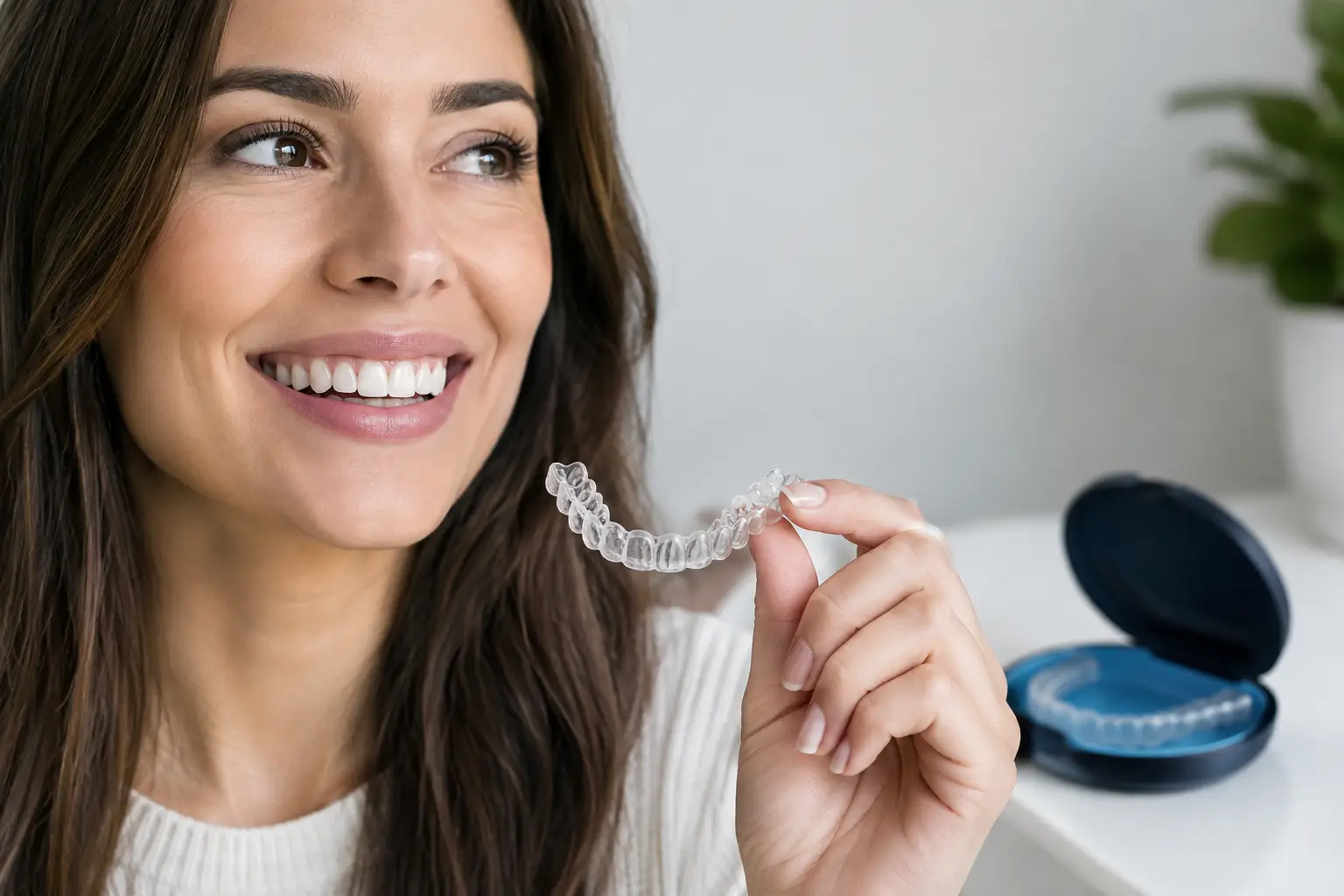
An open bite can make everyday moments unexpectedly frustrating. You may notice that your front teeth do not meet when you bite down, making it harder to tear into foods or feel fully confident in photos. So, can Invisalign treat open bites? In many cases, yes. Clear aligners can be an effective option for certain open bites when treatment is planned and monitored by an orthodontic specialist. The right answer, however, depends on what caused the bite problem and how much tooth and jaw movement is needed.
What an open bite means
An open bite occurs when some upper and lower teeth do not touch when the back teeth are together. The most common type is an anterior open bite, where there is a visible space between the front teeth. Less commonly, a posterior open bite affects the back teeth.
This is more than a cosmetic concern. An open bite may affect biting and chewing, contribute to speech concerns, place uneven pressure on teeth, or make it difficult to close the lips comfortably. Some people also notice jaw strain, although jaw discomfort can have more than one cause and deserves an individualized evaluation.
Open bites develop for different reasons. Childhood thumb or finger habits, prolonged pacifier use, tongue thrusting, mouth breathing, uneven tooth eruption, genetics, and jaw growth patterns can all play a role. That is why two people with a similar-looking gap may need very different treatment plans.
Can Invisalign treat open bites effectively?
Invisalign clear aligners can treat many mild to moderate open bites, especially when the concern is primarily related to tooth position rather than a significant jaw discrepancy. Each set of aligners is designed to guide teeth through small, precise movements over time. For an open bite, that may involve moving front teeth into better contact, adjusting the position of back teeth, or coordinating both arches so the bite comes together more naturally.
Treatment often includes small tooth-colored attachments that help aligners hold and direct certain teeth. Some patients may also use elastics, worn between the upper and lower aligners, to improve how the bite fits. These additions are common and are selected because they give the orthodontist more control, not because anything has gone wrong.
Clear aligners offer a meaningful benefit for adults and teens who want a less visible treatment option. They are removable for meals and brushing, which can make daily oral hygiene easier than it is with fixed braces. But removability also means the results depend on consistent wear. Most patients need to wear aligners about 20 to 22 hours each day, changing them as directed and attending progress visits.
When aligners are often a good fit
Aligner treatment may be a strong option when the open bite is dental in nature, the teeth can be moved predictably into a healthier relationship, and the patient can commit to wearing aligners as prescribed. It can also work well for patients who have previously had orthodontic treatment and have developed an open bite from shifting teeth or changed habits.
Digital treatment planning helps the orthodontist evaluate tooth movement before treatment begins. At 1st Impressions Orthodontics, advanced imaging and a personalized exam help determine whether clear aligners can provide the level of bite correction you need, not just a straighter appearance.
When Invisalign may not be the best choice
Some open bites are more complex. If the concern is caused largely by the position or growth of the upper and lower jaws, aligners alone may not fully correct the problem. Severe skeletal open bites can require braces, temporary anchorage devices, coordination with another dental specialist, or, in select adult cases, jaw surgery.
Clear aligners may also be less predictable when a patient cannot wear them consistently or when very detailed tooth movements are needed. Traditional braces can give an orthodontist continuous control over certain difficult movements. That does not mean braces are automatically better. It means the best appliance is the one that fits the biology of your bite and the goals of your treatment.
For children and growing teens, early orthodontic guidance may be especially valuable. Addressing habits, airway-related concerns, jaw growth, or eruption patterns at the appropriate time can sometimes simplify later treatment. An orthodontic evaluation does not obligate your child to begin treatment right away. It provides clear guidance about what to watch and when action may help.
How Invisalign treatment for an open bite works
The process begins with a comprehensive orthodontic consultation. Your orthodontist examines your teeth, bite, facial balance, jaw function, and health history. Digital scans and X-rays help reveal details that cannot be seen in a mirror, including root position, developing teeth, and the relationship between your teeth and jaws.
If Invisalign is appropriate, a customized plan maps out the expected movements. You will receive a series of aligners and wear each set for the prescribed amount of time, often one to two weeks. Your orthodontist checks progress at scheduled visits and may make refinements along the way. Refinement aligners are additional sets used to fine-tune the result, and they are a normal part of many comprehensive cases.
Open-bite treatment may also include habit support. For example, if the tongue presses between the front teeth during swallowing or at rest, simply moving the teeth may not be enough to protect the result. Your orthodontist may discuss ways to address the habit and, when appropriate, recommend collaboration with other providers. Long-term stability matters as much as getting the bite closed in the first place.
How long does treatment take?
There is no responsible one-size-fits-all timeline for an open bite. Mild cases may take around a year, while more involved bite correction can take 18 to 24 months or longer. Treatment time depends on the severity of the bite, the type of movements required, whether elastics are needed, how consistently aligners are worn, and whether refinements are necessary.
A clear estimate should come after an in-person evaluation. Online photos can be a convenient first step for some patients, but they cannot replace the diagnostic information needed to determine whether the issue is dental, skeletal, habit-related, or a combination of factors.
Retainers protect your new bite
Once the teeth have moved, retainers help them stay there while the surrounding bone and tissues adapt. This step is essential for every orthodontic patient, but it deserves extra attention after open-bite treatment. Teeth can shift over time, and the forces that contributed to the open bite can return if habits or growth changes are not addressed.
Your orthodontist will recommend a retainer schedule based on your case. Following that plan, bringing retainers to checkups, and speaking up quickly if a retainer no longer fits can help protect the time and effort you invested in treatment.
Questions to ask at your consultation
A consultation should leave you feeling informed, not pressured. Ask whether your open bite is mostly dental or skeletal, whether Invisalign can achieve your bite goals, and what alternatives may offer better control. It is also reasonable to ask about expected treatment time, aligner wear expectations, attachments or elastics, refinements, retainers, and the total financial plan.
The goal is not simply to choose the least noticeable appliance. It is to choose a treatment approach that creates a healthy, functional bite and a smile you feel good about. If your front teeth do not meet, an orthodontic evaluation can replace uncertainty with a clear, personalized path forward.