
A tight jaw at the end of a busy day can feel like a small annoyance, until it starts interrupting sleep, triggering headaches, or making meals uncomfortable. If you are wondering how to relieve jaw clenching, the most helpful first step is to notice when it happens. Clenching is often an automatic response to stress, concentration, an uneven bite, or sleep-related breathing concerns. Relief usually comes from reducing the strain on your jaw while identifying what is driving the habit.
Jaw clenching is common, and it is not a personal failure or something you simply have to live with. A few practical changes can calm overworked jaw muscles. When symptoms persist, a personalized evaluation can help you understand whether your teeth, bite, jaw joints, or sleep are playing a role.
How to Relieve Jaw Clenching During the Day
Many people clench while driving, working at a computer, exercising, or concentrating on a difficult task. Because it happens unconsciously, awareness is a powerful place to start.
Your relaxed jaw position should leave a small space between your upper and lower teeth. Your lips may be gently together, but your teeth should not be touching. Try using a simple reminder on your phone or computer several times a day: “Lips together, teeth apart.” Each time it appears, let your shoulders drop, rest your tongue lightly against the roof of your mouth behind your front teeth, and allow your jaw to soften.
Posture can matter more than people expect. Leaning toward a screen, holding a phone between your shoulder and ear, or carrying tension in your neck may encourage your jaw muscles to work harder. Adjust your screen to a comfortable eye level, support your lower back, and take short movement breaks throughout the day. You do not need a perfect posture. The goal is to avoid staying tense in one position for hours.
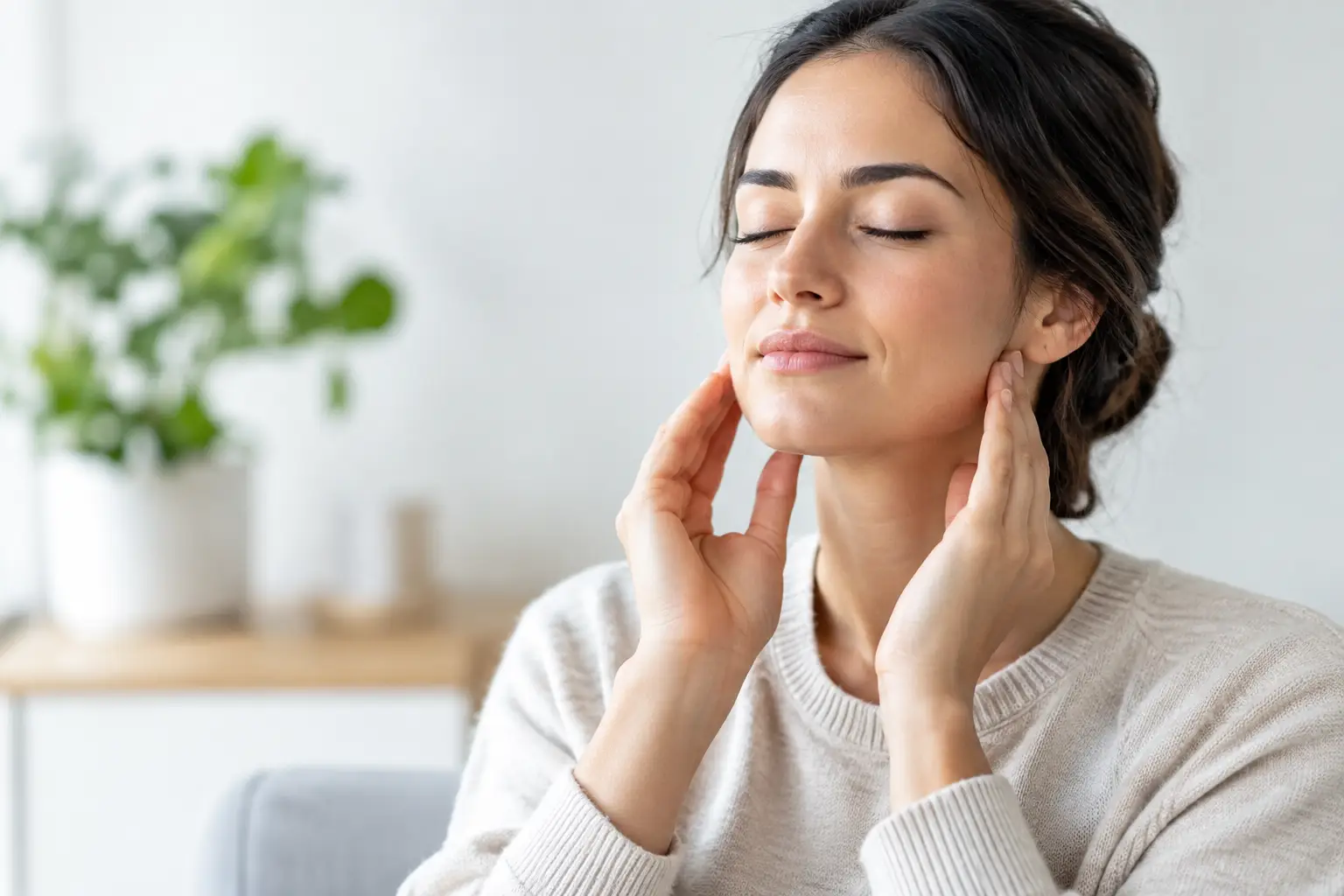
Warmth can also provide short-term comfort. Hold a warm, damp washcloth against the side of your face for 10 to 15 minutes, then gently massage the cheek muscles in small circles. The large muscle over the side of the jaw, often called the masseter, is a common area for tenderness. Massage should feel soothing, not painful. If an area feels sharp, swollen, or increasingly sore, stop and seek professional guidance.
Stress management is not a vague answer to a physical problem. Stress can create real muscle tension, including in the jaw. A brief breathing reset can help: inhale slowly through your nose, exhale a little longer than you inhaled, and repeat for one or two minutes. Some patients find that a walk, stretching, journaling, or a few quiet minutes before bed makes their clenching noticeably less frequent.
Make Evenings Easier on Your Jaw
When your jaw is irritated, give it a temporary break from hard, chewy, or sticky foods. That may mean choosing softer meals for a few days and avoiding gum, ice, chewy candy, and foods that require wide bites. This is not meant to be a permanent restrictive diet. It is simply a way to reduce extra workload while sore muscles settle down.
Try to avoid testing your jaw repeatedly by opening wide or shifting it side to side. It can be tempting to check whether it still clicks or feels tight, but repeated movements may keep the area irritated. When you yawn, support your jaw lightly with your hand if a wide opening is uncomfortable.
If you use over-the-counter pain medicine, follow the label directions and consider any personal health conditions or medications first. A pharmacist or physician can help if you are unsure what is safe for you. Pain medicine may ease discomfort, but it does not address the reason you are clenching, so it works best as one part of a broader plan.
Be Careful With Online Jaw Exercises
Gentle movement can be useful for some people, but aggressive stretching routines are not right for every sore jaw. If your pain is related to joint inflammation, a bite issue, or a recent injury, forcing a bigger range of motion can make symptoms worse.
A safer starting point is controlled relaxation: place your tongue lightly on the roof of your mouth, keep your teeth apart, and slowly breathe while allowing the lower jaw to hang naturally. If you would like a specific exercise routine, ask a qualified dental professional, physician, or physical therapist who can tailor it to your symptoms.
Nighttime Clenching May Need a Closer Look
Some people wake with a tired jaw, temple headaches, tooth sensitivity, or a partner who hears grinding overnight. Nighttime clenching and grinding, often grouped under bruxism, can be related to stress, sleep patterns, medications, bite concerns, or breathing disruptions during sleep. The cause is not always obvious, and it can be more than one factor.
A night guard can protect teeth in certain situations, but it is not a one-size-fits-all solution. Over-the-counter guards may feel bulky, fit poorly, or change how the teeth meet if used incorrectly over time. A custom appliance is designed around your teeth and bite, making it a more comfortable and precise option when an appliance is appropriate.
It is also worth paying attention to sleep symptoms. Frequent snoring, gasping, daytime fatigue, waking with a dry mouth, or restless sleep deserve a conversation with a healthcare professional. For some patients, jaw clenching occurs alongside sleep-disordered breathing. In those cases, protecting the teeth alone may not fully address the bigger concern.
When Your Bite Could Be Part of the Problem
Your teeth and jaw joints work together every time you chew, speak, and swallow. If your bite does not come together comfortably, certain muscles may compensate by working harder. Crowding, an uneven bite, crossbite, open bite, or teeth that meet prematurely can sometimes contribute to jaw strain.
That does not mean every person who clenches needs braces or clear aligners. Clenching can happen even with straight teeth and a healthy bite. But if you have jaw discomfort along with difficulty chewing, uneven tooth wear, frequent headaches, or a bite that feels different than it used to, an orthodontic evaluation can provide useful answers.
At 1st Impressions Orthodontics, we look at the full picture rather than treating one symptom in isolation. Digital imaging and a careful bite assessment can help determine whether orthodontic treatment, a custom appliance, TMJ-focused care, or coordination with another provider may be the most appropriate next step. The goal is clear guidance and a plan that fits your comfort, lifestyle, and long-term oral health.
Signs It Is Time to Schedule an Evaluation
Occasional jaw tightness after a stressful week may improve with rest and simple habit changes. Persistent or worsening symptoms should not be ignored. Schedule an evaluation if you notice any of the following:
- Jaw pain that lasts more than a week or keeps returning
- Clicking, popping, locking, or limited ability to open your mouth
- Headaches, facial soreness, or ear-area pain that seems connected to jaw movement
- Worn, chipped, cracked, or increasingly sensitive teeth
- Pain when chewing or a bite that suddenly feels different
- Loud nighttime grinding, significant snoring, gasping, or unrefreshing sleep
Seek prompt medical or dental care for severe pain, facial swelling, fever, a jaw injury, or an inability to open or close your mouth normally. Those symptoms may need more urgent attention than routine clenching.
Small Changes Can Create Real Relief
The most effective approach to jaw clenching is usually consistent rather than complicated. Relax your teeth apart during the day, give sore muscles a break, use warmth and gentle massage, and pay attention to patterns around sleep, stress, and your bite. Keep a brief note for a week or two about when symptoms appear, what you were doing, and what helps. That information can make a professional evaluation more productive.
You deserve more than advice to “just relax” when your jaw hurts. With compassionate care and a clear look at the factors involved, it is possible to find a path toward a more comfortable jaw, healthier teeth, and calmer days ahead.