
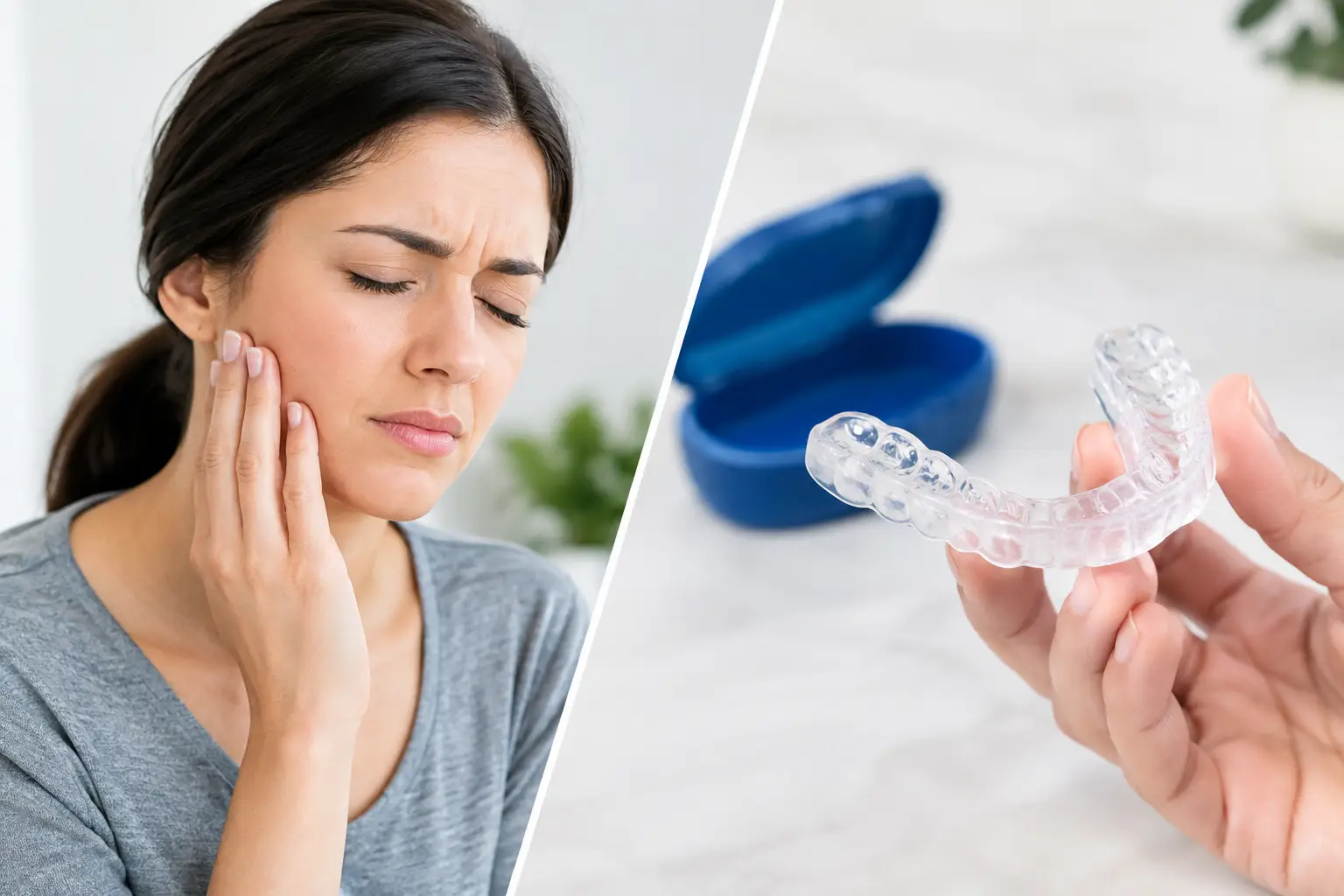
A sore jaw that clicks during breakfast, headaches that seem to start at the temples, or teeth that look increasingly worn can make a simple question feel urgent: should you choose TMJ therapy versus night guard treatment? The answer is rarely as simple as picking the device that seems easiest. A night guard can be a valuable tool, but it does not automatically address the reason your jaw is hurting.
At 1st Impressions Orthodontics, we believe patients deserve clear guidance without pressure. A careful evaluation helps identify whether muscle strain, clenching, bite concerns, joint irritation, or another issue may be contributing to your symptoms. From there, treatment can be designed around your comfort, goals, and daily routine.
TMJ Therapy Versus Night Guard: The Key Difference
TMJ stands for temporomandibular joint, the joint that connects your lower jaw to your skull. You have one on each side of your face, and they work with the surrounding muscles every time you talk, chew, yawn, or swallow. When these joints or muscles are irritated, people often use the broad term TMJ or TMD to describe the condition.
A night guard is a custom oral appliance worn while sleeping. It creates a protective barrier between the upper and lower teeth. For people who clench or grind at night, this can limit direct tooth-on-tooth contact and help prevent chips, cracks, flattened edges, and damage to restorations. Depending on the design and diagnosis, an appliance may also support a more relaxed jaw position.
TMJ therapy is broader. It refers to a personalized treatment plan intended to address jaw-joint and muscle symptoms, as well as factors that may be keeping those symptoms active. A night guard may be one part of that plan, but therapy can also include bite evaluation, jaw exercises, habit changes, temporary dietary adjustments, stress-related clenching strategies, orthodontic assessment, or coordination with other healthcare providers when appropriate.
Put simply, a night guard is a device. TMJ therapy is the diagnostic and treatment process behind deciding whether a device is useful, which type is appropriate, and what else may be needed.
When a Night Guard May Be a Good Fit
A custom night guard may be helpful when the primary concern is nighttime grinding or clenching. Common signs include waking with tight jaw muscles, noticing tooth wear, having cracked fillings or teeth without an obvious cause, or hearing a partner mention grinding sounds during sleep.
The goal is not always to stop clenching completely. Clenching can be related to stress, sleep patterns, medications, airway concerns, and other factors. Instead, the appliance protects the teeth and can reduce the overload created when intense forces are concentrated on a small area of the bite.
Custom matters. Store-bought guards are convenient, but they are not made from an impression or digital scan of your teeth. A bulky, poorly fitting guard can feel uncomfortable, interfere with sleep, or encourage a bite position that is not ideal for your specific needs. A professionally made appliance is designed for fit, durability, and how your teeth come together.
Even a well-made night guard has limits. It may protect enamel while leaving the source of jaw pain unaddressed. If your pain is coming from joint inflammation, an unstable bite, frequent daytime clenching, a muscle issue, or another medical concern, wearing a guard alone may not provide the relief you expect.
When TMJ Therapy Makes More Sense
TMJ therapy is often the better starting point when symptoms are persistent, complex, or changing. For example, someone who has jaw pain plus clicking, limited opening, headaches, facial muscle soreness, or a bite that suddenly feels different needs more than a one-size-fits-all solution.
A personalized evaluation considers the pattern behind your symptoms. Does your jaw hurt most in the morning, after long workdays, or while chewing? Is the clicking painless and occasional, or has it become painful? Are you clenching while concentrating at a computer? Have you recently started orthodontic treatment, changed retainers, experienced an injury, or noticed sleep concerns? These details help guide care.
Conservative treatment is often the first step. This may include an oral appliance if indicated, along with practical changes that let irritated muscles and joints settle. In some cases, orthodontic treatment or an orthodontic evaluation can be relevant when tooth alignment and bite function are part of the larger picture. However, braces or clear aligners are not automatic cures for TMJ symptoms. The right approach depends on a careful diagnosis, not a promise that one treatment fixes every jaw concern.
Some symptoms also call for referral or coordinated care. Significant joint locking, severe pain, trauma, swelling, neurologic symptoms, or difficulty opening the mouth should be assessed promptly. A compassionate care team will recognize when another specialist, physician, physical therapist, or sleep provider should be part of the plan.
Why the Right Diagnosis Protects Your Smile
It is tempting to think of jaw discomfort as separate from orthodontics. In reality, the jaw, teeth, muscles, and bite work together every day. Repeated clenching can wear down teeth and place stress on retainers, crowns, veneers, and fillings. A bite that no longer feels comfortable can also lead people to shift their jaw unconsciously in search of a better position.
That does not mean every clicking jaw needs extensive treatment. Many people have harmless clicking without pain or functional problems. The concern rises when sounds are paired with discomfort, locking, reduced movement, tooth damage, or symptoms that disrupt sleep, meals, work, or school.
A precise exam can distinguish between a sound that should simply be monitored and a symptom that deserves treatment. Digital imaging and detailed bite records can be especially helpful when planning care around an existing orthodontic result, retainer, or more complicated bite relationship.
What to Expect at an Evaluation
A TMJ-focused appointment should feel like a conversation, not a sales pitch. Your provider will ask about your symptoms, dental history, sleep, stress patterns, and habits such as gum chewing or nail biting. They may check how your jaw opens and moves, feel the jaw muscles and joints, look for tooth wear, and evaluate how your teeth fit together.
If an appliance is recommended, the design should be based on your needs rather than a generic template. You should understand when to wear it, how to clean it, what improvement is realistic, and when to return for adjustments. Relief may be gradual, particularly when muscles have been overworking for months or years.
It is also reasonable to ask questions. Will this appliance protect my teeth, reduce my symptoms, or both? Could it affect my bite? What signs mean I should call sooner? Clear answers help you feel confident about the next step.
Choosing Between a Guard and a Broader Plan
For mild grinding with no ongoing jaw pain, a custom night guard may be the practical solution. For recurring pain, headaches, jaw fatigue, locking, or a changing bite, a broader TMJ therapy plan is usually more appropriate. Often, the real answer is not TMJ therapy or a night guard. It is TMJ therapy that may include the right night guard at the right time.
If jaw discomfort is making you avoid favorite foods, lose sleep, or worry about your teeth, you do not have to guess your way through it. A thoughtful evaluation can replace uncertainty with a plan that protects your smile and supports more comfortable days ahead.