
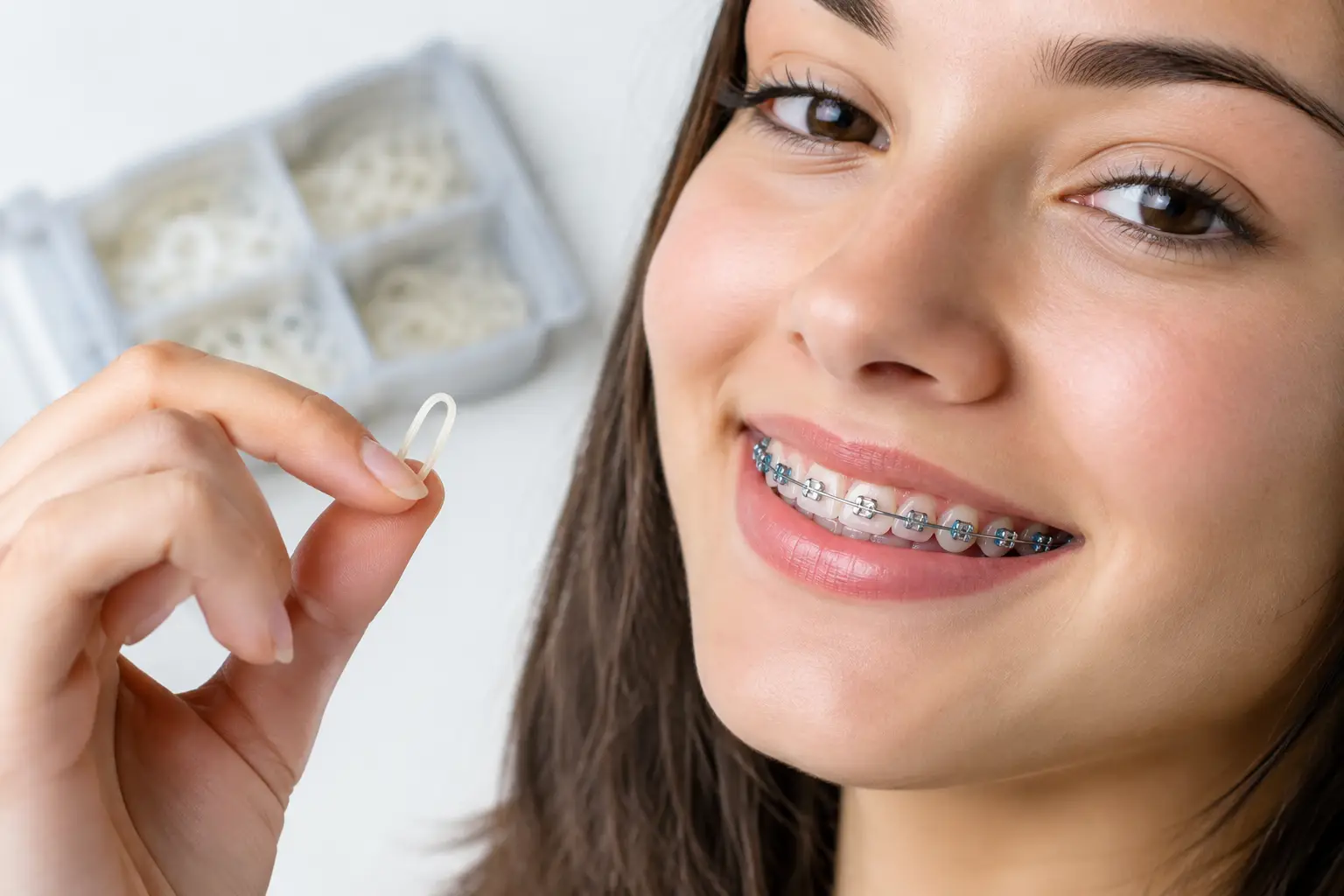
A tiny rubber band can make a meaningful difference in how your teeth and jaws fit together. Orthodontic elastic wear is often one of the most important parts of bite correction, yet it is also the part of treatment patients have the most control over at home. Wearing your elastics exactly as prescribed helps keep treatment moving forward and supports the precise, healthy result you and your orthodontist are working toward.
For many patients, elastics feel like a small add-on to braces or clear aligners. In reality, they deliver a carefully planned, gentle force that braces or aligners alone may not provide. The good news is that once elastic wear becomes part of your routine, it usually feels much more manageable than it sounds.
What orthodontic elastics actually do
Orthodontic elastics, sometimes called rubber bands, are small medical-grade bands that connect to hooks on braces or to special attachments on clear aligners. Their job is to guide the relationship between the upper and lower teeth and, in some cases, help improve how the jaws come together.
Braces and aligners are excellent at moving individual teeth into better positions. Elastics add a different kind of force. They can help correct an overbite, underbite, crossbite, open bite, or a bite that does not meet evenly. The exact pattern matters. A band placed from an upper canine to a lower molar works differently than one placed in the opposite direction or in a triangle pattern.
That is why elastic wear should always follow your orthodontist’s specific instructions. Two patients may both be wearing rubber bands, but their bands may have different sizes, strengths, placement patterns, and schedules. What works for a friend, sibling, or social media creator may not be right for your bite.
Why consistent orthodontic elastic wear matters
Elastics work through steady force. When bands are worn only occasionally, the teeth and bite can begin to move in the intended direction, then drift back when the force is removed. This stop-and-start pattern can slow treatment and make the bite correction less predictable.
Think of elastic wear as similar to following a recipe with a timing step you cannot skip. The ingredients may all be there, but the outcome changes if one part is inconsistent. Wearing bands as directed gives your orthodontist the clearest opportunity to evaluate your progress and make thoughtful adjustments at each visit.
Most patients are asked to wear elastics close to full-time, removing them only for meals, brushing, flossing, and activities specifically discussed with their orthodontist. Others may have a nighttime-only plan. Your instructions are personal, so the schedule provided by your orthodontic team should always take priority over general advice.
Fresh bands deliver more reliable force
Elastics gradually lose their strength as they stretch and are exposed to heat, moisture, and normal jaw movement. This is why patients are commonly instructed to replace them several times a day, often after eating and brushing. Putting the same band back in after a meal may seem convenient, but a fresh band provides more consistent force.
Keep spare packs where you are likely to need them: in a backpack, purse, desk drawer, sports bag, and car. Families with busy school, work, and activity schedules often find that this simple preparation prevents missed wear time.
Getting comfortable with rubber bands
The first few days of wearing elastics can bring mild pressure or tenderness, especially when chewing. This is a normal sign that your teeth and bite are responding to the new force. For most patients, the adjustment period is brief.
Start by practicing in front of a mirror. Your orthodontic team can show you exactly where each elastic should attach and provide a diagram if helpful. Some patients find that a small elastic hook tool makes placement easier, particularly with back teeth or when working around braces.
If elastics are difficult to place, do not feel embarrassed. This is a skill, not something you are expected to know automatically. A quick call to the office can save frustration, and the team can review the pattern with you. At 1st Impressions Orthodontics, clear guidance is part of the care experience, because confidence at home makes treatment easier.
For patients in clear aligners, elastics may connect to small precision cuts in the aligner and tooth-colored buttons on the teeth. Always seat your aligners fully before attaching the bands. An aligner that is not completely in place can affect both comfort and the way force is delivered.
Everyday habits that make elastic wear easier
The most successful routine is the one that fits your real life. Put in fresh elastics after brushing in the morning, after every meal, and before bed if your instructions call for full-time wear. Pairing the habit with things you already do makes it less likely to be forgotten.
A few practical habits can make a difference:
- Keep a backup supply in more than one location.
- Set a discreet phone reminder during the first week or two.
- Use a mirror and elastic tool until placement feels automatic.
- Ask a parent, partner, or friend to help you remember during busy days.
- Bring elastics to school, practice, work, and overnight trips.
If you play sports, ask your orthodontist whether you should wear elastics with your custom or orthodontic mouth guard. Do not assume they should be removed or left in without guidance. The right approach depends on your appliance, sport, and treatment plan.
What if you forget, lose, or break an elastic?
It happens. An elastic can break while you are eating, snap off during a conversation, or get left at home on a rushed morning. Replace it with a fresh one as soon as you can. One missed band or a short lapse is not a reason to panic, but repeated gaps can affect progress.
Do not double up on elastics to make up for missed time unless your orthodontist has specifically told you to do so. More force is not automatically better. It can create unnecessary discomfort and may move teeth in a way that does not match the treatment plan.
If you run out of elastics, contact your orthodontic office promptly. It is better to ask for more than to go days without them. If a hook, button, or brace bracket breaks, save any piece you can find, stop using that elastic pattern if it cannot be attached correctly, and call for instructions. Your team can help determine whether you need an appointment sooner.
When discomfort deserves a call
Mild pressure is expected when elastics are started or changed. Sharp pain, swelling, a sore that will not heal, a loose appliance, or an elastic that repeatedly rubs the same area deserves attention. A small amount of orthodontic wax may help with irritation from a hook or bracket, but it should not replace professional guidance when something feels wrong.
Tell your orthodontist if your bite suddenly feels dramatically different, if you cannot open or close comfortably, or if jaw symptoms become more noticeable. Treatment is designed to be precise, and feedback from patients helps the team make the right adjustments.
Avoid using non-orthodontic rubber bands
Only use the elastics provided or approved by your orthodontist. Household rubber bands, hair ties, and bands from another treatment plan are not safe substitutes. They are not designed for orthodontic use, may carry too much or too little force, and can create avoidable risks if they slip beneath the gums.
It is also best not to change your elastic pattern based on online advice. Orthodontic treatment is highly individualized. A pattern that corrects one bite can worsen another.
A small daily commitment with a visible purpose
Every time you replace your elastics, you are doing your part to support the next stage of your smile and bite correction. If your routine feels difficult, your elastics are uncomfortable, or you are unsure about placement, ask for help early. Clear answers and a simple plan can turn a frustrating step into one you handle confidently each day.