
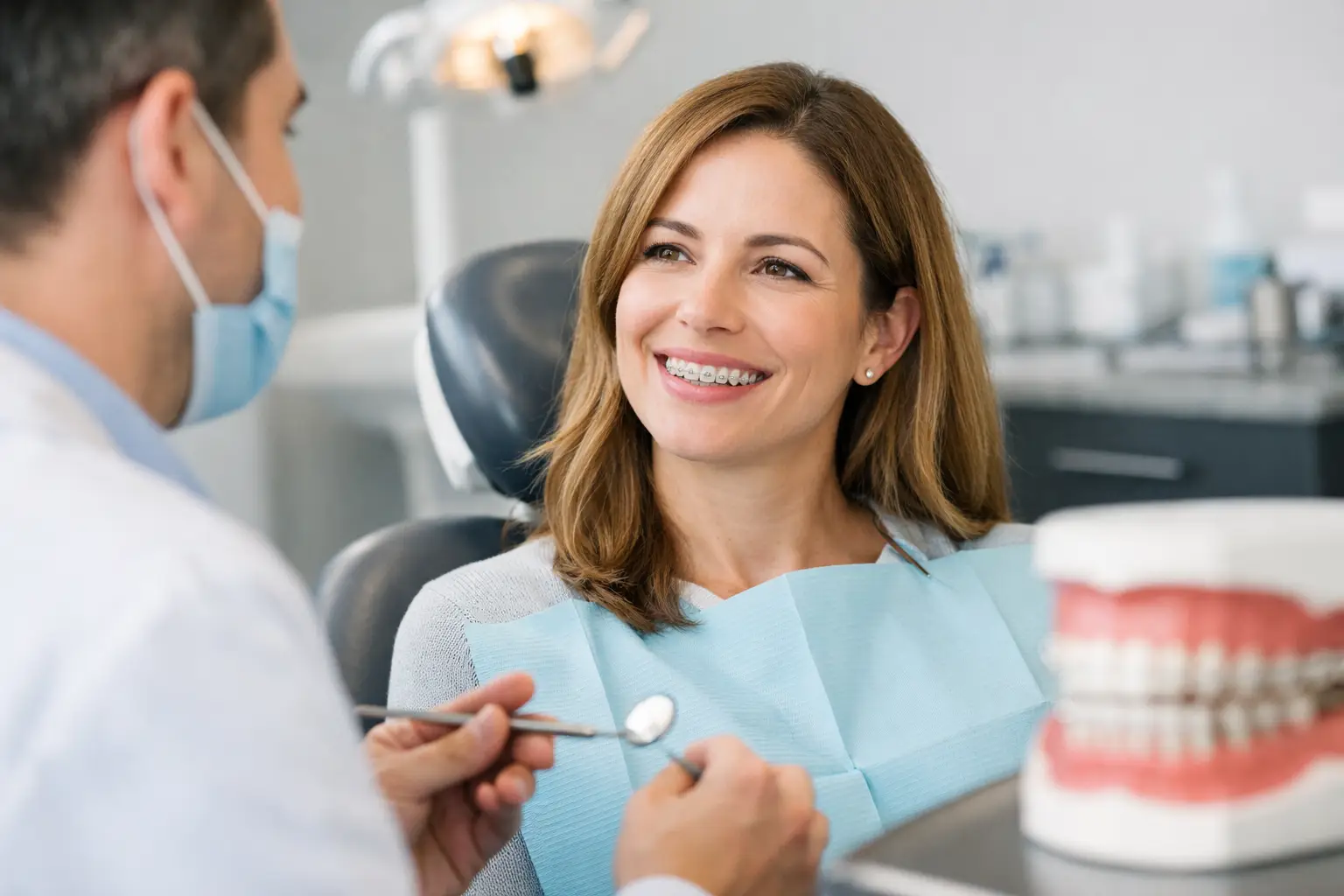
You might feel completely ready to straighten your teeth – until you picture showing up to work, joining a video call, or sitting through a client meeting with orthodontic appliances on your teeth. That hesitation is common, and it is one reason adult orthodontics often gets put off for years. The good news is that treatment has changed. For many adults, it is more discreet, more customized, and far more manageable than they expected.
Adults often come in thinking orthodontic treatment is mainly cosmetic. Sometimes it is partly about appearance, but that is rarely the whole story. Crooked teeth can make brushing and flossing harder. Bite problems can lead to uneven wear, jaw strain, or teeth that chip more easily. In some cases, people are dealing with crowding, shifting after childhood braces, or discomfort they have simply learned to live with. Adult orthodontics can address those concerns in a way that supports both smile aesthetics and long-term oral health.
Why adults choose orthodontic treatment
For some people, the tipping point is a photo. For others, it is a cracked tooth, a retainer that no longer fits, or a dentist pointing out gum recession around crowded teeth. Adult patients usually decide to move forward when they realize the issue is not going away on its own.
There is also a practical side to treatment. Straightening teeth can improve cleaning access, and correcting bite problems may reduce excess pressure on certain teeth. If your upper and lower teeth are not meeting properly, that imbalance can affect chewing, comfort, and wear patterns over time. Orthodontics is not a cure-all for every dental or jaw concern, but in the right case, it can make a meaningful difference.
Many adults also appreciate that treatment today is more flexible. Clear aligners, ceramic braces, and modern digital planning have made the process feel less disruptive. You still need commitment, and there are still adjustments to make, but the experience is often smoother than people expect.
Adult orthodontics options
The best treatment depends on your teeth, your bite, your goals, and your daily routine. There is no single option that is right for every adult, which is why a personalized evaluation matters.
Clear aligners
Clear aligners are popular with adults because they are removable and less noticeable. They can be a strong option for many alignment and bite concerns, especially for patients who want flexibility at work, school, or social events. They also make brushing and flossing easier because you remove them to eat and clean your teeth.
That convenience comes with responsibility. Aligners only work well if you wear them as directed, usually 20 to 22 hours a day. If you tend to forget things, snack frequently, or know your schedule is unpredictable, that can make treatment less efficient. Clear aligners are excellent for many adults, but success depends on consistency.
Metal braces
Metal braces remain one of the most effective and precise orthodontic tools available. They are reliable for simple and complex cases alike, and because they are fixed in place, you do not have to remember to wear them.
Adults sometimes dismiss metal braces immediately because of appearance, but they can still be the smartest choice in certain situations. If tooth movement is more involved or bite correction is a major goal, braces may offer better control. In many cases, treatment can also move along more predictably because the system stays on the teeth full time.
Clear braces
Clear braces give you the structure of braces with a less noticeable look. They are often a good middle ground for adults who want strong treatment mechanics without the visibility of traditional metal brackets.
They are not invisible, and they still require attention to hygiene and food choices. But for many adults, they offer a balance between aesthetics and control that feels comfortable and realistic.
What adult orthodontics can treat
A consultation is the best way to know what is possible, but adult orthodontics commonly treats crowding, spacing, overbites, underbites, crossbites, open bites, and relapse after earlier treatment. Some adults are surprised to learn that shifting can continue over time, even if they had braces as a teen.
It is also worth knowing that adult treatment can be more complex when old dental work is involved. Crowns, bridges, missing teeth, gum recession, and bone loss do not automatically rule out orthodontics, but they can change the treatment plan. Sometimes orthodontic care is coordinated with a general dentist or another specialist to protect overall oral health and get the best result.
That is why careful planning matters. Digital imaging and 3D diagnostics can help your orthodontist evaluate roots, bone support, jaw relationships, and spacing in a more complete way before treatment begins.
Is adult treatment slower than teen treatment?
Sometimes, yes. Adults do not have the same growth patterns teens do, so certain bite corrections may take longer or require a different approach. Teeth can still move very well in adulthood, but the biology is a little different, and supporting structures may need more careful monitoring.
That does not mean treatment is excessively long. Many adult cases fit within a reasonable timeframe, often somewhere between several months and two years depending on complexity. Minor relapse might be addressed faster, while comprehensive bite correction can take longer. The most accurate answer always comes from an exam, not a generic estimate online.
Common concerns adults have
Appearance is usually the first concern, but it is not the only one. Adults also worry about discomfort, scheduling, cost, and whether treatment will interfere with daily life.
Some soreness is normal, especially when treatment begins or changes are made, but it is usually temporary. Most patients adapt quickly. If you choose braces, there can be an adjustment period with eating and cheek irritation. If you choose aligners, there is often a learning curve with removing trays, keeping them clean, and planning meals around wear time.
Scheduling matters too. Adults are balancing work, family, school pickups, travel, and everything else. That is why efficient visits, clear communication, and a treatment plan built around real life can make such a difference. Orthodontic care should feel organized and supportive, not like one more stressful thing on your calendar.
Cost is another real question, and a fair one. Fees vary based on case complexity, appliance choice, and treatment length. What helps most is transparency early on – knowing what is recommended, why it is recommended, what your payment options are, and what the timeline is likely to be. For many adults, treatment becomes much more approachable once the process is clearly explained.
What to expect at your consultation
A good consultation should leave you feeling informed, not pressured. You should understand what is happening with your teeth and bite, what your treatment options are, and which plan best fits your goals.
That process often includes photos, digital scans or impressions, and diagnostic imaging. From there, your orthodontist can explain whether your concerns are mainly cosmetic, functional, or both. You should also hear an honest discussion of trade-offs. For example, one option may be more discreet, while another may offer better control. One plan may be faster, while another fits better with your daily routine.
This is also the time to talk about anything that could affect treatment, from previous dental work to jaw discomfort to trouble sleeping. In some cases, orthodontic concerns overlap with TMJ symptoms or other oral health issues, and that bigger picture matters.
Getting the best result from adult orthodontics
The best outcomes come from a partnership. Your orthodontist designs the treatment, but your habits still matter. Keeping appointments, following instructions, wearing aligners or elastics as directed, and maintaining excellent oral hygiene all affect the final result.
Retention matters just as much. Teeth can shift after treatment at any age, which is why retainers are not optional if you want to protect your investment. Many adults seeking treatment now are doing so because they stopped wearing retainers years ago. That is common, and it is fixable, but it is also a reminder that long-term stability takes follow-through.
If you have been putting this off because you think you missed your window, you have not. Adult orthodontics is not about trying to catch up with everyone else. It is about deciding that your comfort, health, and confidence are worth addressing now, with a plan that fits your life instead of disrupting it.