
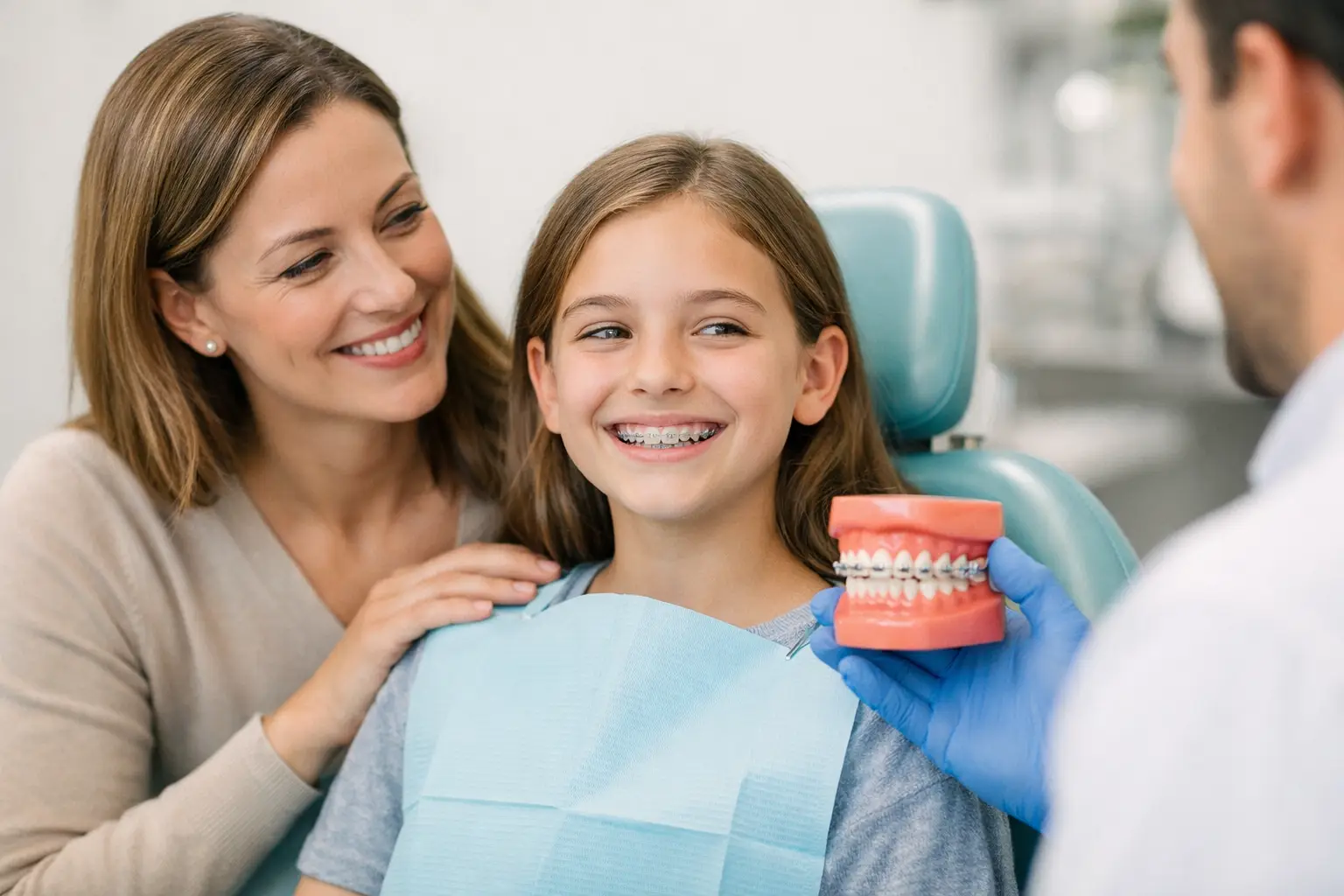
A crooked front tooth, a noticeable overbite, or a child who avoids smiling in school photos can make braces feel like an urgent next step. This guide to braces for kids can help you understand what treatment may involve, when to schedule an orthodontic evaluation, and how to make the process feel calm and manageable for your family.
Braces are not just about creating a straighter smile. They can guide teeth into healthier positions, improve how the upper and lower teeth fit together, and make daily brushing more effective. The right timing and approach depend on your child’s growth, bite, dental development, and personal needs.
When Should Kids See an Orthodontist?
The American Association of Orthodontists recommends that children have an orthodontic evaluation by age 7. That does not mean every 7-year-old needs braces. Many children simply need a careful assessment and periodic monitoring while adult teeth continue to come in.
At this age, an orthodontist can identify concerns that may be easier to address while the jaw is still developing. These can include crowding, crossbites, protruding front teeth, a narrow upper jaw, spacing, or habits such as thumb sucking that affect tooth and jaw position.
Some children begin treatment in elementary school, while others are best served by waiting until most or all permanent teeth have erupted. There is no one-size-fits-all schedule. A personalized treatment plan should explain what is happening now, what may change as your child grows, and why treatment is recommended at a particular time.
Early treatment versus waiting
Early interceptive treatment, sometimes called Phase 1 treatment, focuses on a specific developmental concern. It may create space for permanent teeth, guide jaw growth, or reduce the risk of damage to prominent front teeth. It is usually followed by a monitoring period and, for some children, a later comprehensive phase of braces.
Waiting can also be the right choice. If the bite is developing normally and there is no immediate concern, monitoring avoids starting treatment before it is necessary. A thoughtful orthodontist will be comfortable recommending observation when that is the best path.
Signs Your Child May Benefit From Braces
Parents often notice crooked or crowded teeth first, but bite concerns are not always easy to see. Consider an orthodontic evaluation if your child has difficulty biting or chewing, teeth that meet unevenly, early or late loss of baby teeth, mouth breathing, frequent cheek biting, or jaws that shift or make sounds when opening and closing.
You may also notice that the upper teeth sit far ahead of the lower teeth, the lower teeth extend in front of the upper teeth, or some teeth appear trapped behind others. These signs do not automatically mean your child needs braces, but they are worth a professional look.
An evaluation can be especially reassuring when a child feels self-conscious about their smile. The goal is never to create pressure around appearance. It is to give your child clear, judgment-free information and an option for improving their dental health and confidence when the time is right.
A Guide to Braces for Kids: Choosing the Right Type
Traditional metal braces remain a reliable and highly effective option for correcting a wide range of alignment and bite concerns. Today’s brackets are smaller and more comfortable than many parents remember, and kids can often choose colored elastic ties to make treatment feel more personal.
Clear braces use tooth-colored or translucent brackets, making them less noticeable from a conversational distance. They can be a good option for children and teens who want a more subtle look, though they may require extra care to avoid staining.
Clear aligners can work well for some older children and teens, particularly when they can consistently wear and care for their aligners as instructed. Because aligners are removable, they offer flexibility for meals and brushing. That convenience comes with responsibility: treatment only works well when aligners are worn for the prescribed amount of time each day.
The best appliance is the one that can treat your child’s specific orthodontic needs safely and predictably while fitting their daily routine. Your orthodontist should explain the advantages, limits, expected treatment time, and care requirements of each appropriate option.
What Happens at the First Orthodontic Visit?
A first visit should replace uncertainty with answers. The orthodontic team will review your child’s medical and dental history, examine the teeth and bite, and may take digital photographs or X-rays. Modern digital imaging and 3D technology can give the orthodontist a detailed view of tooth position, jaw relationships, and developing permanent teeth.
If treatment is recommended, you should receive a clear explanation of the goals, appliance options, estimated timeline, and financial details. Ask questions about what happens if a bracket breaks, how often appointments are needed, and whether your child will need retainers after braces come off.
For many families, convenience matters as much as clinical results. Flexible scheduling, clear communication, and a team that speaks directly to both parents and kids can make regular appointments far less stressful.
The First Week With Braces
The first few days after braces are placed are often the biggest adjustment. Your child may feel pressure or tenderness when biting, especially after adjustments. This is normal and usually improves within several days.
Soft foods such as yogurt, scrambled eggs, soup, pasta, smoothies, and applesauce can make the transition easier. Orthodontic wax can help protect the cheeks or lips if a bracket initially rubs against soft tissue. Follow the care instructions from your orthodontic team before using any over-the-counter pain relief.
A little encouragement goes a long way. Let your child know that feeling awkward at first does not mean something is wrong. Most kids adapt quickly once they learn how to eat, brush, and speak comfortably with braces.
Daily Care That Protects Treatment Progress
Excellent brushing and flossing are essential during braces treatment. Food and plaque can collect around brackets and wires, increasing the chance of cavities, gum inflammation, and white spots on the enamel. Brushing after meals when possible, using a fluoride toothpaste, and cleaning carefully along the gumline are smart habits.
Flossing takes more patience with braces, but a floss threader, orthodontic flosser, or water flosser can help. A water flosser is useful for removing food particles, though it does not fully replace brushing and flossing between teeth.
Your child will also need to avoid foods that can bend wires or pop off brackets. Hard candy, popcorn, ice, sticky caramel, chewing gum, and biting directly into whole apples, corn on the cob, or crusty pizza can cause problems. Cutting firm foods into smaller pieces is usually the easier option.
What if a Bracket Breaks or a Wire Pokes?
Orthodontic emergencies are usually not dangerous, but they can be uncomfortable and deserve prompt guidance. If a wire is poking, orthodontic wax can cover the end temporarily. If a bracket comes loose, keep it in place if possible and contact your orthodontic office for instructions.
Do not try to cut a wire yourself. Calling early helps the team decide whether your child needs to be seen right away or can wait until the next available appointment. Quick communication can prevent a small issue from disrupting treatment progress.
How Long Do Kids Wear Braces?
Most comprehensive braces treatment lasts about 18 to 24 months, though the timeline varies. Simple alignment may take less time, while complex bite correction, missing teeth, impacted teeth, growth changes, and inconsistent care can extend treatment.
Keeping appointments, wearing elastics exactly as directed, protecting braces from damage, and maintaining excellent hygiene all support a smoother timeline. Retainers are equally important after braces. Teeth naturally tend to shift, and retainers help protect the progress your child worked hard to achieve.
Talking With Your Child About Braces
Children respond best when they feel included rather than talked around. Explain that braces are a tool to help their teeth and bite work better, not a punishment or a reason to feel different. Let them choose elastic colors if they want, pack braces-friendly snacks for school, and celebrate small milestones such as the first successful adjustment or a great brushing check.
If your child is anxious, ask the orthodontic team to walk them through appointments in simple language. At 1st Impressions Orthodontics, compassionate care means giving children time to ask questions and helping families understand each step without pressure.
A confident smile is meaningful, but so is the experience of getting there. With a personalized plan, supportive guidance, and steady home care, braces can become one practical step toward a healthier, more comfortable future for your child.