
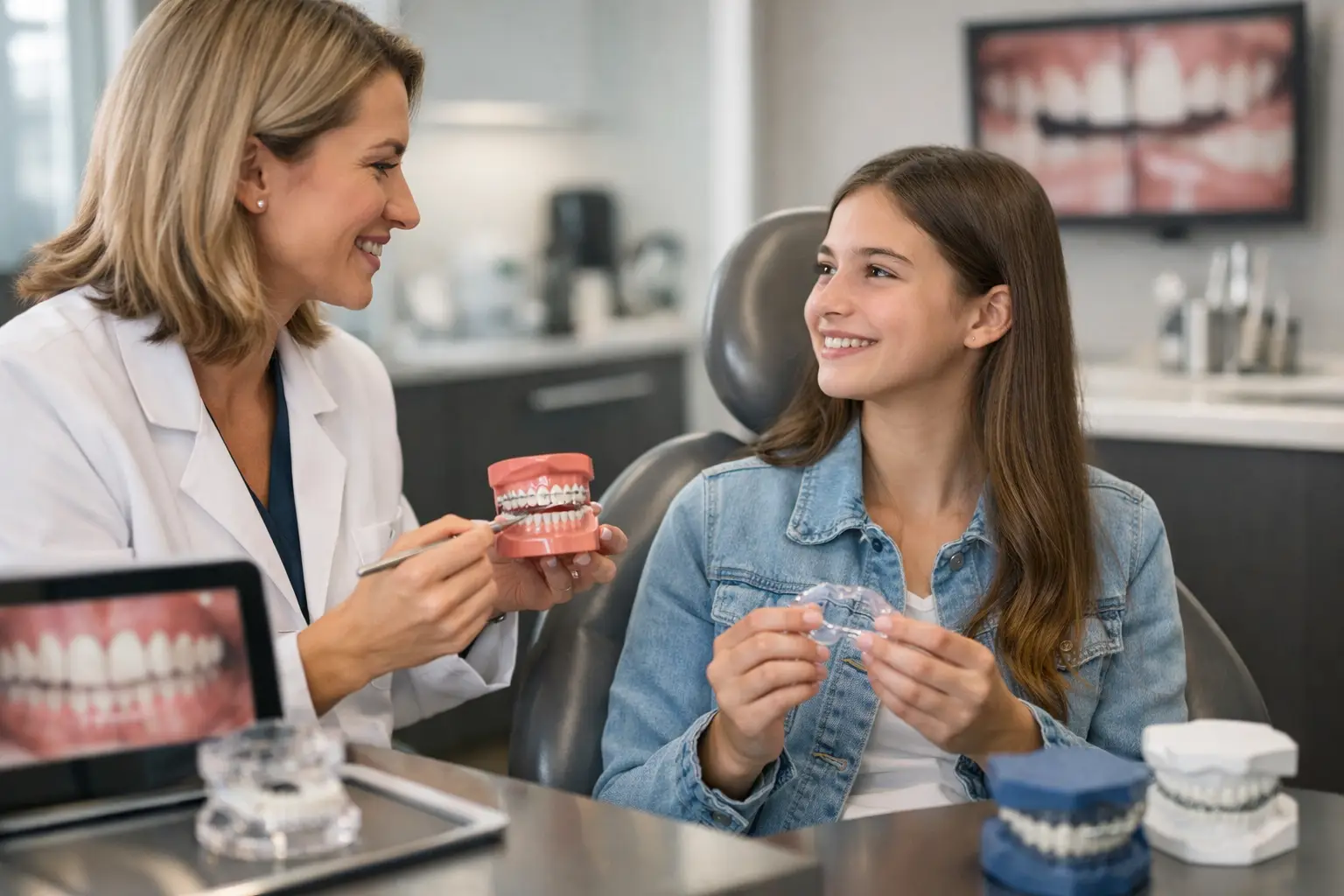
Two people can both have crowded teeth and still need very different orthodontic plans. One may need early treatment to guide jaw growth, while another may be a good fit for Invisalign with minimal disruption to work or school. That is exactly how orthodontic treatment is personalized – not by offering one appliance to everyone, but by building care around the person behind the smile.
For many patients, that difference matters as much as the final result. Families want clear answers. Teens want options that fit their daily life. Adults want treatment that respects their schedule, appearance concerns, and budget. Personalized orthodontic care makes the process feel more manageable because the plan is based on your needs, not a standard formula.
How orthodontic treatment is personalized from the first visit
Personalization starts before brackets or aligners ever come into the picture. A thorough orthodontic evaluation looks at far more than whether teeth appear straight. Your orthodontist studies how your teeth fit together, how your jaws align, whether there is crowding or spacing, how you bite and chew, and whether there are concerns involving jaw comfort, airway, or tooth eruption.
Modern imaging plays a major role here. Digital scans, photos, and 3D imaging can reveal details that are easy to miss with a quick visual exam alone. That matters because treatment decisions should be based on precision. A patient with mild-looking crowding may actually have a bite issue driving the problem. Another patient may be mainly concerned with appearance but need a plan that protects long-term function too.
Just as important, your orthodontist will ask about your goals. Some patients are focused on confidence in photos. Others want to fix a crossbite, reduce jaw strain, or make room for erupting teeth. A personalized plan starts by understanding what you want to change and what needs to be corrected for a healthy, stable result.
Your age and stage of life shape the plan
Orthodontic treatment is not personalized only by diagnosis. It is also shaped by timing.
For children
With children, the question is often whether early interceptive treatment could prevent a bigger problem later. If a jaw is developing unevenly, permanent teeth are erupting in a difficult pattern, or a harmful bite habit is affecting growth, early treatment may create space or guide development at the right moment. In other cases, the best plan is watchful waiting. Good orthodontics is not about rushing treatment. It is about choosing the right timing.
For teens
Teens often need a balance between effectiveness and practicality. Braces may be the best option for certain movements, especially if the bite needs significant correction. Clear aligners can work well for many teens too, but success depends on consistent wear. That is where personalization becomes honest, not just appealing. The best treatment is not the one that sounds easiest. It is the one that fits the teen’s clinical needs and ability to follow through.
For adults
Adults often come in with a different set of priorities. They may want subtle treatment, fewer office disruptions, or a plan that works around meetings, parenting, or travel. Some also have restorations, gum concerns, previous orthodontic relapse, or jaw symptoms that influence treatment choices. Adult care can be highly effective, but it often requires thoughtful planning that respects both lifestyle and oral health history.
Treatment options are selected for fit, not popularity
A personalized orthodontic plan does not begin with, Do you want braces or Invisalign? It begins with, What is the best way to move your teeth safely and efficiently?
Braces remain an excellent option for many patients because they give precise control over complex tooth movement and bite correction. Clear braces may appeal to patients who want a less noticeable look. Invisalign and other clear aligner systems can be a strong choice for patients who want removability and a more discreet experience.
The right option depends on several factors: the complexity of the case, the health of the teeth and gums, the patient’s age, daily habits, and how much compliance the treatment requires. For example, removable aligners offer convenience, but they only work as planned when worn as directed. Braces remove that variable, which can be helpful for some patients.
That is one of the biggest misconceptions about orthodontics. Personalized care is not about hearing yes to every preference. It is about getting a plan that honestly matches your needs, even when the answer is, it depends.
Bite problems matter just as much as straight teeth
Patients often begin by noticing crooked front teeth, but orthodontists are also thinking about function. If the bite is off, straightening visible teeth alone may not solve the real issue.
Overbites, underbites, open bites, crossbites, and narrow arches can affect chewing, speech, tooth wear, and long-term stability. In some cases, bite imbalance can even contribute to jaw strain or discomfort. That is why personalization includes looking at the whole system, not just the cosmetic surface.
This is also where treatment length can vary. One patient may only need alignment. Another may need space creation, bite correction, elastics, or phased treatment over time. A shorter plan is not always the better plan if it leaves functional problems unresolved.
Comfort, schedule, and daily life are part of the plan
Personalized treatment should work clinically, but it also needs to work in real life. That means considering school calendars, sports, work commitments, travel, and comfort preferences.
For a student involved in band or athletics, appliance choice and mouth guard planning may matter. For a working adult, fewer in-office visits or a discreet look may be important. For a parent managing appointments for multiple children, scheduling flexibility and clear communication can make the process far less stressful.
Even small details affect the experience. Some patients are nervous about discomfort. Others want to understand every step before starting. Some need a simpler plan financially, while others are more focused on finishing before a major life event. These are not side issues. They are part of what makes care feel truly individualized.
A modern orthodontic practice should be able to combine clinical precision with convenience. Digital tools, organized scheduling, and transparent explanations help patients stay confident and informed throughout treatment, not just at the consultation.
Technology helps make personalization more precise
Advanced technology does not replace clinical judgment, but it does make customized treatment more accurate.
Digital impressions can improve comfort and detail compared with traditional molds. 3D imaging can show tooth roots, jaw relationships, and eruption patterns more clearly. Treatment simulation software can help map tooth movement and support decisions about appliances, timing, and expected progress.
This matters because small differences in anatomy can change the approach. A plan that looks simple from the front may involve root positioning challenges or jaw limitations that need careful management. Better diagnostics help reduce guesswork and improve communication, which is reassuring for patients trying to make an informed decision.
At practices like 1st Impressions Orthodontics, that combination of technology and attentive care helps turn treatment planning into a conversation rather than a sales pitch. Patients can better understand what is recommended, why it is recommended, and what to expect along the way.
Personalization continues after treatment starts
A treatment plan is not truly personalized if it never adapts. Teeth do not always move on a perfect schedule, and life does not stand still while orthodontic care is happening.
Sometimes a patient responds faster than expected. Sometimes aligner wear has been inconsistent, or a bracket issue changes the timeline. A child may hit a growth stage that affects timing. An adult may need adjustments because of travel or dental work. Personalized care means monitoring progress closely and making smart changes when needed.
That same thinking applies at the finish line. Retainers are part of personalization too. The best retention plan depends on the patient’s bite, treatment history, and likelihood of relapse. Some patients need a fixed retainer, some do well with removable retainers, and many benefit from a combination. Keeping results stable is not an afterthought. It is part of the original strategy.
Why this approach leads to better experiences
When patients understand that orthodontics is tailored to them, the process tends to feel less overwhelming. There is more clarity around why a certain treatment was recommended, how long it may take, and what role they play in the outcome.
That clarity builds trust. It also reduces the frustration that can come from unrealistic expectations. If you know upfront why braces may be better than aligners for your bite, or why early treatment is being monitored instead of started immediately, the plan feels grounded in expertise rather than guesswork.
The best orthodontic experience is not only about straight teeth at the end. It is about feeling heard, cared for, and guided by a team that takes your goals seriously while protecting your long-term oral health.
If you have been putting off treatment because you assumed the process would be one-size-fits-all, this is the part worth remembering: good orthodontic care should fit your smile, your bite, your timeline, and your life.