
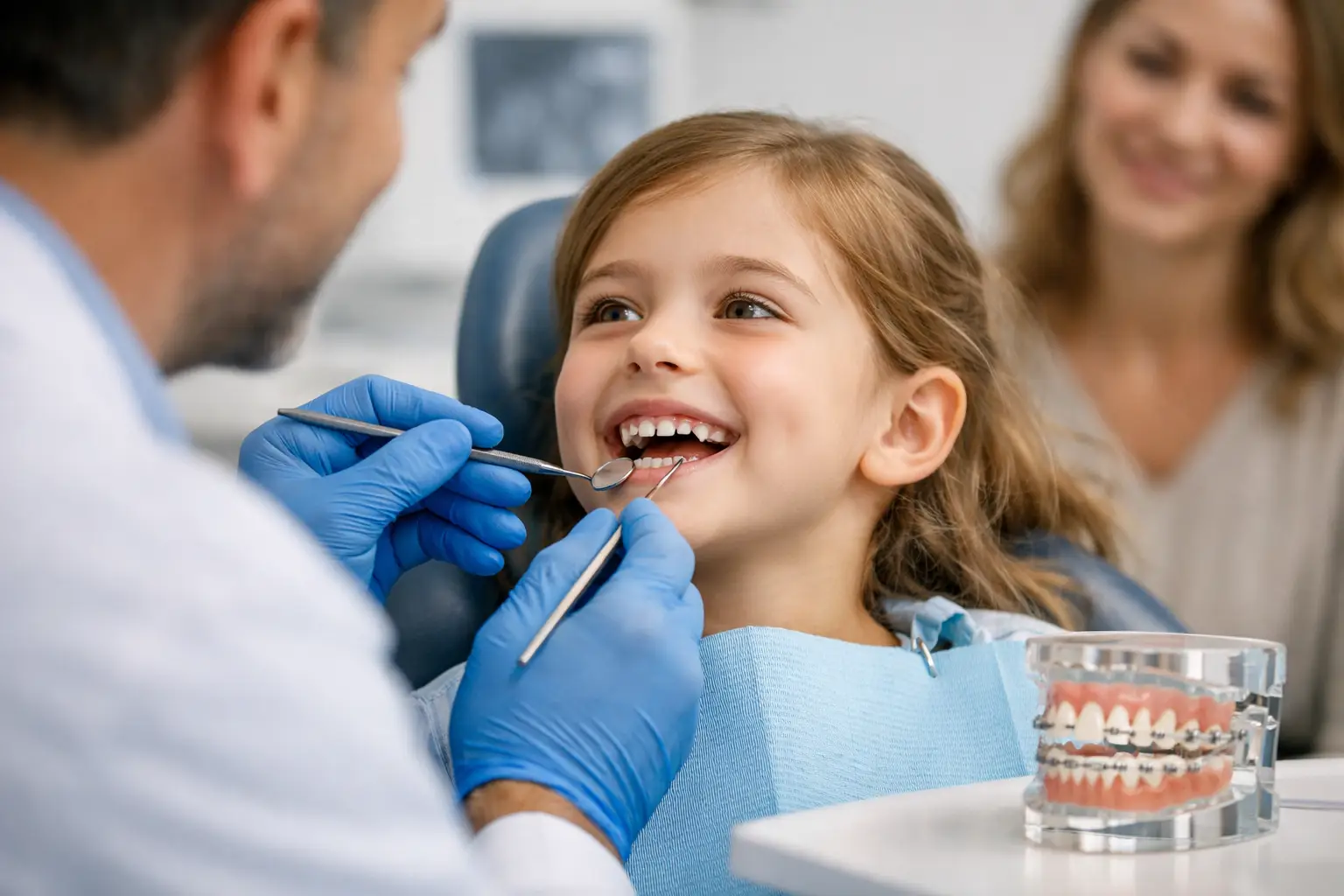
A child does not need to have all of their permanent teeth before an orthodontist can spot a developing concern. In some cases, interceptive orthodontic treatment can guide jaw growth, make room for incoming teeth, or reduce the risk of a more complicated bite issue later. In others, the best recommendation is simply to monitor development and let your child keep growing naturally.
That distinction matters. Early orthodontic care is not about putting every young child in braces. It is about giving families clear guidance at the right time, with treatment only when it offers a meaningful benefit.
What Is Interceptive Orthodontic Treatment?
Interceptive orthodontic treatment, sometimes called Phase 1 treatment, is orthodontic care provided while a child still has a mix of baby teeth and permanent teeth. It is designed to address specific growth, spacing, bite, or tooth-eruption concerns before they become more difficult to manage.
Rather than focusing only on straightening every tooth, this approach looks at the bigger picture: how the upper and lower jaws relate, whether adult teeth have enough room to come in, how the bite functions, and whether habits or airway-related concerns may be affecting oral development.
Treatment may involve a limited set of braces, a palatal expander, a space maintainer, or another custom appliance. The right option depends on the child’s needs. Some children benefit from a short active treatment period, while others need observation until more permanent teeth arrive.
Why an Early Orthodontic Evaluation Can Help
The American Association of Orthodontists recommends an orthodontic evaluation by age 7. That can sound early, but it does not mean treatment is automatically needed at 7. At this age, the first permanent molars and front teeth have usually erupted, giving an orthodontist useful information about jaw development, crowding, bite alignment, and eruption patterns.
An early visit can be especially valuable because growing jaws are still responsive to guidance. If a child has a narrow upper jaw, a crossbite, significant crowding, or a tooth that is blocked from erupting properly, addressing the issue during growth may prevent it from becoming more involved later.
Just as importantly, a consultation can provide reassurance. Many children are developing normally and do not need treatment yet. Families can leave with a clear plan, including what to watch for and when to return for follow-up.
Signs Your Child May Benefit From Interceptive Orthodontic Treatment
Parents are often the first to notice a change, but some orthodontic concerns are subtle. An orthodontist can identify developing issues through an exam and digital imaging, even when a child has no discomfort.
Consider scheduling an evaluation if you notice several of the following concerns:
- Early or late loss of baby teeth
- Difficulty chewing, biting, or closing the lips comfortably
- Crowded, overlapping, or unusually spaced teeth
- Upper teeth that bite inside the lower teeth, known as a crossbite
- Front teeth that extend far forward or do not meet properly
- A jaw that shifts to one side when your child bites down
- Persistent thumb or finger sucking beyond the preschool years
- Teeth that appear blocked, missing, or slow to erupt
Mouth breathing, frequent snoring, or restless sleep can also be worth discussing with your child’s dentist, pediatrician, and orthodontist. Orthodontic treatment is not a substitute for medical evaluation of sleep concerns, but the shape and development of the jaws can be part of a broader conversation about oral and airway health.
What Early Treatment Can and Cannot Do
When it is appropriate, early treatment can create space for permanent teeth, improve the relationship between the upper and lower jaws, correct certain crossbites, and help reduce dental trauma risk when front teeth protrude significantly. It may also guide erupting teeth into a better position and preserve space after a baby tooth is lost too soon.
These benefits can make later treatment simpler. For example, creating room during growth may reduce the likelihood that a permanent tooth becomes trapped or that tooth removal is considered later. Correcting a functional crossbite early can help prevent a child from repeatedly shifting their jaw to one side when biting.
Still, it is helpful to have realistic expectations. Early treatment does not guarantee that a child will never need braces or Invisalign as a teen. After Phase 1 treatment, there is usually a rest period while the remaining permanent teeth erupt. Many children later benefit from a second, more comprehensive phase to fine-tune alignment and bite details.
The goal is not to promise a shortcut. The goal is to intervene thoughtfully when timing makes a genuine difference.
What Treatment Looks Like for Families
The process starts with a personalized orthodontic evaluation. At 1st Impressions Orthodontics, this includes a careful exam and modern digital imaging when needed to understand how the teeth and jaws are developing. We take time to explain what we see in clear, parent-friendly language, including whether treatment is recommended now, later, or not at all.
If active treatment is the right choice, your child may wear an appliance or limited braces for several months to a little over a year. Appointments are generally scheduled at regular intervals so the orthodontist can check progress, make adjustments, and keep treatment moving comfortably.
A removable appliance may need consistent wear at home, while braces require extra attention to brushing and food choices. Each option has trade-offs. Removable appliances can be convenient for eating and cleaning, but they only work when they are worn as instructed. Fixed appliances do not rely on daily compliance in the same way, but they require good hygiene and care around crunchy or sticky foods.
Children often adapt more quickly than parents expect. Clear instructions, encouragement, and a supportive care team make a meaningful difference, especially for kids who feel nervous about the first few visits.
How to Support Your Child During Treatment
Early orthodontic care works best when it feels manageable, not overwhelming. Help your child understand that treatment is not a punishment or something to be embarrassed about. It is a tool to help their smile and bite develop in a healthy direction.
Keep the routine simple. Encourage thorough brushing around brackets or appliances, follow food and wear instructions, and bring your child to adjustment visits. If an appliance breaks, feels loose, or causes a sore spot that does not improve, call the orthodontic office for guidance rather than trying to adjust it at home.
It also helps to celebrate small wins. The first successful week with an expander, a great brushing report, or a positive appointment can build confidence and help children feel proud of their role in treatment.
Questions Parents Often Ask
Is treatment painful?
Most children feel pressure or mild soreness for a few days after an appliance is placed or adjusted. This is usually temporary and can often be managed with soft foods and the comfort measures recommended by your orthodontic team. Sharp pain, persistent discomfort, or a broken appliance should always be reported.
Will my child need braces again later?
Possibly. Phase 1 treatment handles a specific developmental concern, while later treatment aligns the full set of permanent teeth and refines the bite. Whether a second phase is needed depends on growth, eruption patterns, and treatment goals.
Can we wait and see?
Sometimes, yes. Observation is a valid orthodontic plan when there is no immediate advantage to treatment. The key is having an orthodontist monitor growth so a time-sensitive concern is not missed.
If you are wondering whether your child’s smile is simply changing or showing an early orthodontic concern, an evaluation can replace uncertainty with a clear next step. The most reassuring answer may be that no treatment is needed right now – and when treatment is recommended, your family will know exactly why it matters and what comes next.