
If your teeth feel like they are competing for space, you are not imagining it. The best orthodontic treatment for crowding depends on more than how your smile looks in photos. It also depends on how your teeth fit together, how severe the crowding is, your age, your daily routine, and whether your bite needs correction along with alignment.
Crowding is one of the most common reasons people seek orthodontic care, and it can show up differently from person to person. For one patient, it might be a slightly rotated front tooth. For another, it may be overlapping teeth, difficulty flossing, bite problems, or teeth that have shifted over time. That is why there is no single treatment that is automatically best for everyone.
What causes dental crowding?
Crowding usually happens when there is not enough room in the jaw for all the teeth to fit into proper alignment. Genetics often play a major role. Some people simply inherit smaller jaws, larger teeth, or a combination that creates limited space.
Crowding can also develop or worsen over time. Baby teeth that are lost too early, habits in childhood, impacted teeth, or natural shifting as a teen or adult can all change spacing. In some cases, crowding is mostly cosmetic. In others, it is connected to a deeper bite issue that should be treated for comfort and long-term stability, not just appearance.
Best orthodontic treatment for crowding: what really matters
When patients ask about the best orthodontic treatment for crowding, the honest answer is that it depends on the type and severity of the problem. A mild case may be treated very differently from moderate or severe crowding. The right option should create healthy alignment without cutting corners.
Your orthodontist will usually look at several factors at once. They will assess how much space is missing, whether the crowding affects the upper arch, lower arch, or both, how your bite lines up, whether jaw growth is still happening, and what kind of result will be most stable after treatment.
This is where advanced imaging and a customized plan matter. A treatment that looks simpler on the surface is not always the better choice if it leaves the bite off or creates relapse later.
Invisalign for mild to moderate crowding
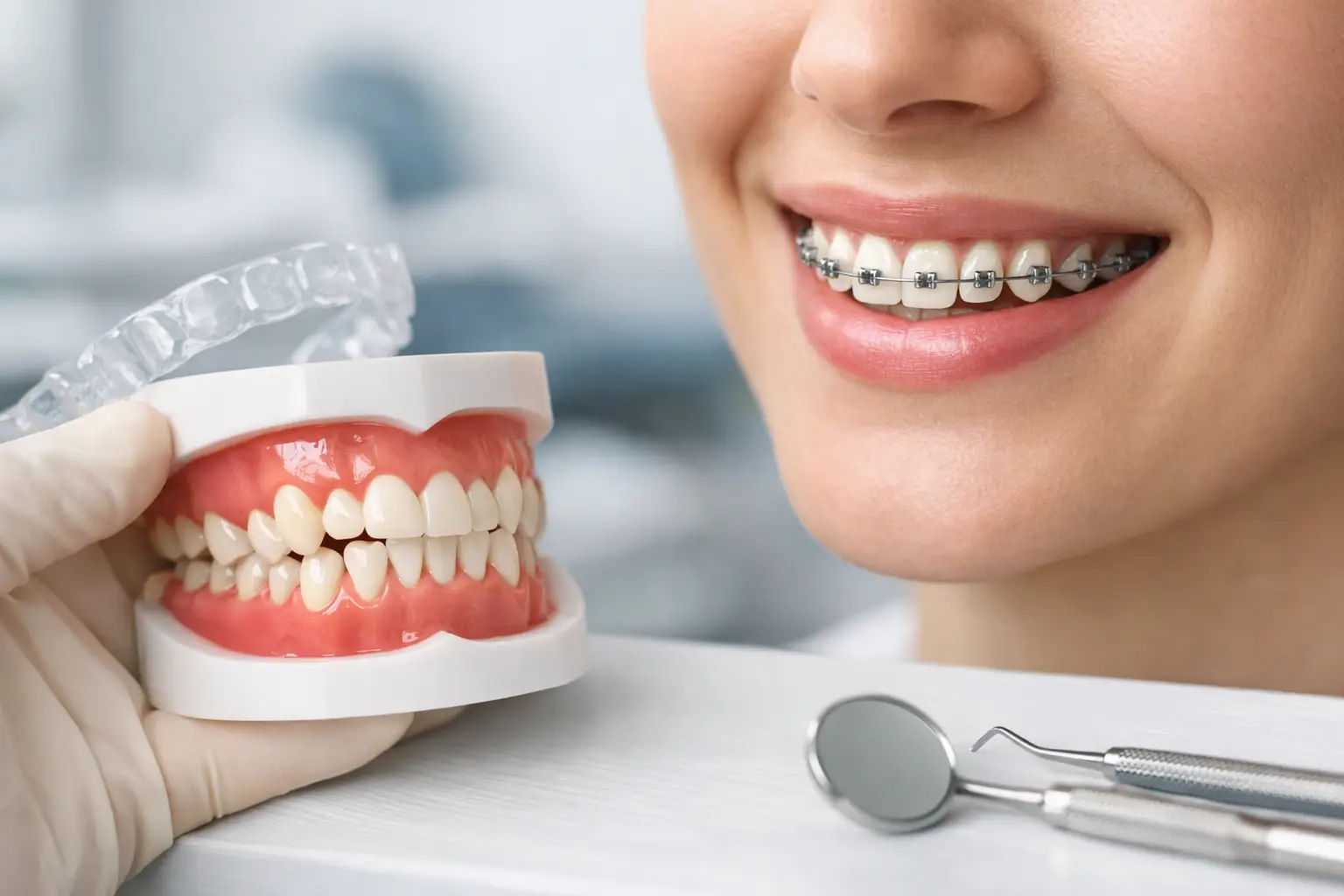
Invisalign is often an excellent option for mild to moderate crowding, especially for teens and adults who want a more discreet treatment experience. Clear aligners can gradually move teeth into better positions using a series of custom trays, and many patients appreciate that the aligners are removable for meals, brushing, and important events.
For the right case, Invisalign can be very effective. It is especially appealing for working adults, teens with busy schedules, and anyone who wants fewer disruptions to daily life. Comfort is another common reason people choose it. While aligners still create pressure as teeth move, they do not involve brackets and wires rubbing against the cheeks.
That said, Invisalign is not automatically the best orthodontic treatment for crowding in every situation. Success depends heavily on wearing the aligners as directed. If a patient frequently leaves them out, treatment can slow down or become less predictable. Some more complex tooth movements and bite corrections may also be better handled with braces.
Braces for moderate to severe crowding
Traditional braces remain one of the most reliable treatments for moderate to severe crowding. Metal braces and clear braces both give orthodontists a high level of control, which is especially useful when teeth are significantly rotated, overlapping, or part of a more complex bite problem.
Braces do not rely on patient compliance in the same way clear aligners do, because they are fixed in place. For children and teens, that can be a major advantage. For adults with more advanced crowding, braces may also offer the most efficient path to a strong, precise result.
Some patients hesitate because they are worried braces will feel too visible or inconvenient. That is understandable, but modern orthodontics offers more comfortable and lower-profile options than many people expect. Clear braces can also provide a less noticeable look while still delivering the control needed for more involved treatment.
When expanders or early treatment help
For children, the best orthodontic treatment for crowding may start earlier than braces or aligners. If a child still has developing jaws and mixed dentition, early interceptive orthodontics can sometimes guide growth and create more room before crowding becomes more severe.
In certain cases, palate expanders or space-maintaining strategies can reduce future complications. This does not mean every child with mild crowding needs early treatment. In fact, some children do better with monitoring until more permanent teeth come in. The key is timing. A well-timed evaluation can identify whether growth can be used to help, or whether waiting will make more sense.
Parents often appreciate this approach because it is proactive without being rushed. The goal is not to start treatment unnecessarily. The goal is to intervene only when it can make treatment simpler, healthier, or more stable later.
Do crowded teeth ever require tooth removal?
Sometimes, yes. In more severe cases, creating enough room may involve removing certain teeth as part of a carefully planned orthodontic strategy. This is one of the most misunderstood parts of crowding treatment.
Extractions are not recommended casually. They are considered when the amount of crowding is significant and space cannot be created in a healthy, balanced way through expansion, reshaping, or tooth movement alone. The decision should always be based on facial balance, bite function, periodontal health, and long-term stability.
For some patients, avoiding extractions is possible and appropriate. For others, trying too hard to avoid them can lead to compromised results. This is one area where a specialist evaluation really matters, because the best plan is the one that protects both your smile and your bite.
How to choose the best option for your lifestyle
The clinical side matters most, but lifestyle matters too. If you are an adult who speaks with clients all day, clear aligners may feel more comfortable socially. If you have a teen who is unlikely to wear aligners consistently, braces may be the better choice even if aligners sound appealing at first.
Treatment time, maintenance, food restrictions, hygiene habits, and appointment schedules should all be part of the conversation. A good orthodontic plan should fit your life as well as your teeth. That is part of what makes treatment feel manageable instead of stressful.
This is also why personalized care matters so much. Two patients with similar crowding can still need different solutions. One may prioritize esthetics. Another may need more bite correction. Another may want the option that requires the least day-to-day decision-making.
Why crowding should not be ignored
Crowded teeth are not just a cosmetic issue. When teeth overlap tightly, they can be harder to brush and floss well, which may increase the risk of plaque buildup, gum irritation, and uneven wear. In some cases, crowding also contributes to bite strain or makes other orthodontic issues harder to correct later.
Treating crowding can improve smile appearance, but it can also support oral health and comfort. Straightening teeth into a more functional position often makes hygiene easier and helps distribute biting forces more evenly. That can have lasting benefits beyond the mirror.
The best orthodontic treatment for crowding starts with a full evaluation
If you are trying to figure out the best orthodontic treatment for crowding, the most helpful next step is not guessing between braces and Invisalign online. It is getting a full orthodontic evaluation that looks at your teeth, bite, jaw structure, and goals together.
At a practice like 1st Impressions Orthodontics, that evaluation can bring clarity quickly. With modern imaging, customized treatment planning, and clear guidance, patients can understand what is causing the crowding, what their options are, and which path makes the most sense for their comfort, timeline, and long-term results.
The best treatment is not the one that sounds trendiest or fastest. It is the one that fits your smile carefully, corrects the problem completely, and gives you confidence that your result will last. If your teeth feel crowded now, getting answers sooner can make the process feel much simpler than you may expect.