
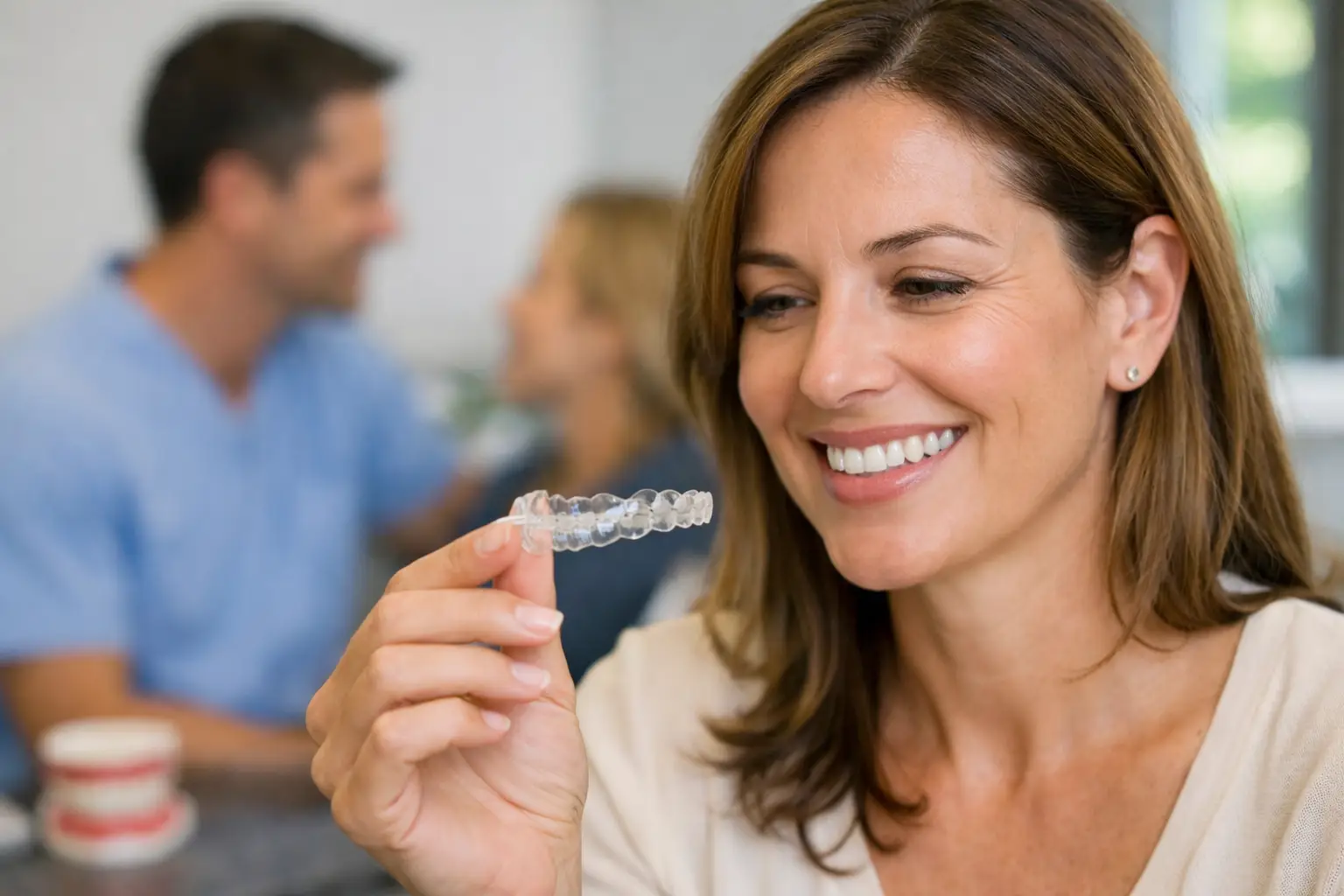
A presentation at 9 a.m., lunch with clients, a family photo that weekend – adult life leaves little room for treatment that feels disruptive. When Thornton adults consider Invisalign, they are often looking for more than a straighter smile. They want a plan that respects their work schedule, social life, comfort, and confidence while addressing the concerns they see every time they look in the mirror.
Clear aligners can be an excellent choice for many adults, but the right answer depends on your teeth, bite, goals, and willingness to wear the aligners consistently. A personalized orthodontic evaluation replaces guesswork with clear guidance, so you can decide whether Invisalign treatment fits your life and your smile.
Why adults choose Invisalign in Thornton
Many adults put off orthodontic treatment because they assume braces are their only option or that treatment will be too noticeable. Invisalign clear aligners are custom-made, removable trays that gradually guide teeth into healthier positions. Because they are clear and close-fitting, they are generally less noticeable than traditional braces in professional and social settings.
The ability to remove aligners is another meaningful advantage. You can take them out for meals, brush and floss as usual, and remove them briefly for an important event. That convenience is especially appealing when you are balancing commutes, meetings, family responsibilities, and Colorado weekends outdoors.
Still, removability comes with responsibility. Aligners need to be worn about 20 to 22 hours each day to keep treatment moving as planned. If they spend too much time in a case instead of on your teeth, progress can slow and the fit of your next aligner may be affected. For adults who appreciate a routine and can stay consistent, that trade-off is usually manageable.
What Invisalign can correct for adults
Invisalign is not only a cosmetic option for a small gap between front teeth. With a carefully designed treatment plan, clear aligners may address crowding, spacing, teeth that have shifted since earlier orthodontic treatment, and certain bite concerns. Correcting how teeth fit together can matter just as much as improving how they look.
A healthy bite can make chewing more comfortable, help distribute pressure more evenly across teeth, and reduce the frustration of teeth that chip or wear unevenly. Some adults also find that their crowded teeth are difficult to clean thoroughly. Straightening them can make daily brushing and flossing easier, although regular dental care remains essential throughout treatment.
There are limits, and an honest consultation matters. Significant jaw discrepancies, certain complex tooth movements, impacted teeth, or bite problems that require more control may be better treated with braces or a combination of approaches. Clear aligners can use small tooth-colored attachments and other techniques for added precision, but they are not automatically the best choice for every case. The goal is not to force every smile into Invisalign. It is to recommend the treatment that gives you a stable, healthy result.
What about jaw discomfort or TMJ symptoms?
Jaw soreness, clicking, headaches, and tension can have several causes. Orthodontic treatment may be part of a broader plan when the bite contributes to a problem, but it is not a universal cure for TMJ symptoms. A thoughtful evaluation should look at your bite, symptoms, dental history, and goals before making promises about relief.
The Invisalign process, without the uncertainty
The process starts with an orthodontic consultation, where your provider examines your teeth and bite and listens to what you want to change. Digital scans and imaging can create a detailed picture of your starting point without the mess of traditional impressions. From there, your orthodontist can explain whether clear aligners are appropriate and what your expected treatment plan may involve.
Once your aligners are made, you will wear each set in sequence, changing to the next set according to your prescribed schedule. Appointments are typically less frequent than adjustment visits for braces, though you will still need regular check-ins. These visits allow the orthodontic team to confirm that teeth are tracking properly and make adjustments if needed.
Some patients need attachments, which are tiny, tooth-colored shapes placed on selected teeth. Attachments give aligners something to gently grip so they can make more precise movements. They are visible up close, but far less noticeable than most people expect. Your orthodontist may also recommend elastic bands if your bite needs additional correction.
Treatment time varies. A straightforward alignment concern may take less time than a more involved bite correction, and refinements are sometimes needed after the first series of aligners. Refinements are not a failure. They are a normal part of pursuing the precise finish that makes a smile and bite feel complete.
Making clear aligners work with a busy schedule
The daily habits are simple, but they deserve attention. Remove aligners before eating or drinking anything besides plain water. Brush your teeth before putting them back in when possible, especially after coffee, snacks, or meals. Clean the trays regularly with the method recommended by your orthodontic team, and keep their case with you so they do not end up wrapped in a napkin and accidentally discarded.
For the first day or two with a new set, mild pressure is common. That pressure is a sign that the aligner is guiding teeth as planned. Most patients adjust quickly, and clear aligners are designed with smooth edges for comfort. If an edge feels irritating or an aligner is not fitting as expected, contact your orthodontic office rather than trying to solve the issue on your own.
Travel is also workable with a little preparation. Bring your current aligners, the next set if instructed, a case, and cleaning supplies. If you lose a tray, call your orthodontic team promptly. Depending on the stage of treatment, they may advise wearing a previous set, moving to the next set, or arranging a replacement.
Cost, timing, and the questions worth asking
Adults deserve straightforward conversations about investment and timing. Invisalign cost can vary based on the complexity of your case, the length of treatment, whether refinements are expected, and insurance benefits. Rather than relying on a generic online price, ask for a personalized estimate and an explanation of what is included in your treatment.
It is also helpful to ask how appointments are scheduled, how progress is monitored, and what happens if an aligner is lost or treatment needs refinement. You should understand the retention plan before treatment begins. Teeth naturally tend to shift over time, so retainers are the long-term step that protects the result you worked for.
A supportive orthodontic team will welcome these questions without pressure. At 1st Impressions Orthodontics, adult treatment is planned around clinical precision and the practical details that make care feel manageable, from clear communication to a schedule that respects your time.
A confident next step for Invisalign Thornton adults
You do not need to decide from a social media photo or a one-size-fits-all promise. An in-person evaluation can show what is possible for your smile, what the timeline may look like, and whether Invisalign or another orthodontic option makes the most sense. If you have spent years hiding a crowded tooth, avoiding photos, or wondering whether treatment is still worth it as an adult, a clear conversation is a good place to start.
The best orthodontic plan should leave you feeling informed, supported, and comfortable with the next step – not rushed into a decision. Your smile deserves that level of care.