
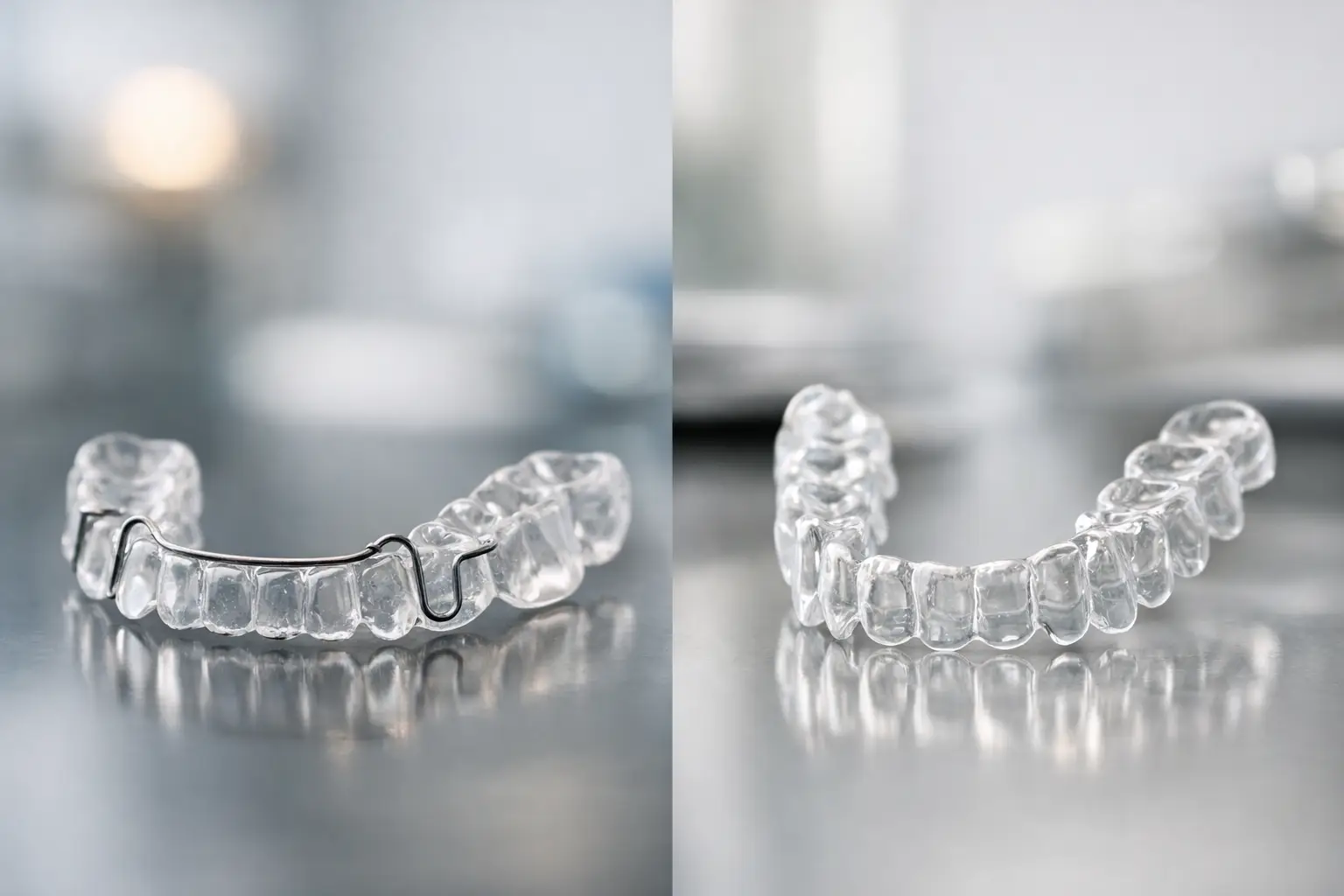
A clear plastic tray can look nearly identical whether it is an aligner or a retainer. That is why the retainer vs aligner difference can feel confusing at first. The key distinction is simple: aligners are designed to move teeth, while retainers are designed to help teeth stay where they are.
Both can be part of a healthy, confident smile journey. But they do very different jobs, follow different wear instructions, and are made for different stages of care. Knowing which one you have – and why your orthodontist recommends it – helps protect your results and makes treatment feel much more manageable.
Retainer vs aligner difference: active movement vs. holding results
Clear aligners are active orthodontic appliances. Each set is carefully planned to apply gentle, controlled pressure that guides teeth into new positions. Patients change through a series of aligners over time, with each tray moving the smile a small step closer to the treatment goal.
A retainer is a maintenance appliance. Once teeth have been moved with braces or aligners, the tissues and bone around them need time to adapt. A retainer holds the teeth in their corrected positions while that stabilization happens. Long-term retainer wear also helps manage the natural tendency of teeth to shift throughout life.
Think of aligners as the treatment phase and retainers as the protection phase. One creates change; the other preserves it.
What clear aligner treatment does
Clear aligners, including Invisalign treatment, are custom-made from digital scans and a precise orthodontic plan. Rather than using brackets and wires, the aligners fit closely over the teeth. Small features called attachments may be placed on certain teeth to give the aligners the grip needed for more complex movements.
Depending on the patient, aligners can address crowded or spaced teeth, certain bite concerns, tooth rotation, and other alignment issues. Treatment is not simply about making teeth look straighter. A thoughtful plan considers how the upper and lower teeth fit together, how the bite functions, and what will create a stable result.
For aligners to work as intended, they generally need to be worn about 20 to 22 hours a day. They are removed for meals, most drinks other than water, and brushing and flossing. Patients typically move to a new set on a schedule set by their orthodontist, often every one or two weeks.
That consistency matters. Wearing an aligner only at night, skipping ahead to a new tray, or taking trays out for long stretches can delay progress and affect the fit. For busy adults and teens, the convenience of removable treatment is a major benefit, but it comes with the responsibility to wear the aligners as directed.
Why one aligner cannot replace a retainer
An aligner may still fit after a patient moves on to the next tray, but it is not meant to be a long-term retainer. It was designed for a specific movement at a specific point in treatment. Continuing to wear an old aligner instead of a prescribed retainer can be uncomfortable, can put pressure on teeth in unintended ways, and may not provide the stable support needed after treatment.
At the end of clear aligner treatment, patients receive retainers made for their final tooth positions. This is a planned transition, not an optional extra.
What a retainer does after braces or aligners
Retainers protect the time, effort, and investment that went into creating your new smile. After braces come off or the final aligner is complete, teeth are not permanently locked into place. The supporting structures around them continue to remodel, especially during the first several months after active treatment.
This is why full-time retainer wear is often recommended at first. Your orthodontist will give instructions based on your treatment, bite, age, and stability needs. Many patients later transition to nighttime wear. Because teeth can shift naturally over the years, nighttime retainer wear is commonly a long-term habit.
There are two common types of retainers. A removable clear retainer covers the teeth much like a clear aligner, making it a discreet choice for many teens and adults. A bonded retainer is a thin wire placed behind the front teeth, where it is less visible. Some patients benefit from one type, while others may use a combination of both.
A bonded retainer is helpful, but it does not eliminate the need for good home care or follow-up. Flossing requires a little more attention around the wire, and the retainer should be checked regularly to make sure it is secure. If it loosens or breaks, contact your orthodontic team promptly. A damaged bonded retainer can allow teeth to shift or, in some cases, place unwanted pressure on a tooth.
How do aligners and retainers feel different?
Because both appliances may be clear and removable, their feel can overlap. A new aligner often feels snug or creates mild pressure for a day or two. That sensation is usually a sign that the aligner is actively working. It should not cause sharp pain, major gum irritation, or a fit that seems dramatically off.
A well-fitting retainer should feel secure and comfortable. It may feel snug if you have not worn it for a few nights, which can be an early warning that minor shifting has started. A retainer that is painfully tight, does not fully seat, or suddenly feels different should not be forced into place. Call your orthodontist for clear guidance instead.
Retainers also need to be kept clean. Rinse them with cool water after removal, brush them gently with a soft toothbrush, and store them in their case when they are not in your mouth. Hot water can warp clear plastic. Napkins are another common source of lost retainers, especially at school, work, or restaurants.
When a retainer may not be enough
If your teeth have shifted a little, a previous retainer may sometimes be adjusted or replaced, depending on the situation. But a retainer cannot reliably correct meaningful crowding, spacing, bite changes, or rotations. Trying to force an old retainer over shifted teeth can damage the appliance and put unhealthy pressure on teeth.
In those cases, a short course of clear aligner treatment may be recommended before making a new retainer. This is especially common for adults who completed orthodontic treatment years ago but stopped wearing retainers. The right next step depends on how much movement has occurred and whether the bite has changed.
An orthodontic evaluation is the most reliable way to tell whether you need a new retainer, limited aligner treatment, or more comprehensive care. Digital imaging and scans allow the team to look beyond the visible front teeth and assess the whole bite with precision.
Choosing the right appliance is not a cosmetic decision alone
Clear aligners can be an excellent fit for patients who want a discreet, removable option and feel confident they can stay consistent with wear time. Braces may be a better choice for certain complex movements, for patients who would rather not manage removable trays, or when treatment goals call for more continuous control.
Retainers are different: almost every orthodontic patient needs them, whether treatment involved braces or aligners. The style and schedule may vary, but retention is what helps your finished smile remain your finished smile.
At 1st Impressions Orthodontics, personalized planning means looking at the details that affect daily life as well as the final result. Your school schedule, work demands, comfort preferences, oral health, bite needs, and smile goals all matter when choosing a path forward.
If you are unsure whether the tray in your case is an aligner or a retainer, bring it to your appointment rather than guessing. A quick evaluation can confirm its purpose, check its fit, and help you keep your smile moving in the right direction – or staying beautifully where it belongs.