
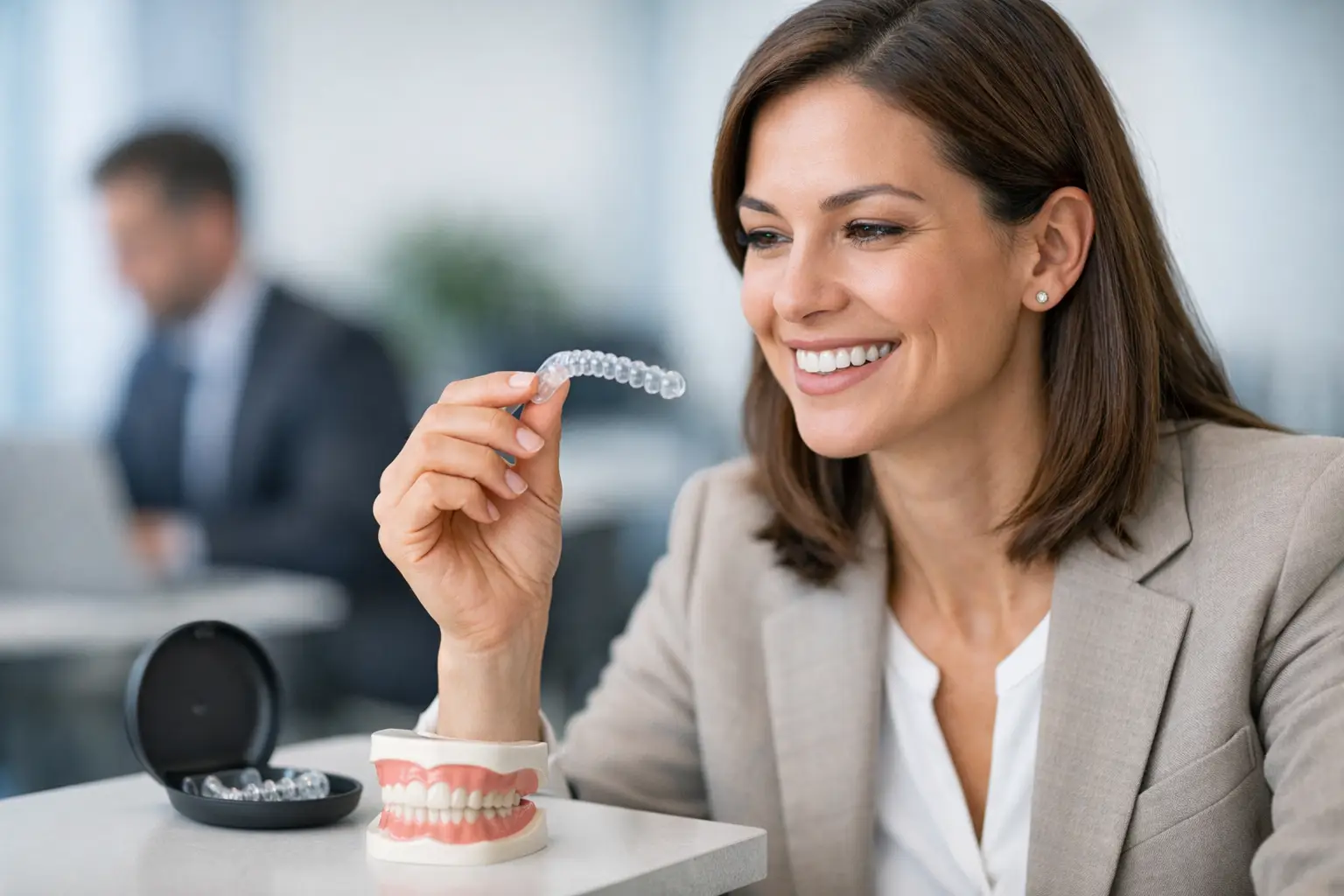
A video call at work, a dinner with friends, and a full calendar can make traditional braces feel like a difficult fit. That was the central concern in this adult Invisalign case study: how can a working adult improve a crowded smile and uncomfortable bite without putting life on hold?
The patient story below is representative rather than a promise of identical results. Every smile, bite, treatment timeline, and financial plan is different. Still, it shows what thoughtful clear aligner treatment can look like when clinical precision is paired with clear guidance and a plan built around an adult’s real routine.
The Starting Point: Crowding, Bite Pressure, and Hesitation
Our representative patient was a 34-year-old project manager who had lived with lower-tooth crowding since her teens. Her upper front teeth also overlapped slightly, and she noticed that one side of her bite felt heavier when she chewed. Photos made her self-conscious, but appearance was not the only reason she considered orthodontic treatment. She wanted to protect her oral health and feel more comfortable speaking, eating, and smiling.
Like many adults, she had questions before scheduling a consultation. Would Invisalign work for an adult case? Would it be obvious during client meetings? Would appointments interrupt her workday? Most of all, she worried about starting treatment and failing to keep up with it.
Those are reasonable concerns. Clear aligners are removable, but successful treatment requires consistency. Invisalign is often a good option for adults with crowding, spacing, certain bite concerns, or teeth that have shifted after previous orthodontic treatment. It is not automatically the best choice for every smile. More complex tooth movements, significant skeletal bite differences, oral health concerns, or a patient who cannot wear aligners as directed may call for braces or another approach.
How the Treatment Plan Was Built
The first visit focused on listening before deciding on treatment. The orthodontic team discussed the patient’s goals, health history, bite concerns, and daily schedule. Digital scans, photographs, and diagnostic imaging created a detailed picture of how her teeth fit together, not simply how they looked from the front.
That distinction matters. Straight front teeth are only part of a healthy orthodontic result. A personalized plan considers the position of the roots, the relationship of the upper and lower teeth, available space, gum health, and the forces involved in chewing. Moving teeth without addressing the bite when appropriate can leave important concerns unresolved.
For this patient, the orthodontist recommended Invisalign clear aligners with a plan to relieve crowding, improve the front-tooth alignment, and coordinate the bite. Small tooth-colored attachments would be placed on selected teeth to give the aligners more control. These attachments are common and help aligners make precise movements that trays alone may not accomplish.
The plan also included conservative interproximal reduction, sometimes called IPR, between specific lower teeth. This involves carefully polishing a very small amount of enamel to create room when appropriate. It can sound intimidating, so the team explained why it was recommended, where it would be done, and how it would feel. In many cases, this small step can prevent the need for more extensive treatment, but it is never used as a one-size-fits-all solution.
The estimated active treatment time was about 14 months. The patient appreciated having a realistic range rather than a rushed promise. Aligner treatment can move efficiently, but biology and wear habits still matter. Teeth do not follow a calendar perfectly.
The Daily Routine That Made Invisalign Work
The patient received a series of custom aligners and instructions to wear them 20 to 22 hours a day. She removed them for meals, snacks that could damage the trays, and brushing and flossing. Water was fine while wearing them, but coffee, tea, and other colored drinks were best enjoyed with the aligners out to reduce staining and protect the plastic from heat.
The adjustment period was noticeable but manageable. For the first few days with a new set of aligners, she felt pressure on the teeth being moved. This is usually a sign that the aligners are working as planned, although sharp pain, a tray that does not fit, or a rough edge should always be brought to the orthodontic team promptly.
Her biggest challenge was not discomfort. It was remembering to put the aligners back in after lunch and afternoon coffee. She began keeping her case in the same pocket of her work bag and setting a brief phone reminder after meals. That simple routine protected her progress and reduced the risk of accidentally wrapping an aligner in a napkin and throwing it away.
Because she traveled occasionally for work, the team gave clear instructions for handling trips: pack the current and next aligner sets, bring the case, and contact the office if a tray was lost or damaged. Clear guidance helped her feel prepared instead of anxious about a disruption.
Check-Ins Without Unnecessary Disruption
Regular progress visits allowed the orthodontist to confirm that the teeth were tracking correctly and that the bite was responding as intended. Some visits were short, while others included placing attachments, completing planned IPR, or making adjustments to the treatment sequence.
Advanced digital planning helps make these appointments efficient, but it does not replace professional monitoring. Teeth can respond differently than predicted, and aligners can lose their fit if wear time drops. In this case, a short period of inconsistent wear during a busy work deadline caused one lower tooth to lag behind. The solution was simple: the patient stayed in that aligner a little longer, returned to consistent wear, and continued once the fit improved.
That moment is worth emphasizing. An unexpected pause is not a failure. Honest communication gives the orthodontic team the information needed to protect the result. Adults should not feel judged for a missed day, a lost tray, or a hectic week. The priority is getting the treatment back on track safely.
Midcourse Changes and Refinement Aligners
By month nine, the patient’s crowding had improved significantly. Her smile looked more balanced, and she reported less awareness of the heavy contact on one side of her bite. Still, the final stage of orthodontic treatment is often where precision matters most.
A new digital scan showed that several teeth needed small additional movements to create the planned bite relationship and finish the alignment. The patient received refinement aligners, which are additional trays designed after reassessing progress. Refinements are not unusual, and they should not be viewed as a sign that treatment went wrong. They are often part of reaching a more precise, stable result.
The trade-off was a few more months of aligner wear. The benefit was avoiding a rushed finish. The patient chose the added time because she understood the goal was not just a nicer photo. It was a smile and bite that worked well together.
Results Beyond Straighter Teeth
At the end of active treatment, the patient’s upper and lower teeth were visibly more aligned, and the crowding that had bothered her for years was resolved. Her bite contacts were more balanced, and she felt more comfortable smiling in professional and social settings.
Her experience also highlights what Invisalign does not change. Clear aligners do not replace routine dental cleanings, treatment for cavities or gum disease, or restorative care for worn or damaged teeth. They are one part of a broader approach to oral health. If jaw pain, headaches, or sleep concerns are present, those symptoms deserve an individualized evaluation rather than assumptions that orthodontic treatment alone will solve them.
Retainers Protected the Investment
The active aligners came off, but orthodontic care did not simply end there. Teeth naturally have a tendency to shift over time, especially in areas that were previously crowded. Retainers help hold teeth in their new positions while surrounding bone and tissues adapt, and they remain an important long-term commitment.
The patient received retainers and clear instructions on wear and care. At first, she wore them full-time except for eating and cleaning. Her orthodontist later adjusted the schedule based on her progress and retention needs. She also learned to keep retainers away from heat, clean them gently, and store them in their case rather than a paper napkin.
For adults considering treatment in Westminster and surrounding communities, the practical lesson is simple: choose orthodontic care that respects your schedule without treating your bite like an afterthought. The right plan should feel clear, personalized, and manageable from the first scan through long-term retention. A consultation can give you a realistic view of what is possible for your smile, your health, and the life you are already living.