
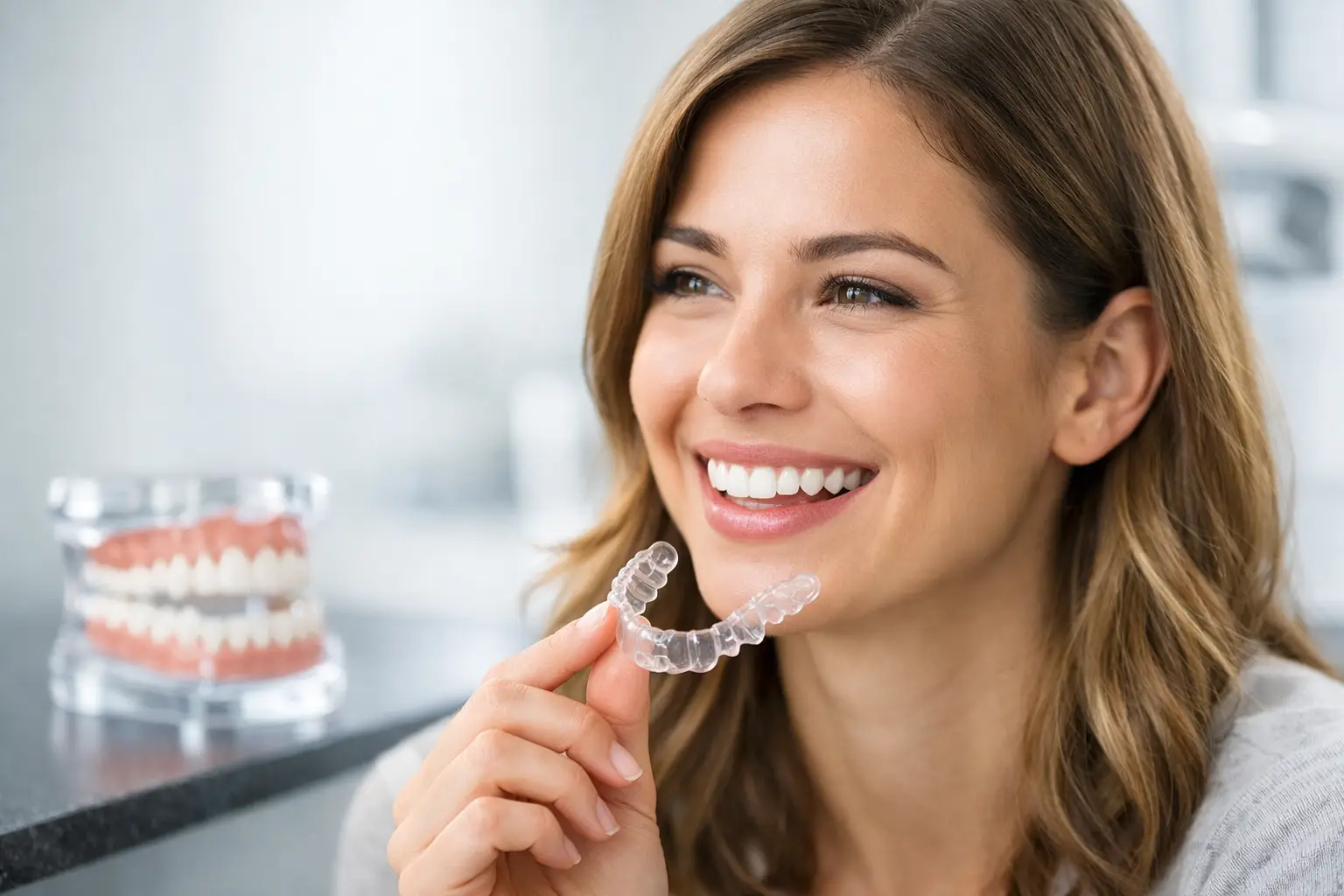
A clear aligner can be easy to notice for all the right reasons: it fits your life without taking over your appearance. Invisalign treatment uses a series of custom-made, removable aligners to move teeth gradually and precisely. For many teens and adults, that means working toward a healthier, more confident smile while continuing to speak, eat, brush, and show up for everyday life with fewer interruptions.
Still, clear aligners are not simply braces without brackets. Successful treatment depends on careful planning, consistent wear, and a bite-focused approach from an orthodontic specialist. The best question is not just, “Can Invisalign straighten my teeth?” It is, “Can it address my specific smile and bite goals in a way that works for me?”
What Invisalign Treatment Can Address
Invisalign aligners are designed to apply gentle, controlled pressure to specific teeth at specific points in treatment. Each set is worn for a prescribed period, then replaced with the next set as your smile progresses.
Clear aligners can treat many common orthodontic concerns, including crowded or overlapping teeth, gaps, teeth that have shifted since prior braces, and certain types of overbites, underbites, crossbites, and open bites. They can also be an excellent option for adults who want to correct a few visible teeth but need an orthodontist to confirm that their bite remains healthy and stable.
The key is that orthodontic treatment is about more than making front teeth look straighter. The way upper and lower teeth meet affects comfort, chewing, tooth wear, and long-term stability. A treatment plan should account for the whole smile, not just the teeth most visible in photos.
Clear Aligners Are Not One-Size-Fits-All
Some people are ideal candidates for Invisalign treatment. Others may get more predictable results with metal braces, clear braces, or a combination of approaches. Complex tooth rotations, significant jaw discrepancies, impacted teeth, and certain bite corrections may call for braces or additional orthodontic techniques.
That is not a drawback. It is simply why an in-person orthodontic evaluation matters. Digital scans and 3D imaging allow your orthodontist to assess tooth positions, roots, bone support, and bite relationships before recommending the right path. Clear guidance at the beginning can prevent surprises later.
What the Invisalign Process Looks Like
The process begins with a consultation focused on your goals, dental health, bite, and lifestyle. You may be concerned about a crowded lower front tooth, a gap that keeps showing up in photos, or a bite that feels uncomfortable. Those concerns are worth discussing openly. A personalized plan starts by understanding what matters to you.
If clear aligners are appropriate, digital impressions create a detailed model of your teeth. This replaces the messy impression material many patients remember from the past. Your orthodontist then plans the sequence of tooth movements and reviews the anticipated course of treatment with you.
Once your aligners are ready, you will receive instructions for wearing and caring for them. Most patients wear aligners about 20 to 22 hours a day, removing them only to eat, drink anything other than water, and brush and floss. You will change to new aligners on the schedule your orthodontist provides, usually every one to two weeks.
Appointments are generally shorter and less frequent than traditional braces visits, though regular progress checks are still essential. These visits help confirm that teeth are tracking as planned and allow your orthodontist to make adjustments when needed. Some movements require small tooth-colored attachments, which give the aligners a better grip and improve control. Attachments are subtle, but they are an important part of achieving precise results.
The Daily Habits That Make a Difference
Removability is one of Invisalign’s biggest advantages, but it also places more responsibility in the patient’s hands. Aligners only work when they are worn consistently. Taking them out for long stretches, forgetting to put them back in after meals, or frequently skipping changes can slow progress and affect results.
A practical routine helps. Keep your aligner case with you so the trays do not end up wrapped in a napkin at a restaurant or school lunch table. Brush your teeth before putting aligners back in when possible, and rinse the trays with cool water. Hot water can warp the plastic. Cleaning them regularly helps keep them clear and fresh.
For teens, the decision often comes down to readiness. A responsible teen who can follow the wear schedule may do very well with clear aligners. For someone who is likely to lose trays or leave them out, braces may offer a more dependable solution because they work around the clock without needing to be remembered.
Comfort, Appearance, and Treatment Time
Most patients describe Invisalign aligners as comfortable after a brief adjustment period. You may feel pressure for a day or two when starting a new set, which is a normal sign that teeth are moving. The smooth plastic has no wires or brackets to rub against cheeks, although attachments can take a little time to get used to.
Because the aligners are clear, they are far less noticeable than traditional braces from a conversational distance. This can be especially appealing to working adults, college students, and teens who prefer a lower-profile option for presentations, family events, or school activities.
Treatment time varies. Some limited cases may take several months, while more comprehensive smile and bite correction can take 12 to 24 months or longer. It depends on the starting position of your teeth, the complexity of the bite, how consistently aligners are worn, and whether refinements are needed near the end. An orthodontist can provide a realistic estimate after examining your smile, rather than offering a timeline based on a generic online promise.
Understanding Cost and Value
The cost of Invisalign treatment depends on the complexity and length of care, not just the aligners themselves. A comprehensive plan includes the diagnostic records, digital treatment planning, progress appointments, clinical oversight, and retainers needed to protect the final result.
Insurance may contribute to orthodontic care, and many practices offer flexible financing options to make monthly payments more manageable. During a consultation, ask for a clear explanation of what is included, what insurance may cover, and whether there could be costs for lost aligners or additional treatment beyond the original plan. Transparent answers make it easier to plan with confidence.
Choosing care based only on the lowest advertised price can create frustration if important elements are left out or if your bite is not evaluated thoroughly. The goal is not merely to receive a series of aligners. It is to receive thoughtful orthodontic care that supports a stable, healthy result.
Why Retainers Still Matter After Clear Aligners
Teeth have a natural tendency to shift throughout life. That is why retainers are not an optional finishing detail. They are part of protecting the time, commitment, and investment you made in your smile.
After your active aligner phase, your orthodontist will recommend a retainer plan based on your needs. Many patients begin by wearing retainers full time, then transition to nighttime wear. Following those instructions is the best way to maintain the result you worked hard to achieve.
If you are considering clear aligners in Westminster or nearby communities, start with a consultation where you can ask real questions and receive recommendations tailored to your smile. At 1st Impressions Orthodontics, the right treatment begins with compassionate care, precise planning, and a plan that feels manageable from your first scan to your final retainer.