
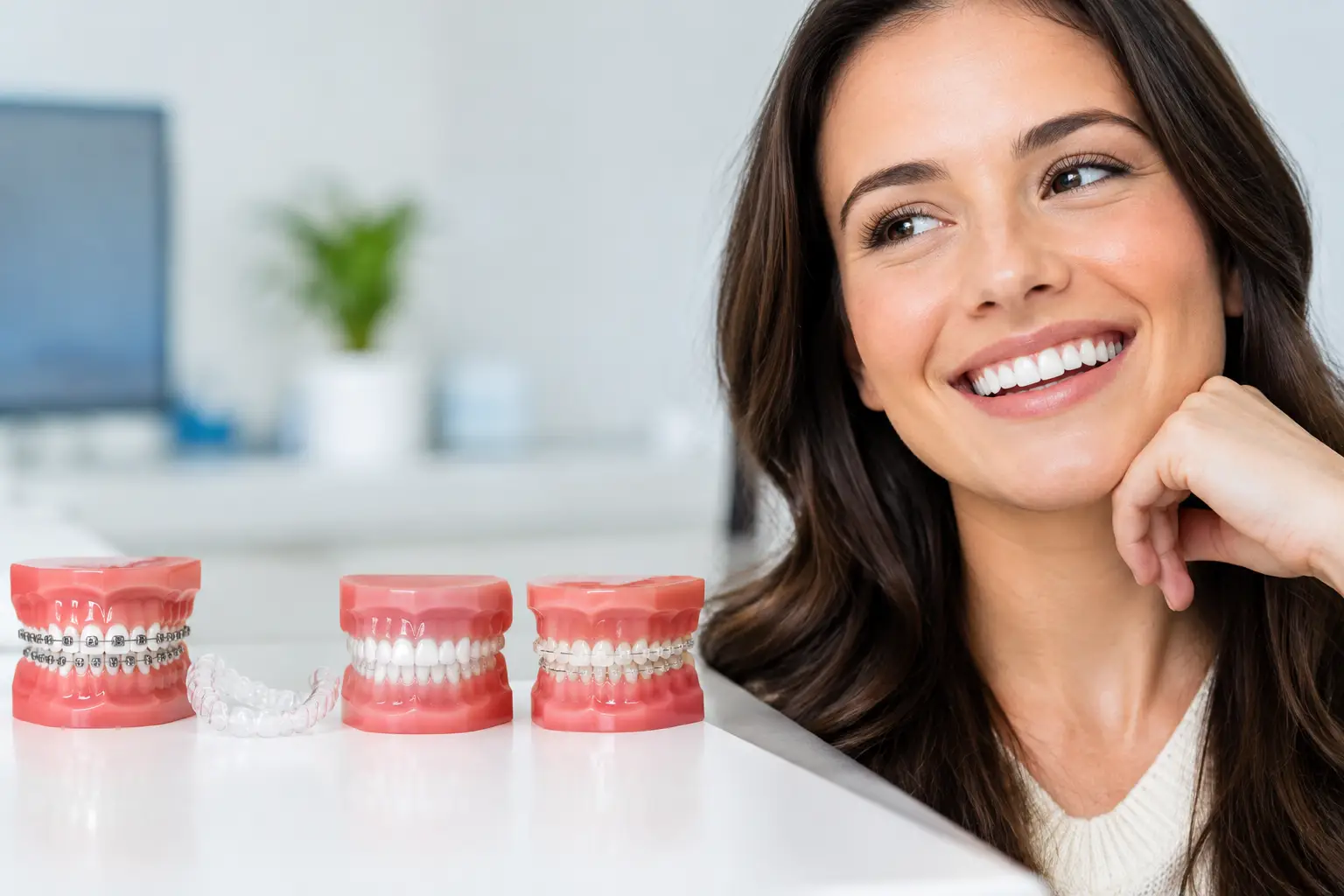
A bite can look minor in a photo and still affect how comfortably someone chews, speaks, sleeps, or feels about their smile. This guide to bite correction options is designed to make the next step feel clearer: understand what is happening, learn which treatments may help, and get personalized answers from an orthodontic specialist rather than guessing from a mirror.
What Does Bite Correction Mean?
Your bite describes the way your upper and lower teeth meet when your mouth closes. When the teeth and jaws do not line up as they should, it is called a malocclusion. Some bite concerns are mostly cosmetic, while others can make cleaning difficult, create uneven tooth wear, strain certain teeth, or contribute to discomfort.
Common concerns include an overbite, where upper front teeth sit too far over the lower teeth; an underbite, where lower teeth sit ahead of the upper teeth; and a crossbite, where some upper teeth close inside the lower teeth. An open bite leaves a space between upper and lower teeth when the back teeth touch. Crowding, spacing, and teeth that have erupted out of position can also affect the bite.
There is no single “normal” treatment timeline or appliance for every bite. The right plan depends on the patient’s age, jaw growth, tooth positions, oral health, habits, goals, and the complexity of the correction needed.
A Guide to Bite Correction Options by Need
Orthodontic treatment works by applying gentle, carefully planned forces to move teeth and, when a patient is still growing, guide jaw development. Modern care offers more than one way to do that.
Braces for precise tooth and bite movement
Metal braces remain a reliable choice for correcting mild to complex bite concerns. Brackets and wires give an orthodontist a high level of control over individual teeth, which can be especially useful when teeth are significantly rotated, crowded, impacted, or need to move vertically.
Today’s metal braces are smaller and more comfortable than many adults remember. Clear braces use tooth-colored or transparent brackets for a less noticeable appearance, though they may not be the best match for every treatment plan. Both options require thoughtful brushing, regular adjustments, and some food-related care, but they do not rely on remembering to put an appliance back in after meals.
For teens and adults who want dependable correction and do not mind a visible appliance, braces can be an excellent option. Treatment time varies widely, but many comprehensive cases take roughly 12 to 24 months. More involved bite and jaw concerns may take longer.
Clear aligners for flexibility and discretion
Clear aligners, including Invisalign treatment, use a series of custom trays to move teeth in small stages. They are removable for eating, brushing, sports, and special occasions, which makes them appealing to working adults, teens, and anyone who values a lower-profile treatment option.
Aligners can correct many cases of crowding, spacing, overbite, crossbite, and open bite. Some patients need small tooth-colored attachments, elastics, or other features to create the precise forces a bite needs. These additions are normal and often make a meaningful difference in the final result.
The trade-off is consistency. Aligners generally need to be worn about 20 to 22 hours a day. Taking them out frequently or forgetting to change trays as directed can slow progress. For patients who can commit to the routine, clear aligners offer a convenient, comfortable path to a healthier bite.
Elastics and auxiliary appliances
Rubber bands, called elastics, are often used with braces or aligners to improve how the upper and lower teeth fit together. They may seem small, but wearing them exactly as prescribed is one of the most important parts of treatment for certain overbites, underbites, and crossbites.
Other appliances can help with specific needs. A palatal expander may be recommended for a growing child with a narrow upper jaw or crossbite. Space maintainers can preserve room for permanent teeth after a baby tooth is lost early. Depending on the case, an orthodontist may also use temporary anchorage devices, bite ramps, or other specialized tools to support efficient, precise movement.
These appliances are not selected because they are trendy or because one option is automatically faster. They are chosen when the diagnostic records show they can help create a stable, functional result.
Early interceptive orthodontics for growing smiles
For children, timing can matter as much as the appliance itself. The American Association of Orthodontists recommends an orthodontic evaluation around age 7. That does not mean every child needs braces right away. Many children simply benefit from monitoring as permanent teeth and jaws develop.
When a significant crossbite, narrow palate, harmful habit, crowding risk, or jaw-growth imbalance is present, early treatment may help address the issue while growth is still on the child’s side. This is sometimes called Phase 1 treatment. After a resting period, a second phase may be recommended later to align the permanent teeth and refine the bite.
Early care is not about starting treatment before it is necessary. It is about recognizing the cases where waiting could make correction more difficult or limit the available options.
Surgical orthodontics for significant jaw differences
Most bite problems can be corrected without jaw surgery. However, when the upper and lower jaws have a substantial skeletal mismatch and growth is complete, orthodontic treatment alone may not fully resolve the concern. In those situations, an orthodontist may coordinate care with an oral and maxillofacial surgeon.
Surgical orthodontics is a bigger commitment, involving braces or aligners before and after surgery, detailed planning, and recovery time. It is generally reserved for cases where jaw position affects function, facial balance, or the ability to achieve a stable bite. A thorough consultation helps patients understand whether this is relevant to them and what alternatives may be available.
What About Jaw Pain, TMJ, and Sleep Concerns?
A bite concern and jaw discomfort can occur together, but one does not automatically cause the other. Clicking, soreness, headaches, and jaw fatigue can have several possible causes, including clenching, muscle strain, stress, joint conditions, and sleep habits. Orthodontic treatment is not a universal cure for TMJ symptoms, so a careful evaluation is essential before connecting pain to a bite.
Similarly, oral appliances used for snoring or obstructive sleep apnea serve a different purpose from braces or aligners. They may be part of a broader care plan for eligible patients, often in coordination with a physician or sleep specialist. Clear guidance matters because the right solution should address the actual concern, not just the symptom someone notices first.
How an Orthodontist Chooses the Right Treatment
The best treatment starts with a complete picture. An orthodontic consultation typically includes a conversation about goals and concerns, an exam, photos or digital scans, and diagnostic imaging when appropriate. Advanced 3D imaging can be particularly valuable for evaluating tooth position, roots, bone, and developing teeth in more complex cases.
From there, your orthodontist can explain what is treatable, what is optional, and what the expected commitment looks like. Ask about the estimated timeline, number of visits, wear requirements, comfort expectations, retainers, and total financial plan. Transparent answers help families and adults make decisions with confidence.
At 1st Impressions Orthodontics, personalized treatment planning is paired with compassionate, judgment-free support, so patients can understand their choices without feeling rushed or pressured.
Retainers Protect the Result
Finishing active treatment is a milestone, not the end of bite care. Teeth naturally have a tendency to shift over time, especially after orthodontic movement. Retainers hold the corrected positions while the surrounding bone and tissues adapt.
Some patients receive removable retainers to wear full-time at first and then at night long term. Others may have a bonded retainer behind the front teeth, often combined with a removable retainer. The best type depends on the case, but long-term retention is essential for preserving the smile and bite you worked hard to achieve.
A healthy bite is not about chasing a perfect-looking smile. It is about creating a result that fits your teeth, jaw, comfort, and daily life. Whether you are considering care for a child, helping a teen weigh braces against aligners, or finally addressing a concern you have carried into adulthood, a focused orthodontic evaluation can replace uncertainty with a plan that feels manageable.