
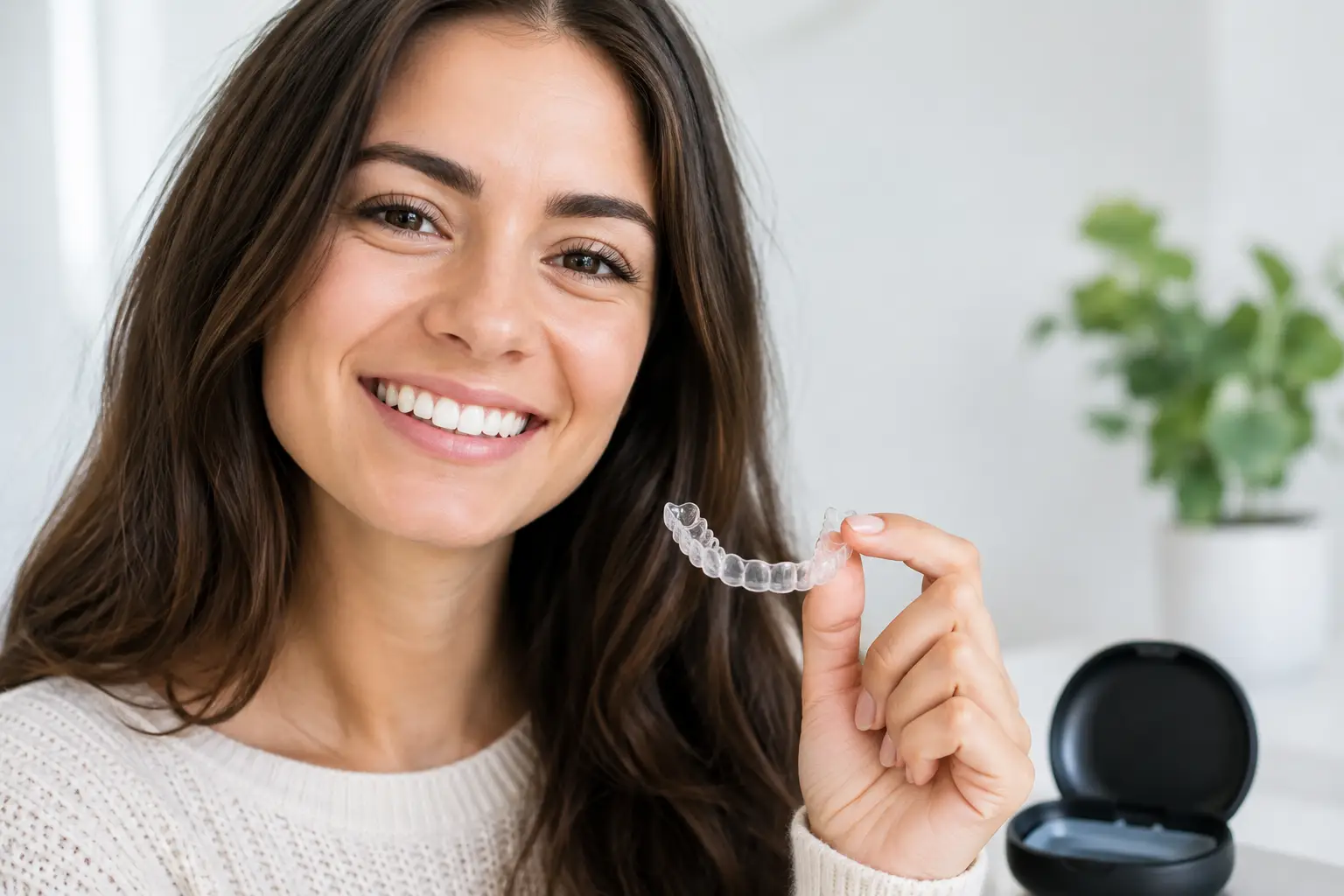
The day your braces come off is a major milestone, but it is not the finish line for your smile. Teeth have a natural tendency to shift, especially during the first months after treatment. The best retainers after braces are the ones that hold your teeth in their carefully planned positions while fitting your lifestyle, bite, and comfort needs.
There is no single retainer that is right for every patient. A clear removable retainer may be an excellent choice for one person, while a fixed retainer or a traditional Hawley retainer may offer better support for another. Your orthodontist’s recommendation should reflect how your teeth moved, how your bite fits together, and what will be realistic for you to wear consistently.
Why Retainers Matter After Braces
Braces move teeth by applying gentle, precise pressure over time. Once the braces are removed, the bone and soft tissues around the teeth need time to stabilize in their new positions. Without a retainer, teeth can drift toward where they started. Even small changes can affect the appearance of your smile or the way your upper and lower teeth meet.
Retention is especially important after corrections involving rotations, gaps, crowding, or bite concerns. Lower front teeth, for example, are particularly prone to movement. Wearing your retainer as instructed protects the investment you made in treatment and helps preserve the confident smile you worked hard to achieve.
For most patients, retainers are a long-term part of orthodontic care. The schedule changes over time, often moving from full-time wear to nighttime wear, but stopping completely can allow unwanted shifting years later.
Best Retainers After Braces: Your Main Options
Your orthodontist may recommend one type of retainer or a combination. Each has meaningful benefits and a few practical trade-offs.
Clear removable retainers
Clear retainers are thin, custom-made trays that fit closely over the teeth. They are discreet, comfortable for many patients, and popular with teens and adults who prefer a less noticeable option. Because they cover the full surface of the teeth, they can provide very precise retention.
They are also easy to remove for meals and brushing. That convenience comes with responsibility: a retainer that stays in a napkin, backpack pocket, or car cup holder is easy to lose or damage. Clear retainers can also wear down, crack, or discolor over time. They need gentle cleaning and should never be exposed to heat, including a hot car or dishwasher.
For patients with a history of clenching or grinding, a clear retainer may wear faster. In some cases, a different material or a separate nighttime appliance may be a better fit. Your orthodontist can help you understand what your teeth and bite need.
Hawley retainers
A Hawley retainer uses a molded acrylic base with a slim metal wire across the front of the teeth. It is a time-tested option that is durable, adjustable, and easy to recognize if it is misplaced. Because the retainer does not fully cover every tooth surface, some patients appreciate the way it feels when speaking or drinking.
The visible wire is the main trade-off. Although it is subtle, it is not as discreet as a clear retainer. Hawley retainers can also feel bulkier at first, particularly against the roof of the mouth or behind the lower teeth. Most patients adapt quickly, and their strength makes them a smart option for patients who need a retainer built to last.
A Hawley retainer can be especially useful when an orthodontist wants the ability to make small adjustments during the retention phase. It should only be adjusted by a trained orthodontic professional, never at home.
Fixed retainers
A fixed retainer is a slender wire bonded to the back of the front teeth, most often on the lower teeth and sometimes on the upper teeth. Since it stays in place, it works around the clock and does not depend on remembering to put it in at night. This can be very helpful for patients whose lower front teeth were crowded or rotated before braces.
The trade-off is cleaning. Flossing around a fixed retainer takes extra care, often with a floss threader or orthodontic floss. Food and plaque can collect around the wire if brushing is rushed. The wire can also come loose on one tooth, which may allow a tooth to shift if it is not repaired promptly.
A fixed retainer does not always replace a removable retainer. Many patients benefit from a bonded wire for the front teeth plus a removable retainer that supports the rest of the arch and the bite. This combination provides dependable protection without asking one appliance to do everything.
How to Choose the Right Retainer
The best choice starts with your orthodontic result, not with what a friend wore. If your treatment corrected significant lower crowding, a fixed lower retainer may be recommended. If you want a nearly invisible option and can reliably follow a wear schedule, clear retainers can be an excellent choice. If durability and adjustability matter most, a Hawley retainer may make sense.
Your daily routine matters, too. A student moving between school, sports, and activities may need a durable case and a clear plan for where the retainer goes during meals. A working adult may prefer clear retainers for professional settings. Someone who knows they are likely to forget nighttime wear may benefit from discussing a fixed option.
There is also a comfort factor. A retainer should feel secure but not painful. It may feel snug when you first receive it or after an occasional missed night, but sharp edges, persistent soreness, or a retainer that no longer fits should be checked rather than forced into place.
Wearing Your Retainer: Consistency Protects Results
Your orthodontist will give you a wear schedule tailored to your treatment. Many patients begin with full-time wear, removing their retainers only for eating, drinking anything other than water, and brushing. After the initial retention period, nighttime wear is often recommended for the long term.
The most common reason teeth shift after braces is not that the retainer was poorly made. It is inconsistent wear. Missing a night once in a while may cause a retainer to feel tight, while repeatedly skipping wear can lead to changes that a retainer can no longer correct.
Build retainer wear into an existing habit. Keep the case beside your toothbrush, put the retainer in immediately after brushing at night, and use the case every time it leaves your mouth. Never wrap it in a napkin. That small habit prevents many accidental losses.
Caring for a Retainer Without Damaging It
A clean retainer feels better, looks better, and supports good oral health. Rinse it with cool water when you remove it, then brush it gently with a soft toothbrush. Use a retainer cleaner when recommended by your orthodontic team. Toothpaste can be abrasive for some clear materials, so ask which cleaning method is right for your appliance.
Avoid hot water, household cleaners, and boiling, all of which can warp or damage a retainer. Store it in its protective case whenever it is not in use. Pets are surprisingly drawn to retainers, so keep the case safely closed and out of reach.
Continue attending regular dental cleanings, and schedule orthodontic retention visits as recommended. For a fixed retainer, pay close attention to the gumline and around the bonded wire. If flossing feels difficult, your dental and orthodontic teams can show you tools and techniques that make the routine easier.
When to Call Your Orthodontist
Reach out if your retainer is lost, cracked, warped, suddenly loose, or too tight to seat fully. Do not wait for your next routine appointment, particularly if you notice a bonded wire has detached or a tooth appears to be moving. Early attention can often prevent a minor issue from becoming a larger correction.
At 1st Impressions Orthodontics, retention care is approached with the same precision and personal attention as active treatment. A quick conversation can help determine whether your retainer needs an adjustment, repair, or replacement.
Your retainer is a simple, powerful way to keep enjoying the smile your braces created. Wear it faithfully, protect it in its case, and ask for help early when something changes. Those small habits give your orthodontic result its best chance to last.