
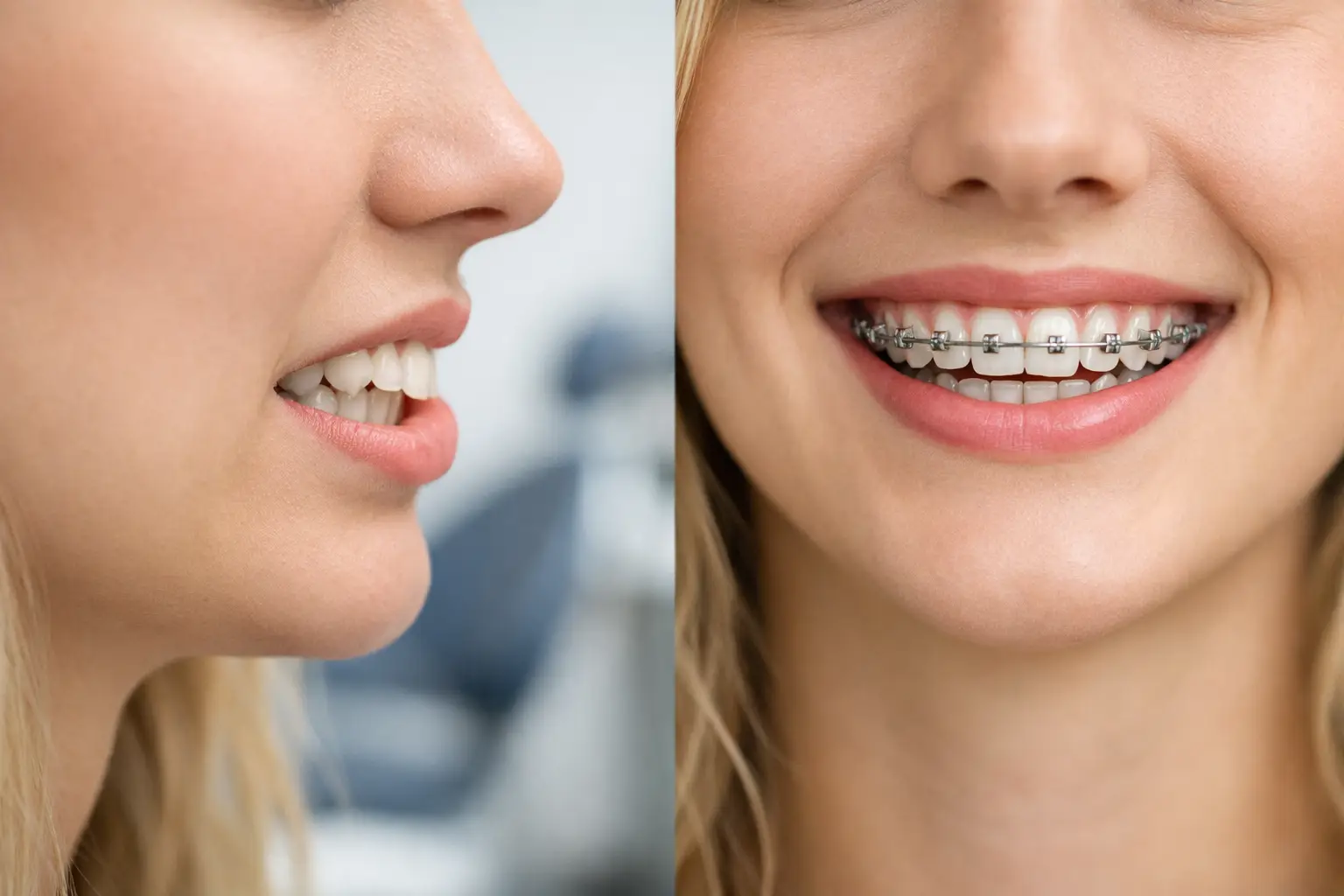
If you’ve ever looked at your profile in a photo or noticed your top front teeth sit too far over your lower teeth, you may be wondering: do braces fix overbite? In many cases, yes – braces can correct an overbite, often very effectively. But the real answer depends on how severe the overbite is, whether the issue involves the teeth, the jaws, or both, and how early treatment begins.
An overbite is more than a cosmetic concern. For some patients, it can lead to uneven tooth wear, jaw strain, speech changes, difficulty biting into food, or a smile that feels out of balance. The good news is that modern orthodontic treatment offers several ways to improve it, and braces are one of the most reliable options.
Do Braces Fix Overbite in Every Case?
Braces can fix many overbites, but not every overbite is the same. Some are caused mainly by tooth position. Others are related to jaw growth and skeletal structure. That difference matters because it shapes how treatment is planned.
When the overbite is primarily dental, braces can move the teeth into healthier alignment and reduce the overlap between the upper and lower front teeth. This is often very predictable. If the overbite is tied to jaw size or jaw position, braces may still be part of the solution, but additional orthodontic tools or a different treatment approach may be needed.
For children and teens who are still growing, orthodontists sometimes have more flexibility because jaw development can still be guided. For adults, growth is complete, so correction focuses more on tooth movement unless a severe skeletal issue calls for combined orthodontic and surgical treatment. That does not mean adults are out of options. It just means the plan needs to match the biology.
What Braces Actually Do for an Overbite
Braces work by applying controlled pressure over time. That pressure gradually shifts teeth into better positions, which can improve how the upper and lower arches fit together.
With an overbite, treatment may involve moving the upper front teeth back, bringing the lower teeth forward, leveling the arches, or carefully adjusting the vertical position of certain teeth. In some cases, rubber bands are used with braces to help improve the bite relationship between the upper and lower jaws.
This is why an overbite correction is not just about straightening crooked teeth. The goal is a bite that functions well, feels comfortable, and looks balanced. A well-planned orthodontic case takes all three into account.
Mild vs. Severe Overbite
A mild overbite is common, and many people have a small amount of upper tooth overlap that is completely normal. Treatment becomes more important when that overlap is too deep or starts causing problems.
Mild to moderate overbites often respond very well to braces alone. Severe overbites can still improve with braces, but treatment may take longer and require more detailed mechanics. If the lower jaw sits significantly behind the upper jaw, or if the bite is very deep, your orthodontist may talk with you about whether the issue is mostly dental or skeletal.
That distinction helps set realistic expectations. Sometimes patients assume braces will simply pull everything into place quickly. In reality, the best results come from precise movement, careful monitoring, and a treatment plan built around your anatomy.
Can Clear Aligners Fix an Overbite Too?
Many patients ask about braces because they want the most effective option, but they also want to know whether Invisalign or other clear aligners can help. In some cases, yes. Clear aligners can correct certain overbites, especially mild to moderate ones.
That said, braces may offer more control in complex cases, especially when significant tooth movement, bite correction, or elastic wear is needed. For teens and adults who want a less visible option, aligners may still be a good fit, but it depends on the details of the bite.
This is one reason a consultation matters. The best treatment is not the one that sounds easiest online. It is the one that gives you the safest, most stable result for your specific bite.
Signs Your Overbite Should Be Evaluated
Not every overbite needs urgent treatment, but there are some signs it deserves a closer look. If your lower teeth are hidden too much when you bite, if your front teeth are wearing down, or if you feel jaw tension or discomfort, it is worth having an orthodontist assess it.
Parents may also notice that a child’s top teeth seem to cover most of the bottom teeth, or that their profile looks more convex than expected. Early evaluation does not always mean early braces, but it can help identify whether timing matters. In growing patients, interceptive treatment can sometimes make future correction easier.
Adults often seek care because they are finally ready to address something they have noticed for years. Sometimes the concern is aesthetic. Sometimes it starts with chipping, clenching, or discomfort. Both are valid reasons to come in.
How Long Does It Take to Fix an Overbite With Braces?
Treatment time varies. Some patients see meaningful bite improvement within several months, while full correction may take 18 to 24 months or longer depending on complexity.
Several things affect the timeline: the severity of the overbite, the health of the teeth and gums, whether extra appliances or rubber bands are needed, and how consistently the patient follows instructions. Missed appointments, broken brackets, or inconsistent elastic wear can slow progress.
A good orthodontic team will not just tell you the estimated timeline. They will explain what is driving it. That clarity helps treatment feel more manageable, especially for busy adults and families trying to plan around work, school, and activities.
What Treatment Can Feel Like
One of the biggest reasons people delay care is worry about discomfort or hassle. That concern is understandable, but overbite treatment is usually more manageable than patients expect.
Braces do create pressure, especially after adjustments, but that is part of how teeth move. Most soreness is temporary. Eating may require a few changes early on, and rubber bands can take some getting used to, but patients generally adapt quickly.
The bigger challenge is often consistency. Successful bite correction depends on regular visits, good oral hygiene, and following your orthodontist’s instructions. When the process is explained clearly and the care team is responsive, patients tend to feel much more confident throughout treatment.
Why Retainers Matter After Overbite Correction
Once braces come off, retention becomes the next important phase. Teeth naturally want to shift, and that includes teeth that were moved to improve an overbite.
Retainers help protect the result. Without them, some relapse is possible. This does not mean treatment failed. It means the bite needs support while the surrounding bone and tissues stabilize.
For patients who have invested time and money into correcting an overbite, retainers are not an afterthought. They are part of the treatment.
When Braces Alone May Not Be Enough
There are situations where braces improve an overbite but are not the only tool needed. Younger patients may benefit from appliances that guide jaw growth. Adults with a significant skeletal discrepancy may need a more advanced approach if the goal is full correction rather than partial improvement.
This is where a thoughtful diagnosis matters. Digital scans, photos, and imaging help the orthodontist see whether the bite problem starts at the teeth, the jaws, or both. From there, the plan can be personalized instead of generalized.
That personalized approach is especially helpful for patients who are balancing function, appearance, comfort, and schedule. In practices like 1st Impressions Orthodontics, the goal is not simply to say yes to treatment. It is to recommend the right treatment, explain it clearly, and make the process feel low stress from start to finish.
So, Do Braces Fix Overbite Reliably?
Yes – braces fix overbite in many cases, and they remain one of the most dependable ways to improve bite alignment. The key is understanding what kind of overbite you have and getting a treatment plan designed around your age, growth stage, and goals.
If your bite feels off, your teeth are wearing unevenly, or you have always wondered whether your overbite can be corrected, an orthodontic evaluation can give you real answers instead of guesswork. The right plan should leave you with more than straighter teeth. It should give you a bite that feels healthier, functions better, and fits your smile with confidence.