
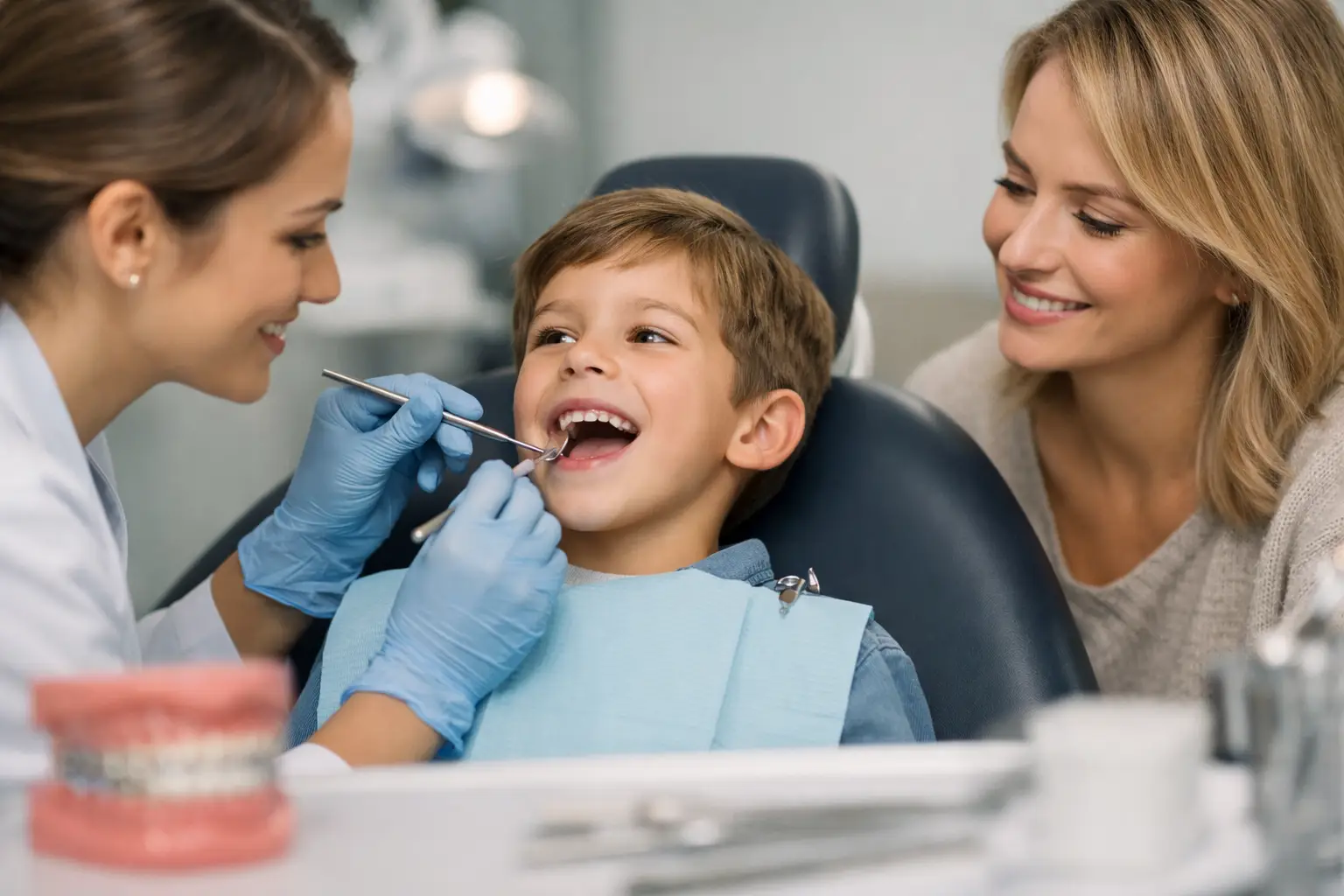
If your child’s teeth seem crowded at age 7, that does not automatically mean braces are around the corner. It does mean the timing is right to get answers. An early orthodontic evaluation guide can help parents understand what an orthodontist is actually looking for, what might need attention now, and what can safely wait.
For many families, the hardest part is not treatment. It is uncertainty. You may notice a crossbite, thumb-sucking habits, mouth breathing, or baby teeth that are not coming out on schedule and wonder whether any of it matters. The good news is that an early evaluation is usually simple, low-stress, and designed to give you clarity, not pressure.
What early orthodontic evaluation really means
An early orthodontic evaluation is an orthodontic checkup done while a child still has a mix of baby teeth and permanent teeth. In many cases, this happens around age 7. That age is not random. It is often the point when enough adult teeth have come in to reveal how the bite is developing, while there is still time to guide growth if needed.
This does not mean every 7-year-old needs treatment. In fact, many do not. Sometimes the most appropriate recommendation is simply to monitor growth and check in again later. That can be just as valuable as starting treatment, because it helps you avoid guessing and gives you a clear plan.
Orthodontists are looking beyond whether teeth appear straight. They are evaluating how the jaws fit together, whether teeth have enough room to erupt properly, and whether habits or growth patterns may create bigger problems over time. A child can have teeth that look fairly even and still have a bite issue worth watching. The reverse is also true.
Early orthodontic evaluation guide: what parents should watch for
Some signs are easy to spot at home. Others are subtle and only show up on imaging or during a bite exam. The most common reasons a parent schedules an early orthodontic visit include crowding, early or late loss of baby teeth, front teeth that stick out, difficulty biting or chewing, speech concerns, and jaws that seem off-center.
Crossbites are another common concern. If the upper teeth sit inside the lower teeth in certain areas, that can affect how the jaw grows and functions. Underbites and deep bites can also be important to evaluate early, especially if they appear to be getting more noticeable as your child grows.
Habits matter too. Prolonged thumb-sucking, tongue thrust, and chronic mouth breathing can influence tooth position and jaw development. That does not mean every habit leads to orthodontic treatment, but it does mean the bite should be checked with those factors in mind.
Sometimes the issue is less visible but still important. A child may have impacted teeth, missing teeth, extra teeth, or eruption patterns that need monitoring. Modern digital imaging and 3D imaging can make these patterns easier to identify before they turn into more complicated problems.
Why timing matters, but not in the way many parents think
Parents often hear “early treatment” and assume earlier is always better. That is not quite how orthodontics works. Timing matters because certain problems respond best while a child is still growing, but starting too soon without a clear reason can add time and frustration.
That is why a thoughtful evaluation matters more than rushing into appliances. Some bite issues benefit from interceptive treatment during childhood because the jaw is still developing and the orthodontist can guide that growth. Other concerns are better treated in the teen years when more permanent teeth are in place.
A good orthodontic plan is not about doing treatment as early as possible. It is about doing the right treatment at the right time.
What happens at an early orthodontic checkup
For most families, the first visit is more straightforward than expected. Your child’s orthodontist will examine the teeth, jaw position, facial balance, and bite. They may take digital images or X-rays to see how permanent teeth are developing under the gums and whether there are spacing or eruption concerns that are not visible yet.
You should expect a conversation, not just a diagnosis. A good evaluation explains what is happening now, what may change with growth, and whether immediate treatment is recommended. If treatment is not needed yet, you should still leave knowing what signs to watch for and when to return.
This is also the time to ask practical questions. Parents often want to know whether the issue affects function or is mostly cosmetic, whether waiting creates risk, how long future treatment may last, and whether early care could reduce the need for extractions or surgery later. The answers depend on your child’s specific growth pattern, which is why personalized care matters.
When early treatment is recommended
Interceptive treatment is usually recommended when there is a clear benefit to acting during growth. That may include expanding a narrow upper jaw, correcting a crossbite, managing severe crowding, reducing trauma risk to protruding front teeth, or guiding space for permanent teeth.
In some cases, early treatment can improve comfort and function right away. In others, it is more about preventing a small issue from becoming a bigger one. There is real value in that, but it is important to be honest about trade-offs. Early treatment can happen in phases, which means some children still need braces or aligners later after more permanent teeth come in. The first phase does not always replace future treatment. It often makes that later treatment simpler, shorter, or more predictable.
That distinction matters for families. If an orthodontist recommends early treatment, the question is not just “Will my child still need braces later?” It is also “What benefit does this first phase create?” If the answer is better jaw development, improved bite function, or avoiding a more complex problem, then early care may be well worth it.
When monitoring is the best next step
A careful orthodontist will not recommend treatment just because a child is old enough for an evaluation. Sometimes monitoring is the smartest approach. Mild crowding, normal developmental stages, and certain eruption patterns may look concerning to parents but improve or become clearer with time.
Monitoring is active, not passive. It means your child’s growth is being tracked so treatment can start at the best moment if needed. That often reduces unnecessary intervention and gives families confidence that they are not missing an important window.
For busy parents, this can be a relief. You get expert guidance without committing to treatment before it truly makes sense.
Questions parents should feel comfortable asking
The best early orthodontic visits leave parents feeling informed, not overwhelmed. It helps to ask whether the issue is dental, skeletal, or both. That affects timing and treatment options. You can also ask what happens if you wait, whether the condition is likely to worsen, and what signs would mean it is time to re-evaluate.
If treatment is recommended, ask what the appliance is meant to accomplish, how your child may feel while adjusting, and what kind of home care will be needed. Practical details matter. So do lifestyle concerns like school, sports, and comfort.
Families in Westminster and nearby communities often tell us they want straightforward answers more than anything else. That is reasonable. Orthodontic care should feel clear and manageable from the first conversation.
How to make the process easier for your child
Children usually take their cue from the adults around them. If you treat the evaluation as a calm fact-finding visit, they are more likely to do the same. Avoid framing it as something scary or assuming braces are guaranteed. Instead, let them know the orthodontist is checking how their teeth and jaws are growing.
It also helps to choose a specialist who is used to working with children and explains things in a reassuring, age-appropriate way. A warm environment, gentle communication, and modern technology can make a big difference, especially for kids who feel nervous in medical settings.
At 1st Impressions Orthodontics, that first visit is meant to give families clear guidance and peace of mind. Whether the next step is treatment now or simply keeping an eye on growth, the goal is the same: make decisions with confidence, not guesswork.
An early orthodontic evaluation is not about putting your child on a fast track to braces. It is about understanding how their smile is developing while you still have options. Sometimes the best outcome starts with treatment. Sometimes it starts with waiting wisely.